Steak is the cut where technique is worth more than money. An expensive ribeye cooked on a lukewarm grill is worse than a cheap tri-tip cooked properly, and the difference between the two is almost entirely heat management and patience. There are only three things that reliably separate a good steak from a disappointing one: a genuinely dry surface, a surface hot enough to build a crust before the interior climbs, and enough rest afterward that the juice stays in the meat instead of on the board. Everything else, including the grade of beef, is a smaller variable than any of those.
Ribeyes and strips
The cuts with enough fat to take full direct heat and reward it.
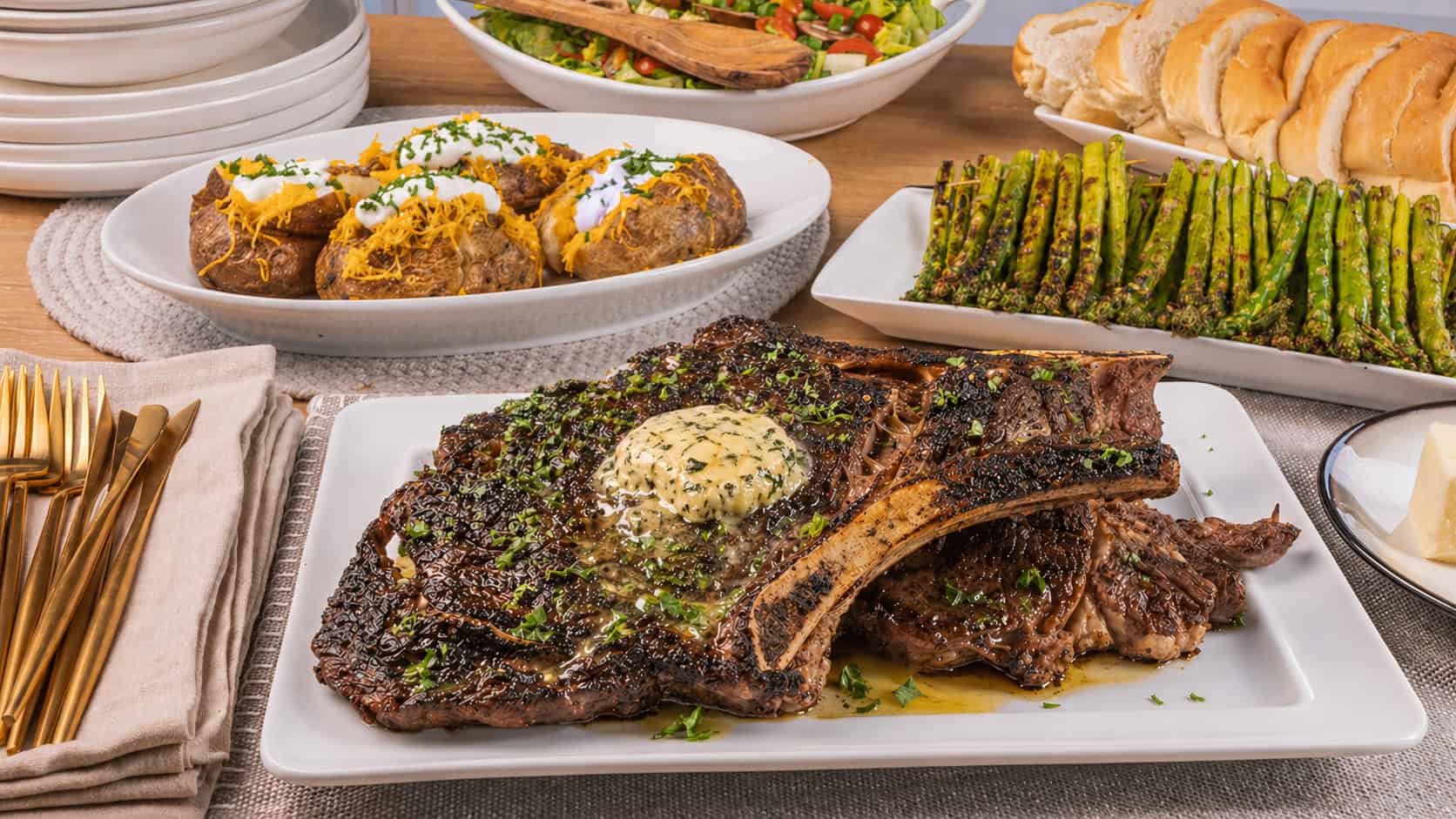
Cowboy Butter Ribeyes
Compound butter finishing a hot-grilled ribeye. The butter goes on after the steak comes off, so it melts into the rest rather than burning on the grate.
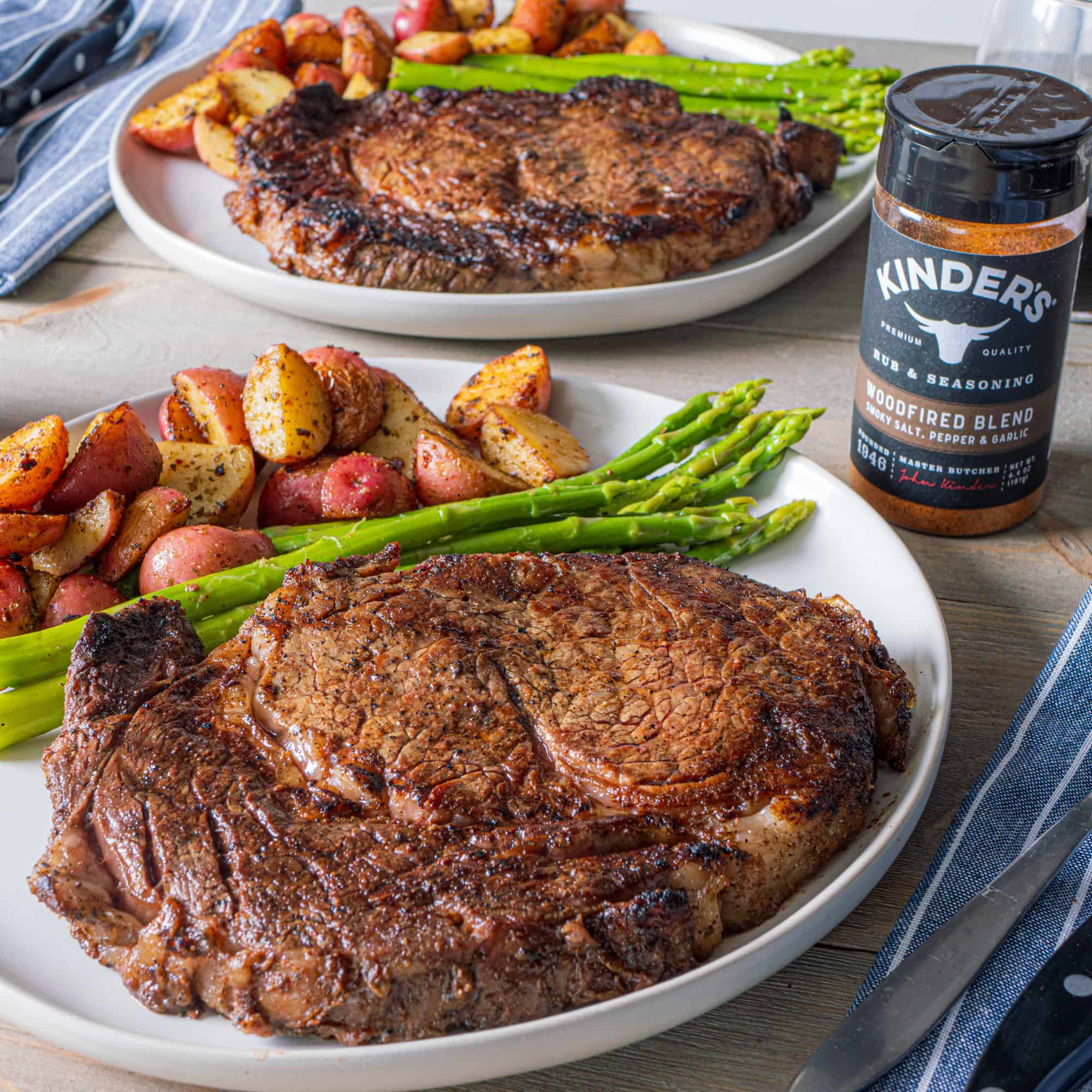
Grilled Woodfired Ribeyes with Crispy Potatoes
Wood smoke against a fatty cut, with potatoes taking the fat that renders off. Get the grate properly hot before anything touches it.
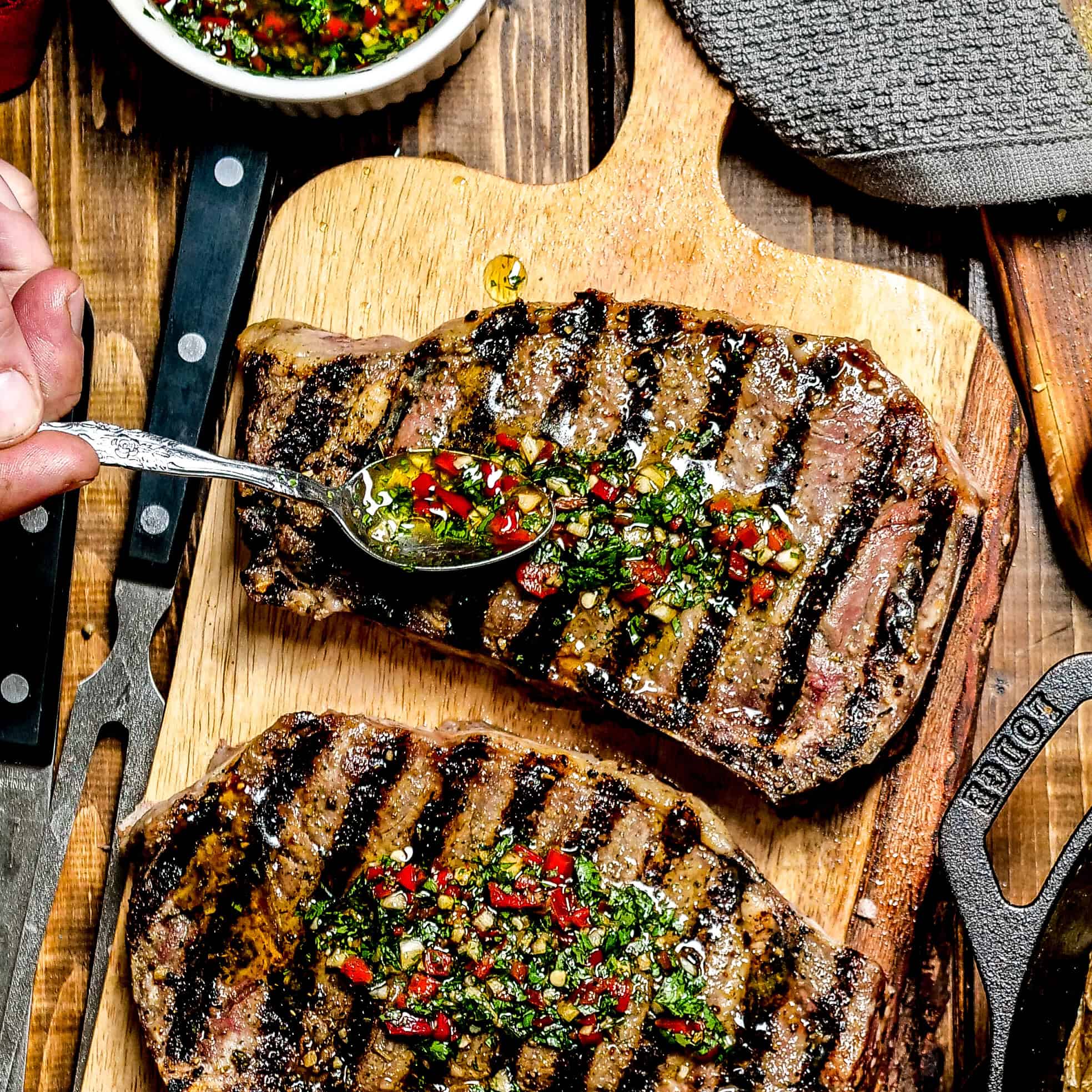
Buttery Steakhouse NY Strip Steaks with Chimichurri
Strip is leaner than ribeye and less forgiving at the top end. Chimichurri adds back the acid and freshness that the fat would otherwise supply.
Tri-tip and carne asada
Bigger roasts and thin cuts, which need almost opposite handling.
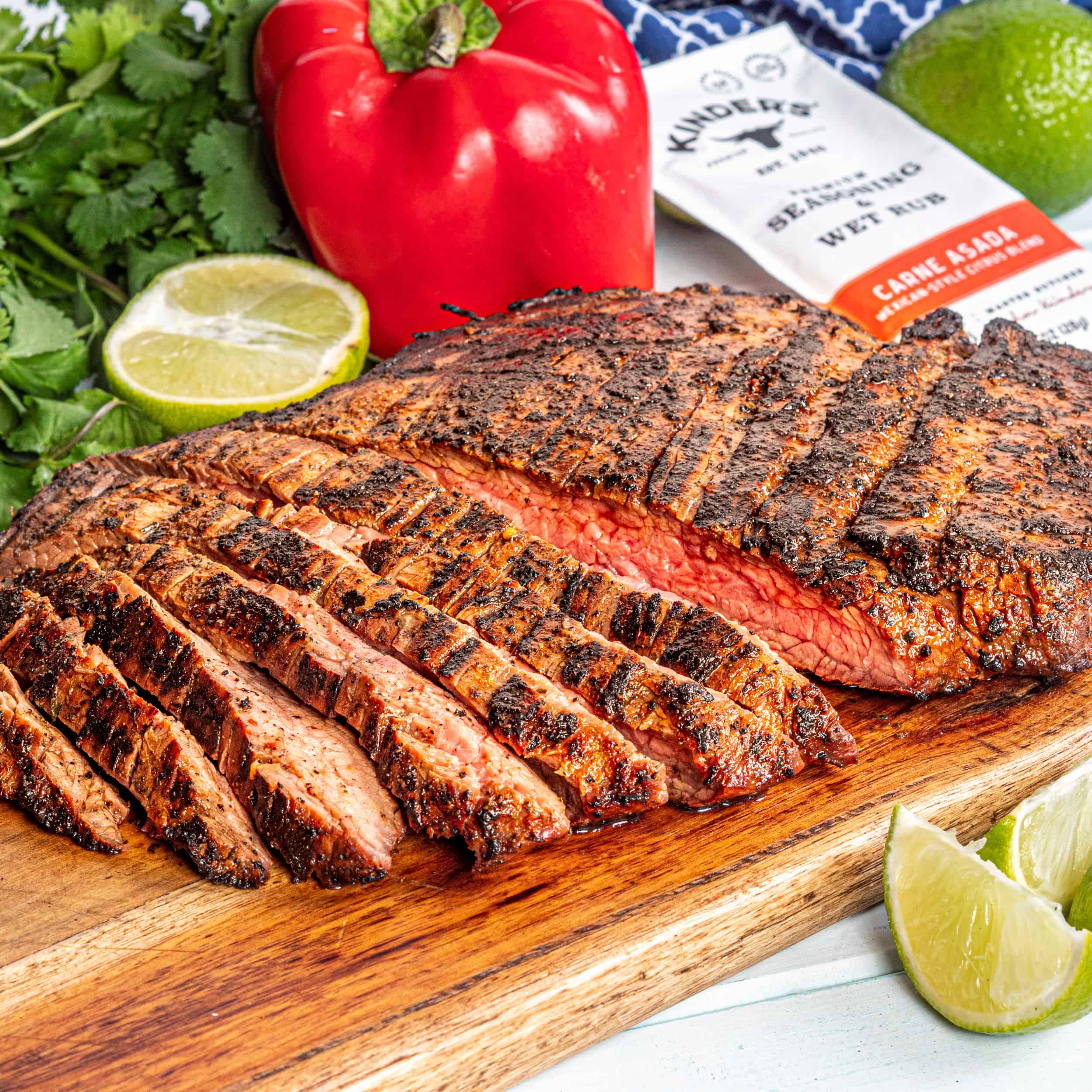
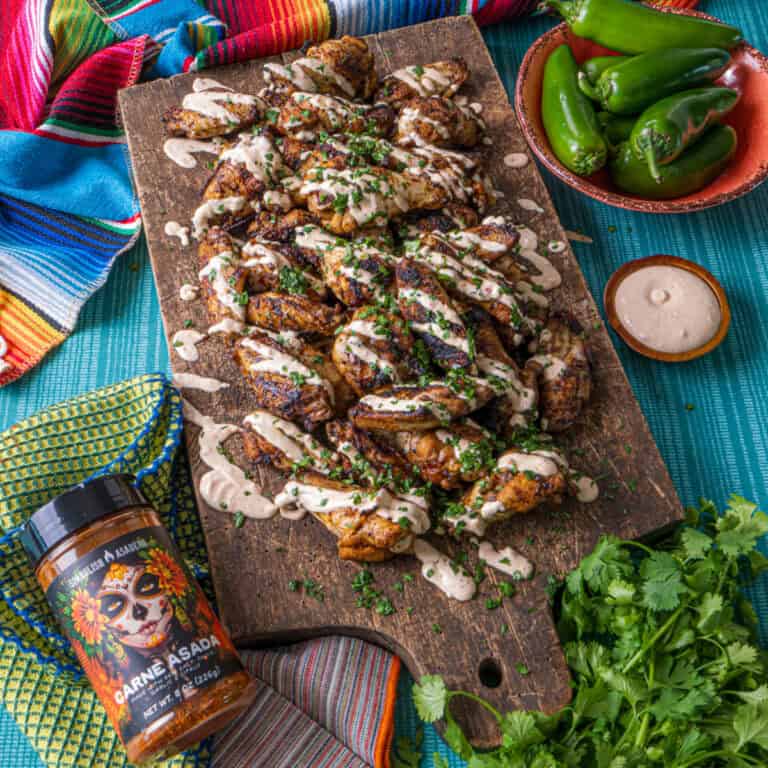
Carne Asada Skirt Steak
Thin, fast and grainy. Very hot grate, a few minutes total, and then slice hard against the grain or it eats tough no matter how well you cooked it.
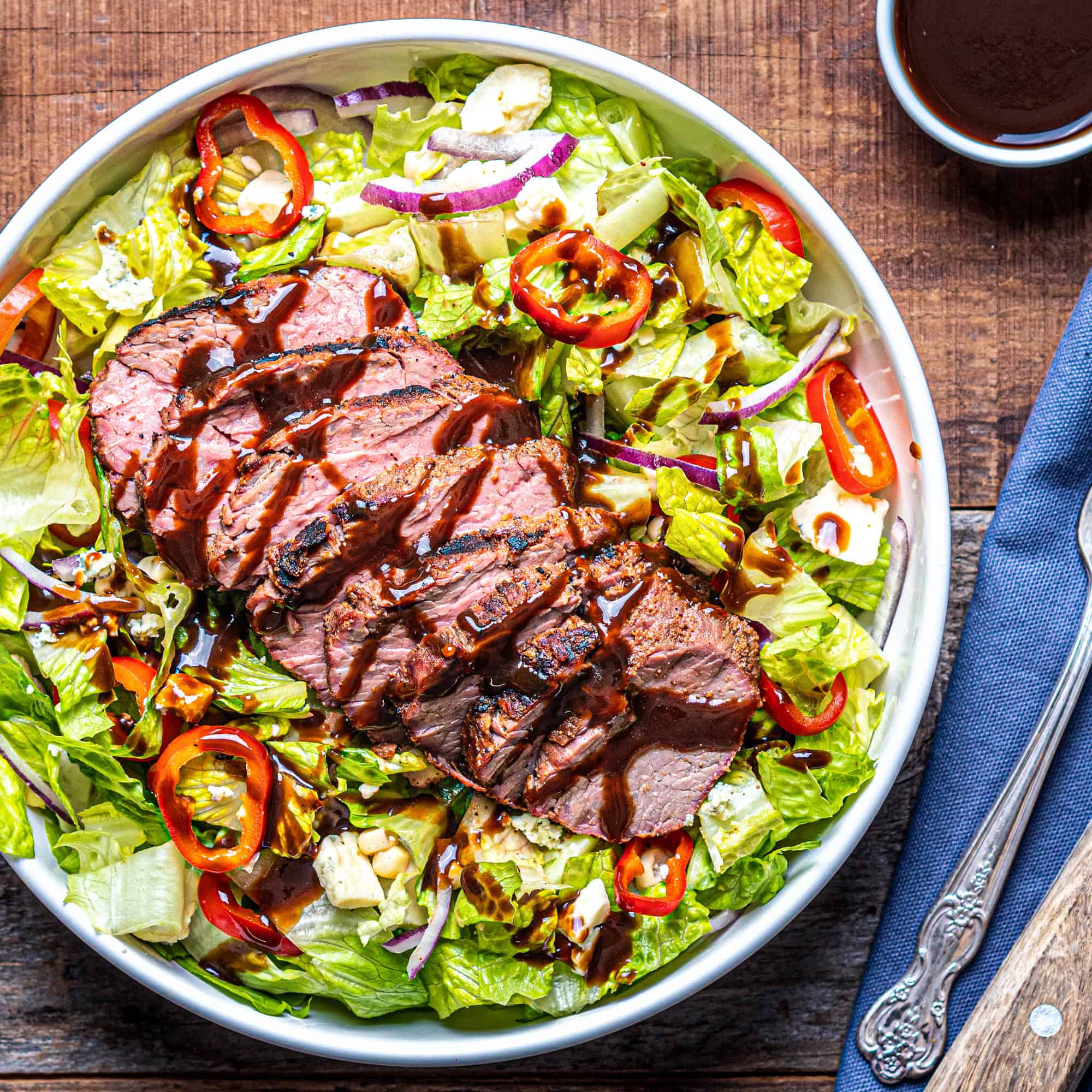
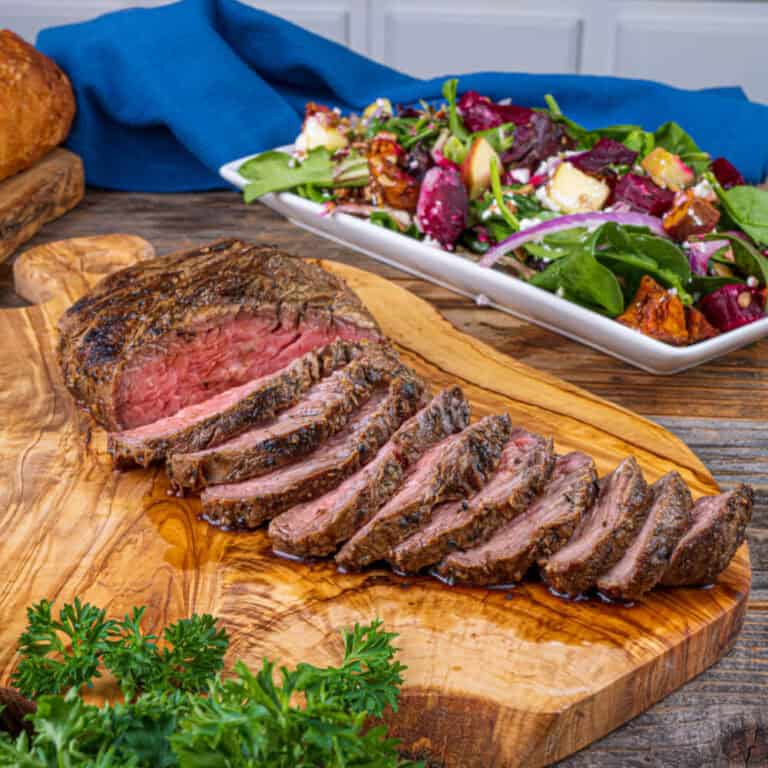
Grilled Tri-Tip Steak Salad
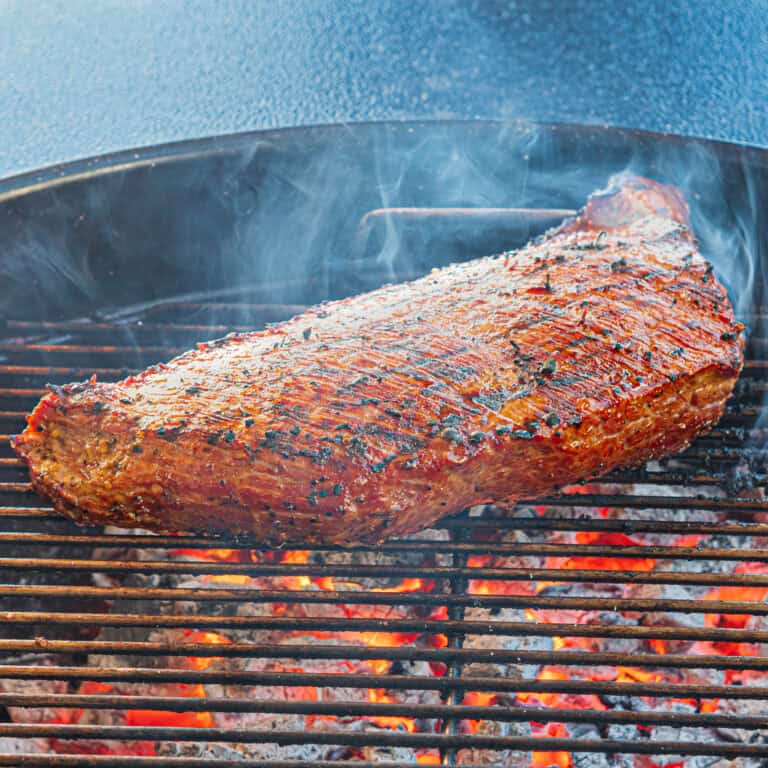
Tri-tip wants two zones: indirect until it is close, then over the fire to finish. The salad turns it into something you would eat in summer.
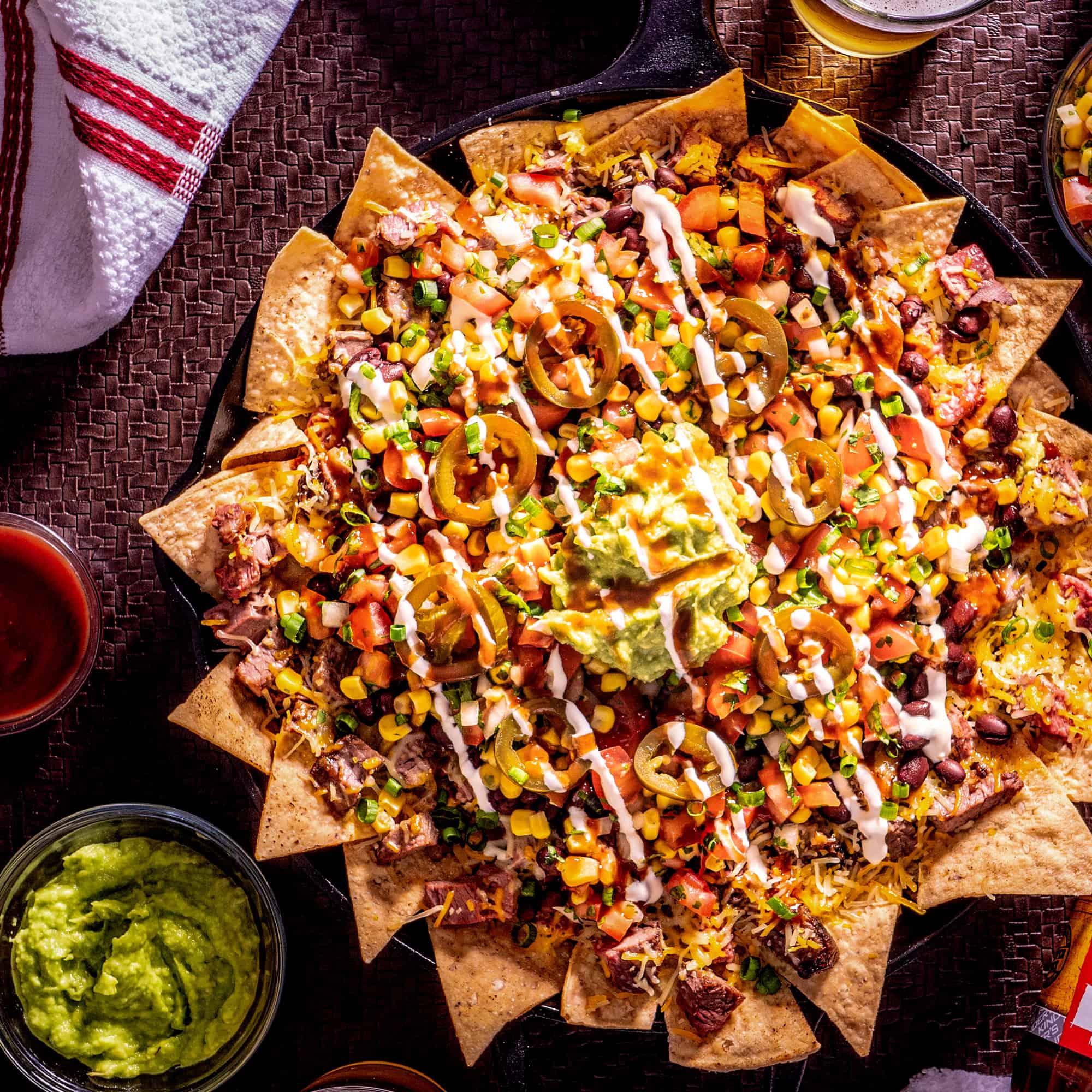
Marinated Tri-Tip Nachos
The best possible use of leftover tri-tip. Slice it thinner than feels right so it reheats in the residual heat rather than needing a second cook.
Where the leftovers go
The second meal, which on this page is frequently better than the first.
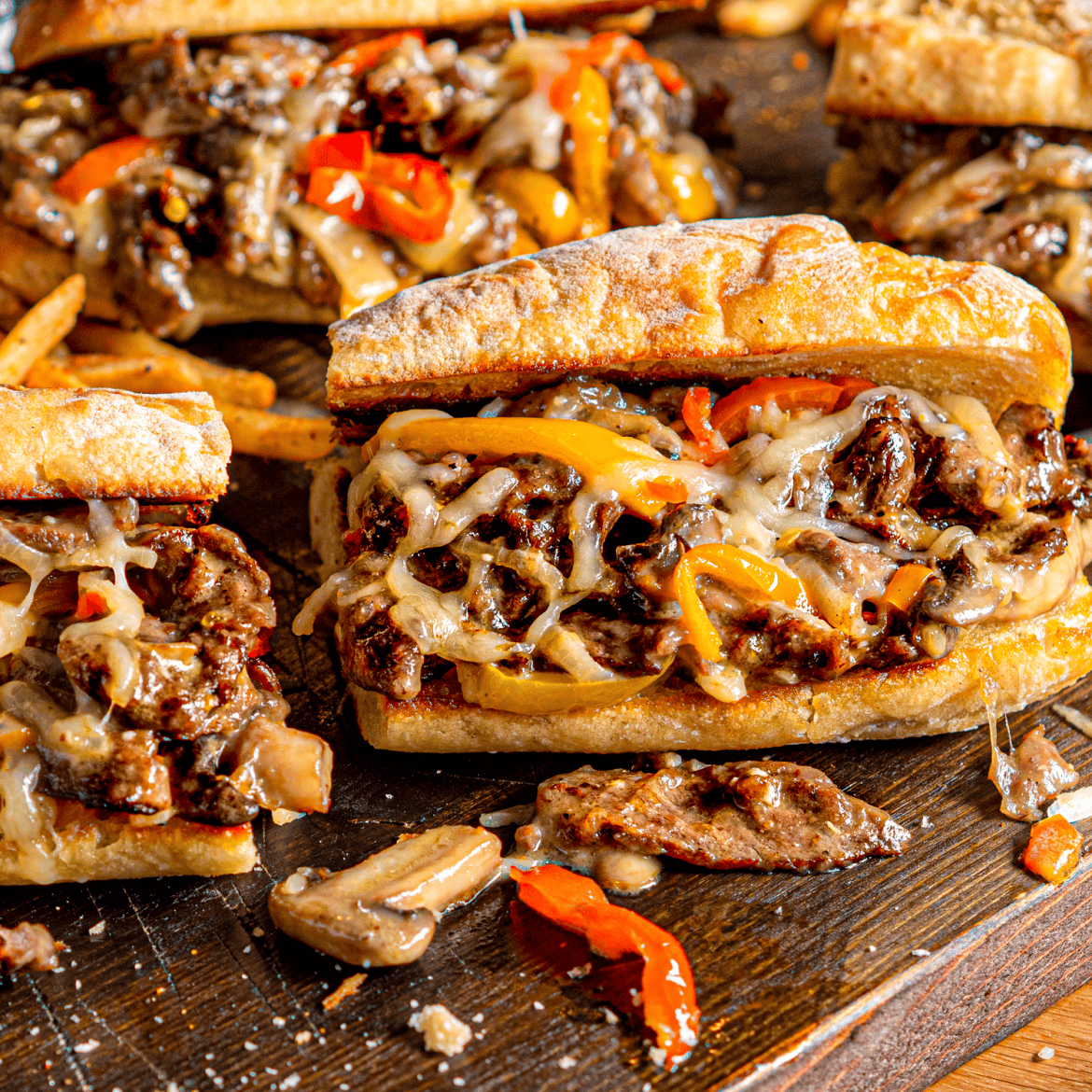
Ribeye Cheesesteaks with Caramelized Onions
Freeze the steak briefly before slicing and you can get it thin enough to cook almost instantly. Onions go long and low, well ahead of the beef.
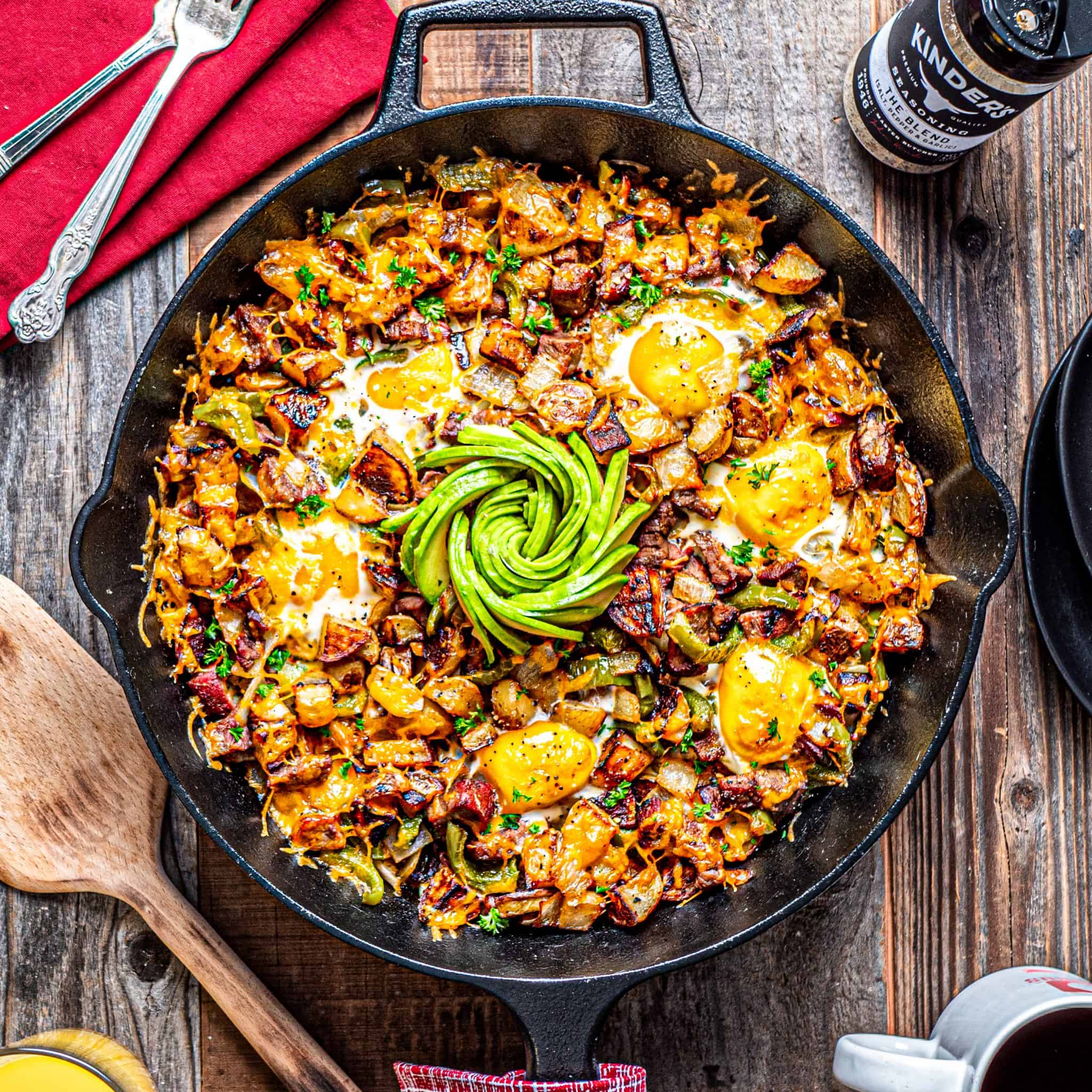
Tri-Tip Steak Breakfast Skillet
Leftover steak, potatoes and eggs in one pan. Get the potatoes properly crisp before the beef joins them, because the beef only needs warming.
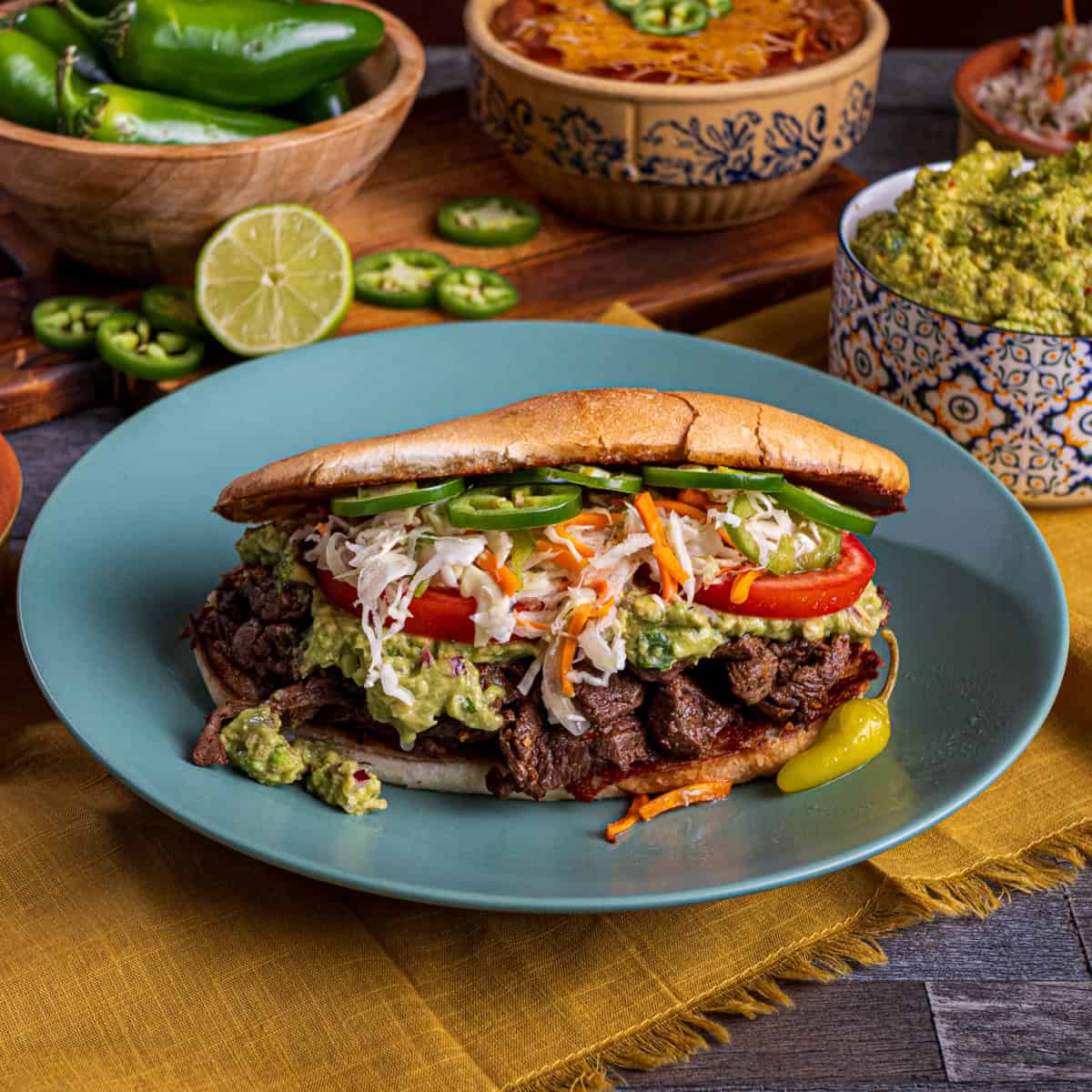
Carne Asada Beef Tortas
A torta carries more than a taco can. Toast the roll in fat and build it warm so the bread holds up to everything going in.
The Rules of the Sear
The other thing worth internalizing is that not every cut wants the same approach. A ribeye has enough intramuscular fat to survive high direct heat from start to finish. A tri-tip is big enough that going all-direct burns the outside before the middle is anywhere close, so it wants two zones and a reverse sear. Skirt and flank are thin, lean and grainy, which makes them fast cooks that live or die on how you slice them at the end. Get the cut and the method matched and the seasoning becomes the easy part. That is why this page is organized by cut rather than by flavor.
Every steak and beef recipe on FlavorMade
-
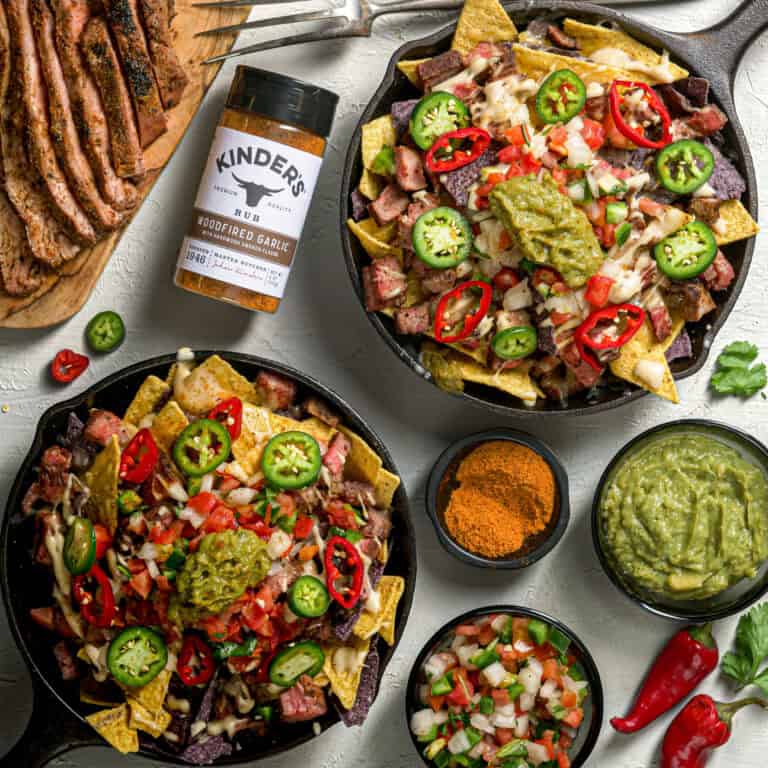
Woodfired Garlic Flank Steak Skillet Nachos with Queso
35 min Grilled flank steak nachos in a cast iron skillet, seasoned with Kinder’s Woodfired Garlic Rub and finished with house-made queso, pico, and jalapeño.
-
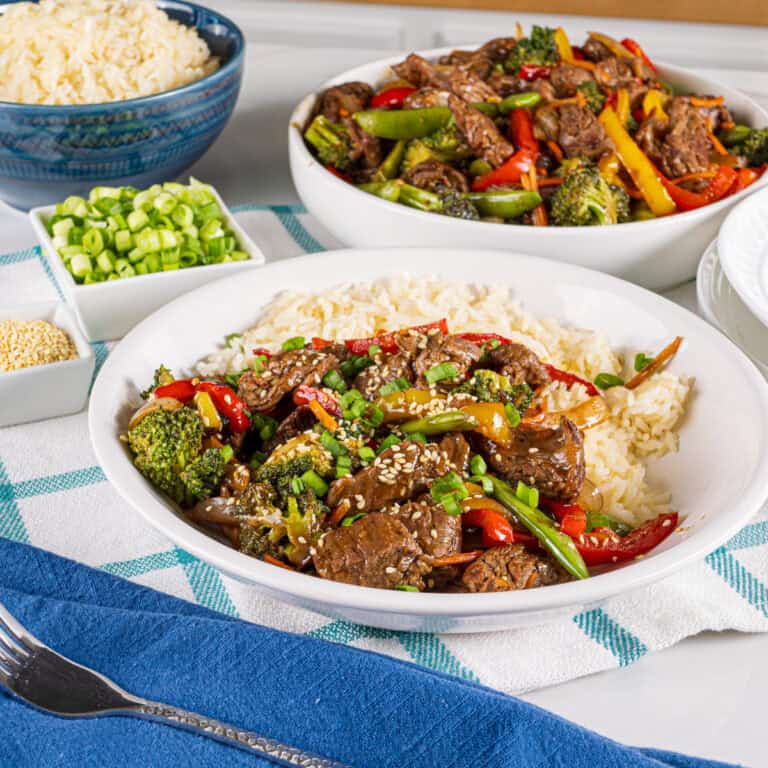
Teriyaki Skirt Steak Stir Fry with Kinder’s Teriyaki Cooking Sauce
35 min Teriyaki skirt steak stir fry with Kinder’s — seared hard over high heat, finished with a glossy teriyaki glaze. Serves 4, ready in 35 minutes.
-
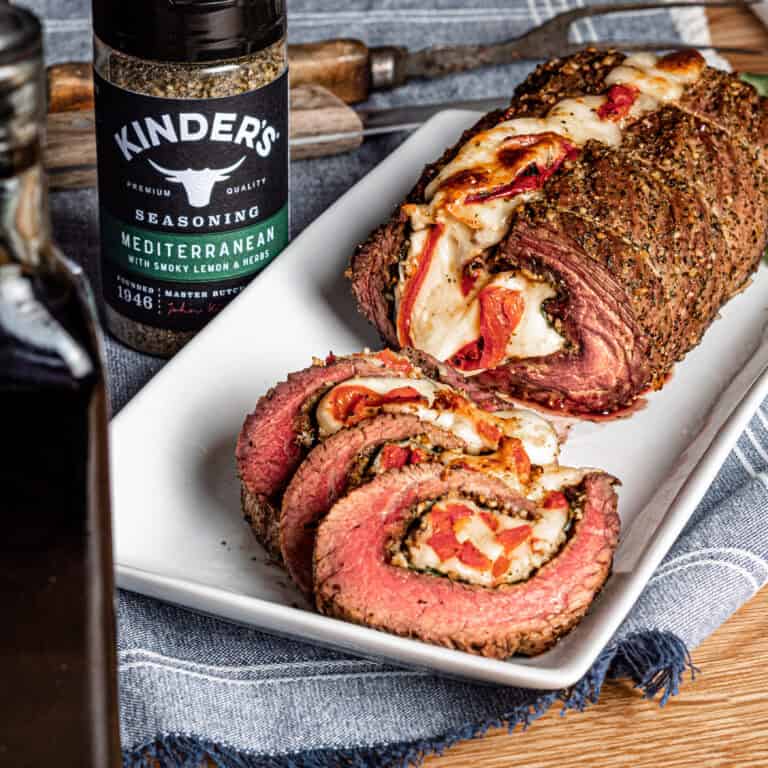
Stuffed Mediterranean Flank Steak Rolls
35 min Stuffed Mediterranean flank steak rolls layered with provolone, roasted peppers, and basil. Baked to 125°F and sliced into tight pinwheel rounds.
-
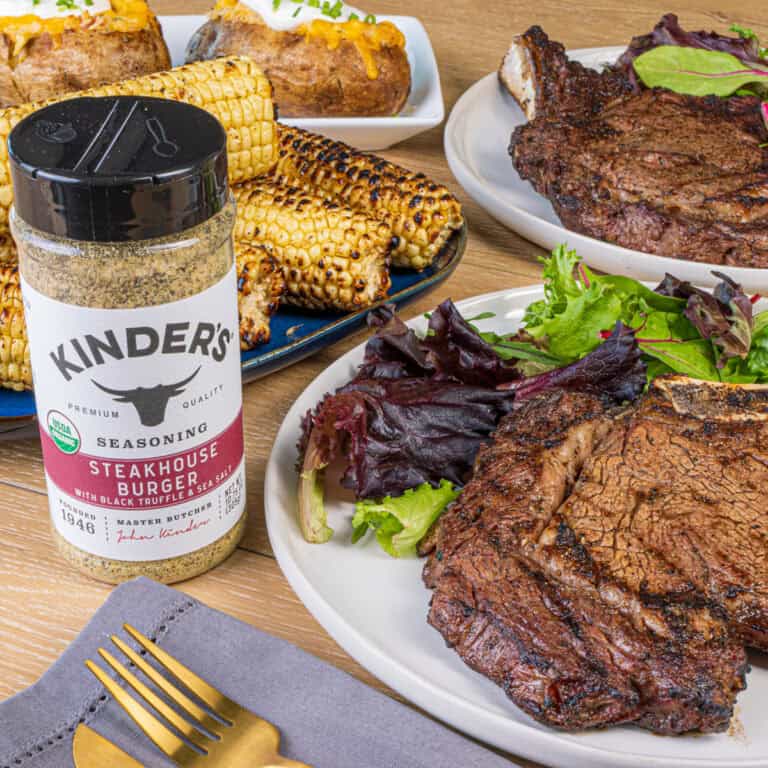
Organic Steakhouse Burger Steaks & Grilled Corn
35 min Steakhouse burger steaks seasoned with Kinder’s for a bold, smoky crust — grilled alongside corn on the cob. Ready in 35 minutes on gas or charcoal.
-
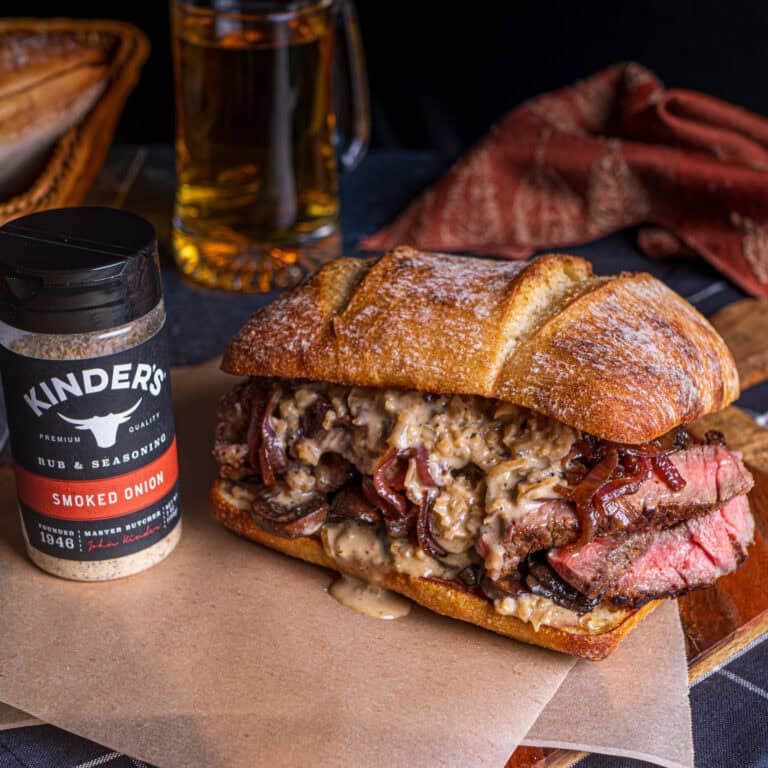
Smoked Onion Steak Sandwich
35 min Smoked onion steak sandwich with butter-basted ribeye, caramelized red onions, and a brandy cream sauce built on Kinder’s Smoked Onion Seasoning.
-
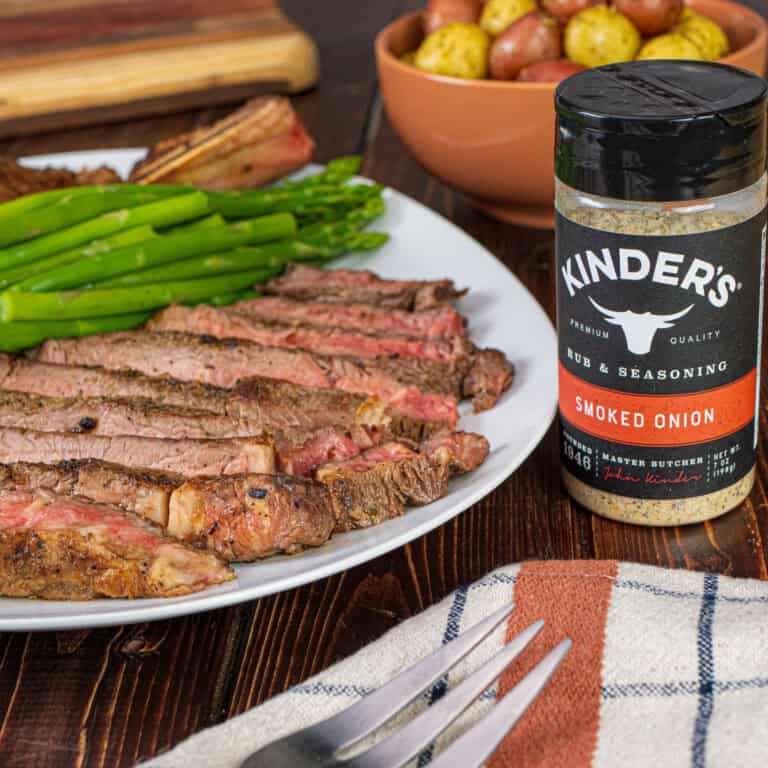
Smoked Onion Ribeyes
35 min Smoked onion ribeyes seared on a screaming hot cast iron with Kinder’s Smoked Onion Seasoning — caramelized crust, butter basted, 35 minutes.
-
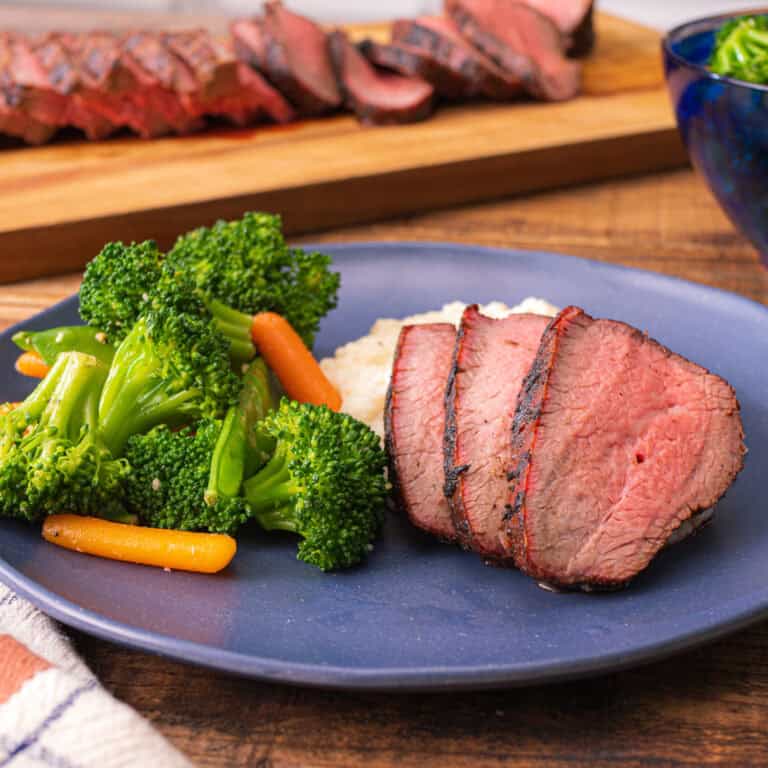
Smoked Barbacoa Tri-Tip Beef Roast with Spanglish Asadero Barbacoa Seasoning
2 min Smoked barbacoa tri-tip beef roast done right: smoke to 115°F with Spanglish Asadero Barbacoa Seasoning, sear for the crust, slice against the grain.
-
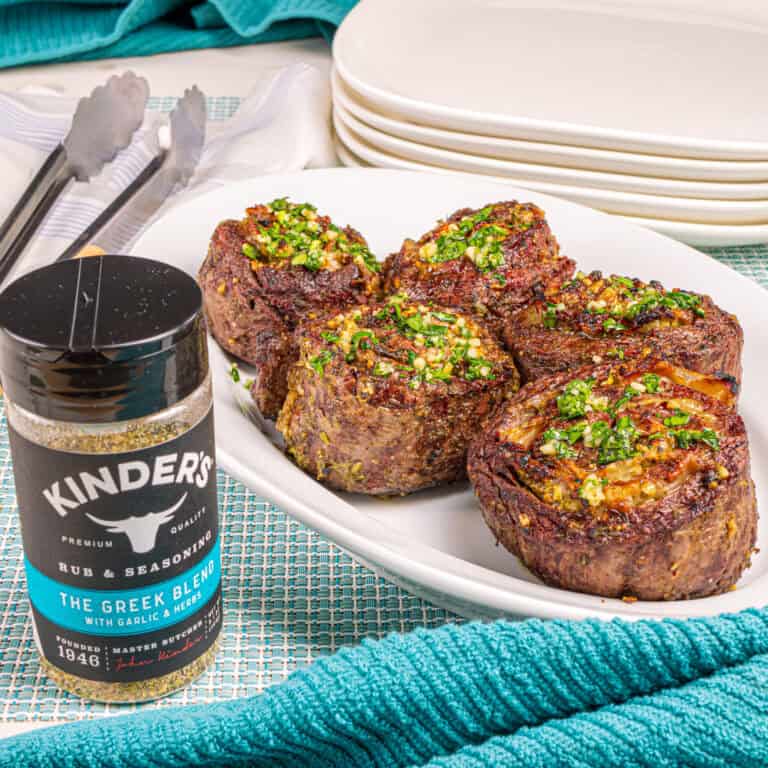
Skirt Steak Pinwheels with Kinder’s The Greek Blend Seasoning
35 min Skirt steak pinwheels layered with pesto, prosciutto, and provolone, seasoned with Kinder’s Greek Blend. Two-zone grill technique, ready in 35 minutes.
-
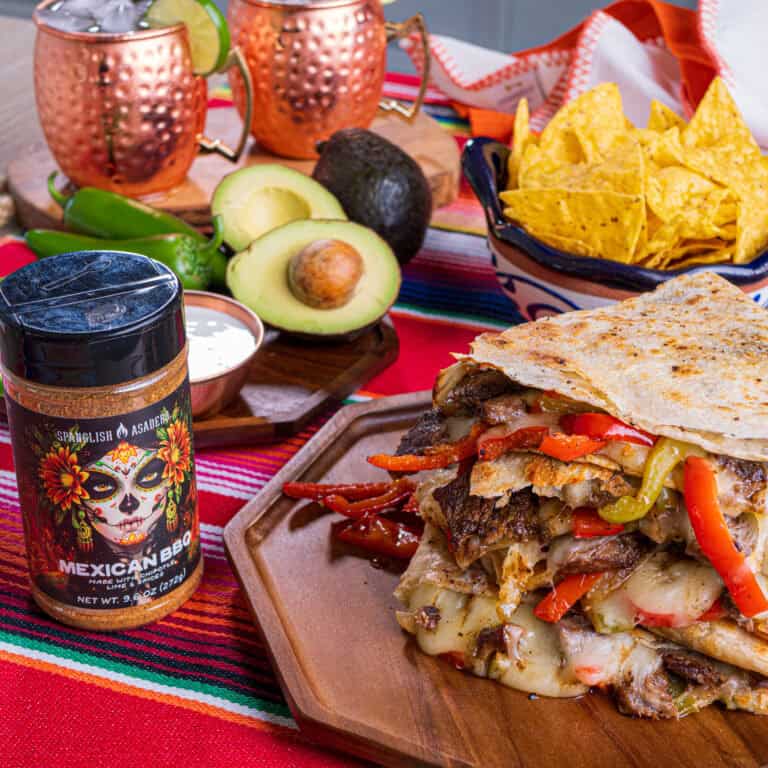
Mexican BBQ Seasoned Steak Quesadillas with Spanglish Asadero
40 min Mexican BBQ seasoned steak quesadillas with Spanglish Asadero — crispy tortilla, melted Monterey Jack, sautéed peppers and onion. Ready in 40 minutes.
-
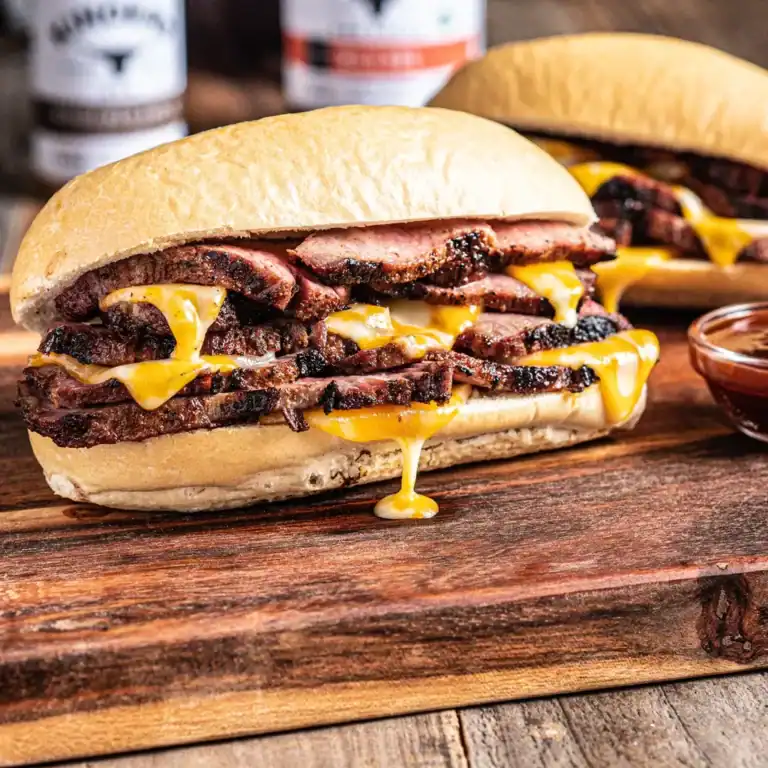
Woodfired Garlic Tri-Tip Sandwich
35 min Kinder’s woodfired garlic tri-tip sandwich: high-heat sear, thin-sliced beef, Colby cheese, and BBQ sauce. A California BBQ move done right.
-
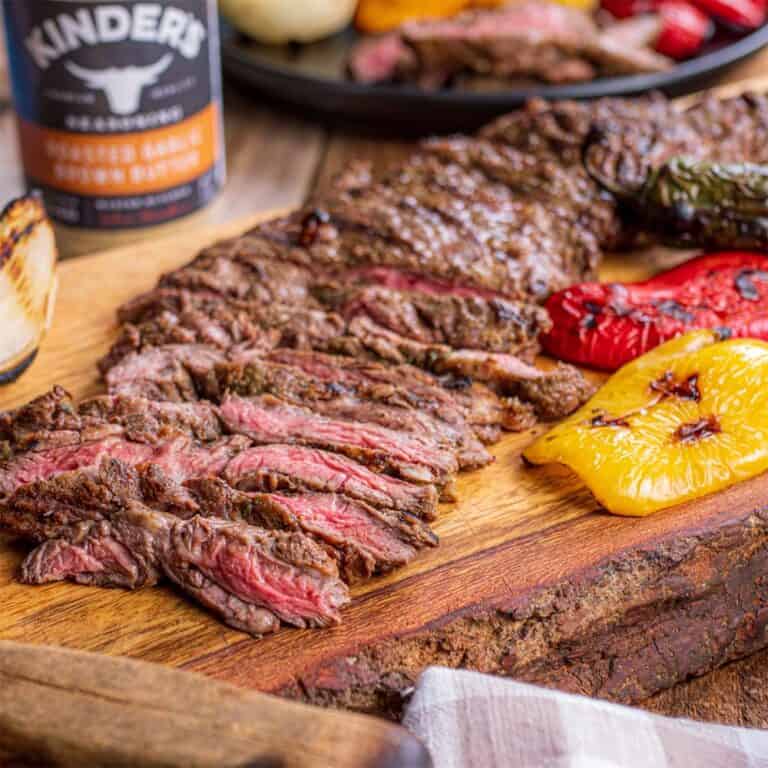
Roasted Garlic Brown Butter Skirt Steak
35 min Roasted garlic brown butter skirt steak with Kinder’s seasoning — high-heat grill, 10-minute rest, slice against the grain. Done in 35 minutes.
-
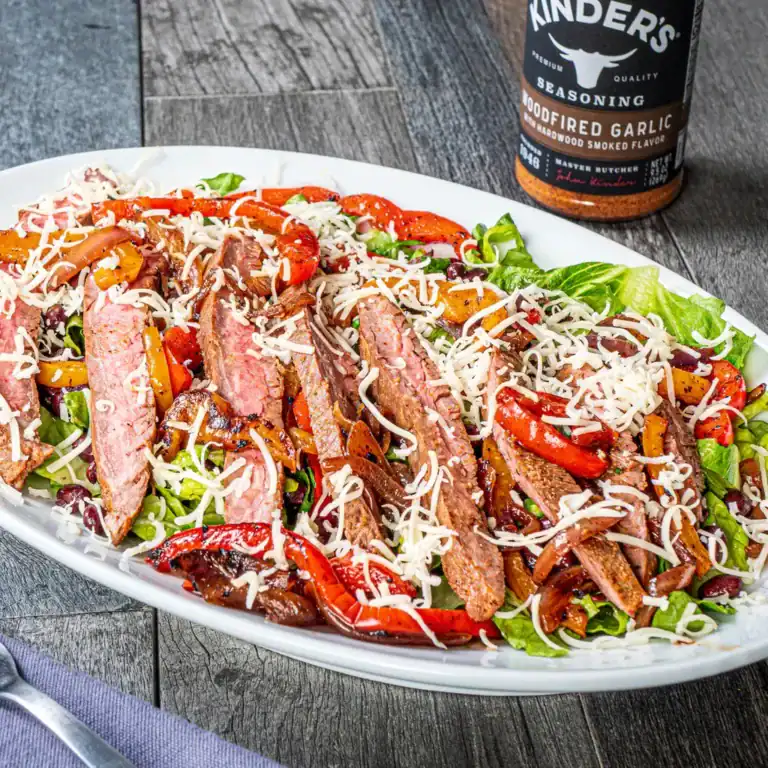
Kinder’s Flank Steak Salad
35 min Kinder’s Flank Steak Salad: thinly sliced pan-seared beef with Woodfired Garlic Seasoning over romaine, black beans, and Monterey Jack. Ready in 35 minutes.
-
Cowboy Butter Tri-Tip with Kinder’s Cowboy Butter Seasoning
35 min Cowboy butter tri-tip recipe with Kinder’s Cowboy Butter Seasoning. Reverse-seared for edge-to-edge medium-rare with a savory herb crust. Feeds six.
-
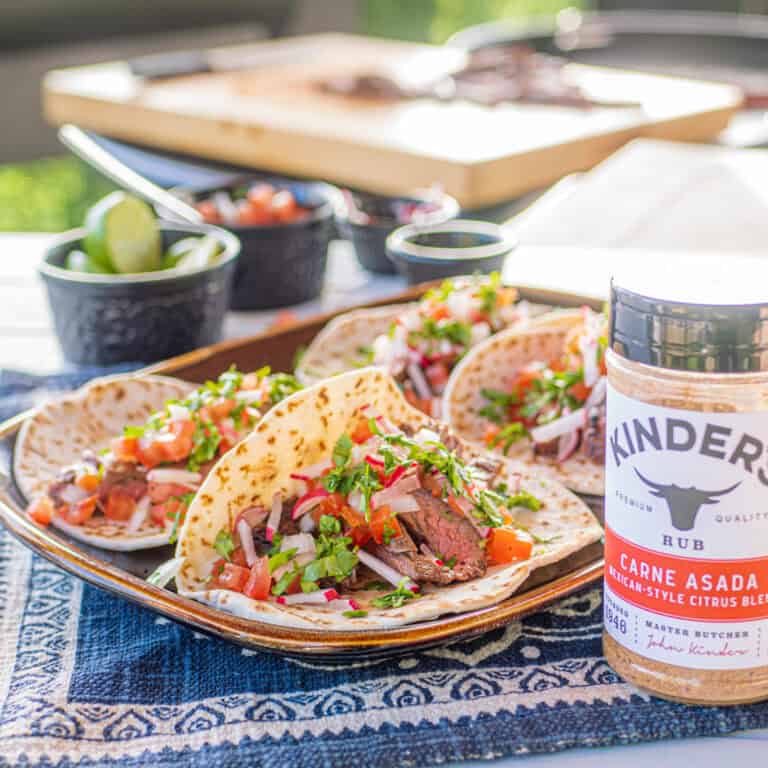
Grilled Carne Asada with Kinder’s Dry Rub
35 min Carne asada seasoned with Kinder’s dry rub — grilled hot and fast, sliced thin across the grain. Tacos, rice bowls, or straight off the board.
-
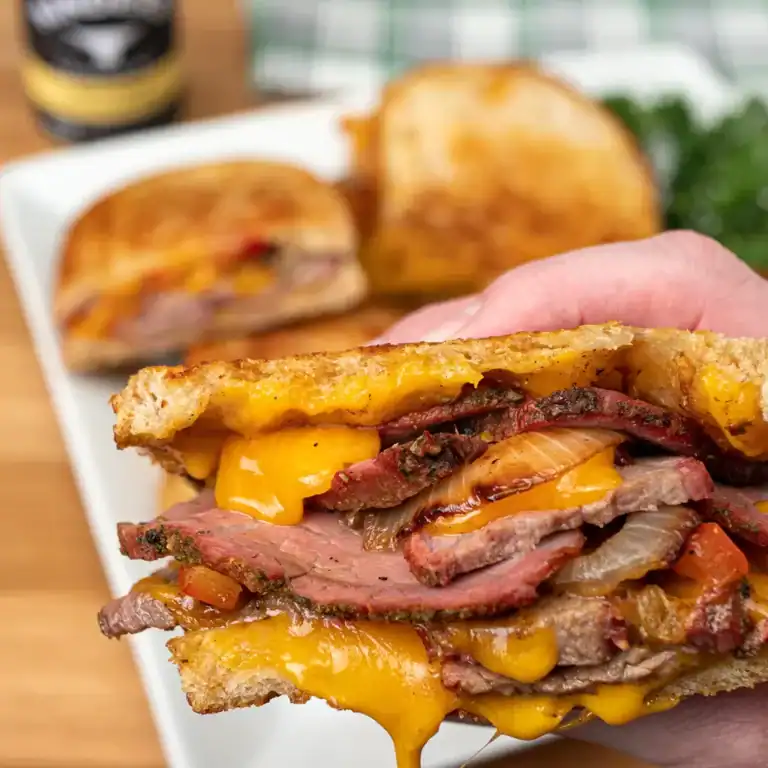
Buttery Steakhouse Tri-Tip Grilled Cheese
35 min Buttery Steakhouse Tri-Tip Grilled Cheese with Kinder’s seasoning, caramelized onions, and sharp cheddar on sourdough. Grilled and griddled in 35 minutes.
-
Grilled Tri Tip with Original 46 Marinade
45 min Grilled tri tip marinated in Kinder’s Original 46 — seared hot, finished low, and sliced against the grain for a juicy California BBQ centerpiece.
-
Grilled Tri Tip with Kinder’s Original 46 Marinade
6 hr 35 min Grilled tri tip marinated in Kinder’s Original 46, seared for deep char, finished to medium-rare. Full technique, two-zone setup, slicing guide.
-
Grilled T-Bone Steaks with Steak Blend Seasoning
48 min Grilled T-bone steaks with Kinder’s Steak Blend build a dark crust at 500F in 8 minutes. Pull 5F under target, rest 10 min, butter finish.
-
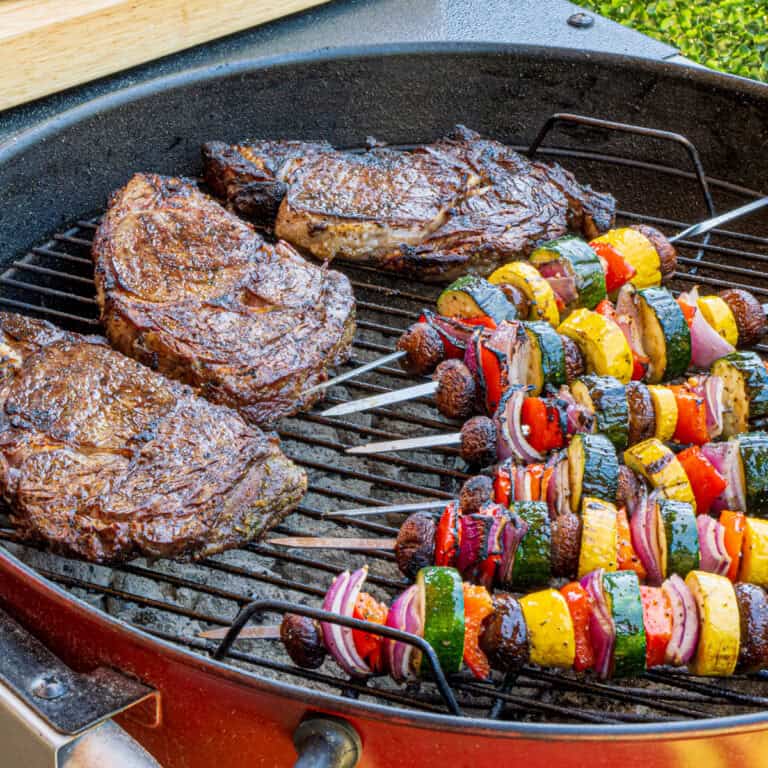
Grilled Buttery Steakhouse Ribeyes & The Blend Veggie Skewers
55 min Grilled ribeyes with veggie skewers — Kinder’s Buttery Steakhouse Seasoning crust, The Blend char on the veggies. One grill, done in 60 minutes.
-
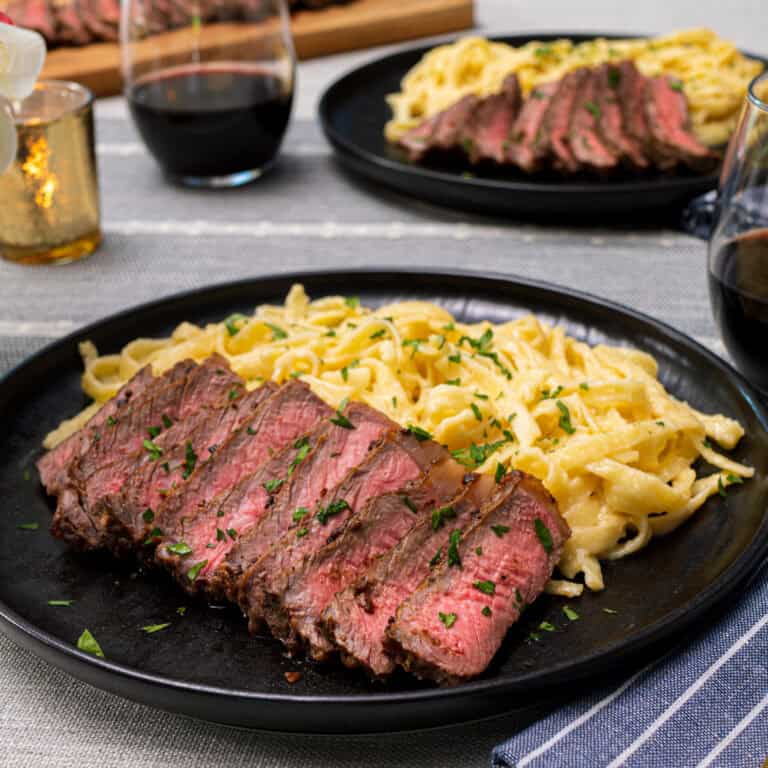
Fettuccine Alfredo with Pan-Seared NY Steak and Kinder’s The Blend
45 min Fettuccine alfredo with steak seasoned with Kinder’s The Blend. Pan-seared NY strip over silky Parmesan Alfredo. Ready in 45 minutes at home.
-
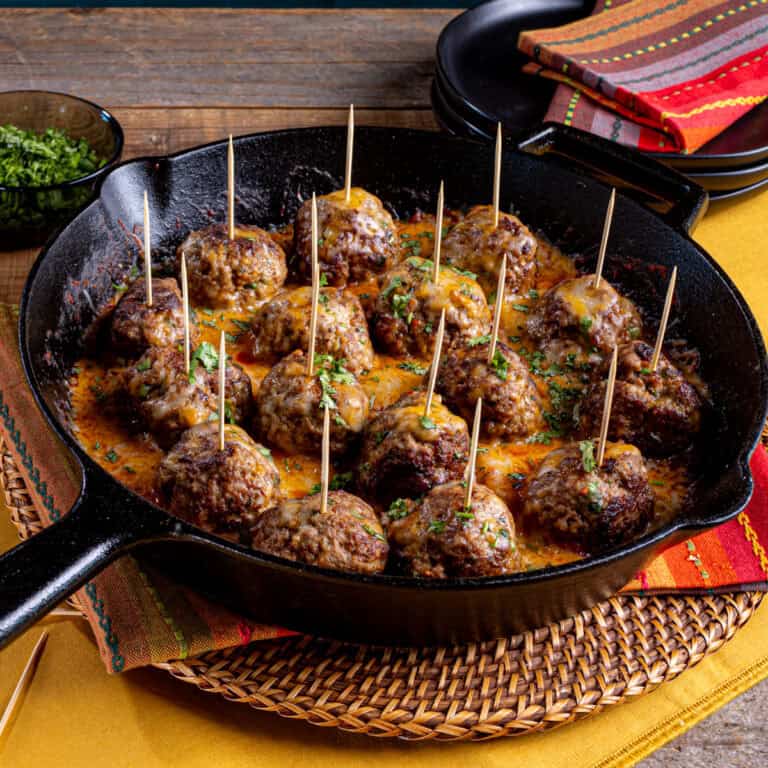
Carne Asada Tex Mex Meatballs
40 min Carne asada tex mex meatballs with Spanglish Asadero seasoning — seared hard, simmered in chipotle tomato sauce, finished with melted cheese. 40 minutes.
-
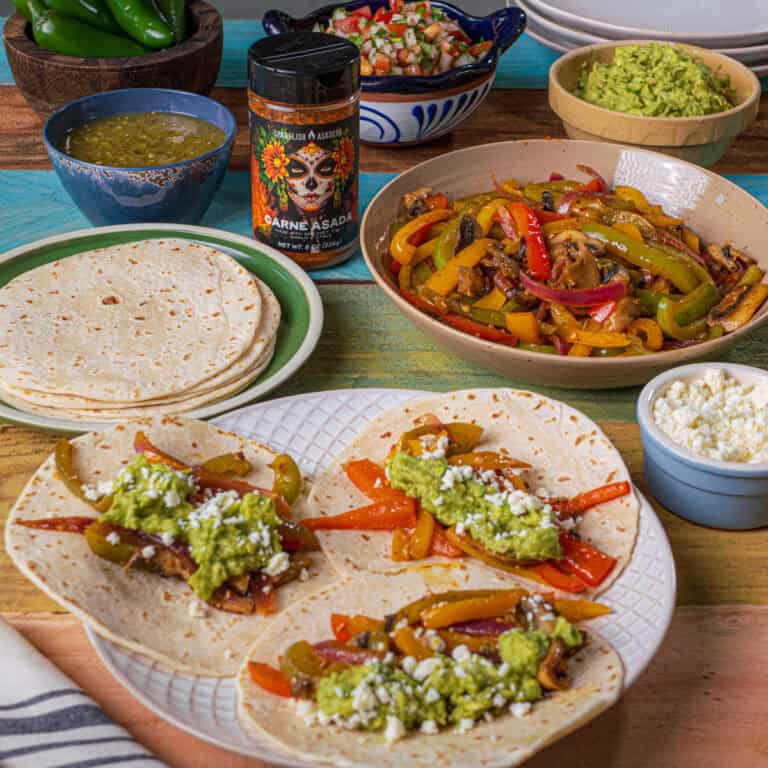
Carne Asada Seasoned Fajita Veggies
15 min Carne asada seasoned fajita veggies in 15 minutes. Bell peppers, red onion, and mushrooms seared with Spanglish Asadero seasoning — one pan, bold flavor.
-
Carne Asada Seasoned Crema
2 min Carne asada seasoned crema made with Spanglish Asadero seasoning, Mexican crema, and fresh lime. Two-minute mix, 30-minute rest, ready to drizzle over tacos.
-
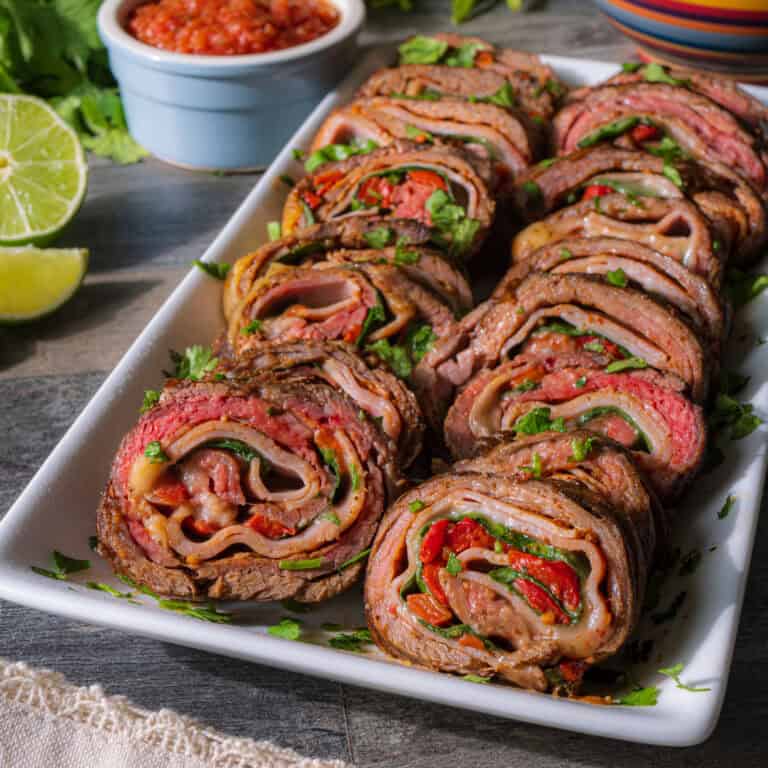
Carne Asada Rollitos de Carne with Spanglish Asadero Seasoning
50 min Carne asada rollitos de carne: flap meat seasoned with Spanglish Asadero, seared hard, roasted to 135°F, and sliced into rounds. Ready in 50 minutes.
Frequently Asked Questions
What temperature should steak be cooked to?
Pull it about five degrees below where you want it, because it keeps climbing while it rests. For a finished result: 130 to 135 for medium rare, 135 to 145 for medium, 145 to 155 for medium well. Medium rare is where most cuts on this page are at their best, particularly ribeye and strip. Tri-tip is worth taking to a true medium rare and no further, since it firms up quickly past that.
How long should steak rest?
About five minutes for a single steak, ten to fifteen for a large roast like a tri-tip. Resting lets the muscle fibers relax and reabsorb the juice that heat pushed toward the center. Cut too early and that juice runs onto the board instead of staying in the meat. Rest it uncovered on a rack or a warm plate, since covering it tightly with foil softens the crust you just spent effort building.
Why is my steak gray instead of seared?
Moisture, almost always. A wet surface has to boil off before the meat can brown, and while that is happening the steak is steaming rather than searing. Pat it thoroughly dry with paper towel, and for a better result leave it uncovered on a rack in the fridge for a few hours first. The other common cause is a pan or grate that simply is not hot enough, or too many steaks crowded onto it at once.
Which way do I slice steak?
Against the grain, and it matters most on exactly the cuts where people forget. Look at the surface and find the direction the muscle fibers run, then cut across them rather than along them. That shortens every fiber and is the difference between tender and chewy on skirt, flank and tri-tip. Tri-tip is the awkward one, because the grain changes direction partway through the roast, so cut it in two at the bend and slice each piece separately.
More from FlavorMade
- Burger & Slider Recipes: the ground beef half of the library
- BBQ Rib Recipes: beef ribs and the long cooks
- Grilling Recipes: everything else on the fire
- Kinder’s Recipes: the rubs and marinades used here