Ribeye Cheesesteaks with Caramelized Onions and Provolone
Ribeye Cheesesteaks with Caramelized Onions and Provolone
Most cheesesteaks fail at the steak itself, sliced too thick, cooked too fast, turned to shoe leather before the cheese even hits it. Here’s why that happens and how to stop it.
Griddle work that feeds a room in shifts, filed with our game day recipes.
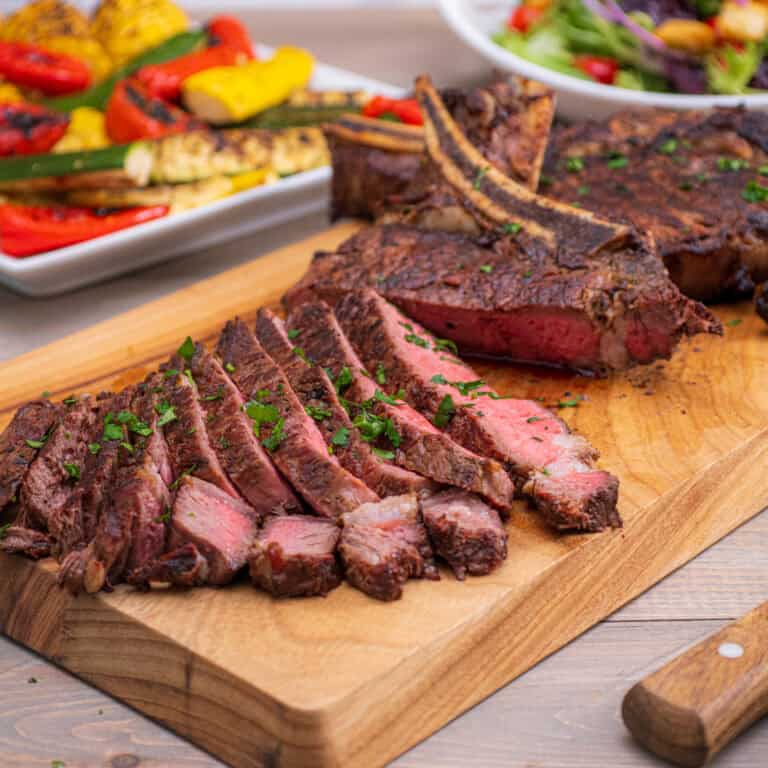
It starts with the freezer. Put the ribeye in for 15–20 minutes before you slice it. Partially frozen meat firms up enough to cut clean, even quarter-inch slices without the beef compressing or tearing under the knife. That thin slice is everything: it sears in 60 seconds a side, stays tender, and picks up a golden crust instead of steaming through in its own moisture.
Build the flavor in layers. Start with the vegetables, onion, bell peppers, mushrooms in butter over medium-high heat. Give the onions the full 5 minutes. You want them golden and slightly sweet, not just translucent. That golden color is caramelized sugar, not steam. It’s a different flavor entirely. Don’t rush it.
Pull the vegetables out. Crank the heat to high. Lay the ribeye in a single layer and let it sit untouched for a full minute before you flip it. You’re listening for the sizzle to settle, not watching for color. That contact with a hot pan is where the crust forms. Season after, not before, to keep the surface dry for a proper sear.
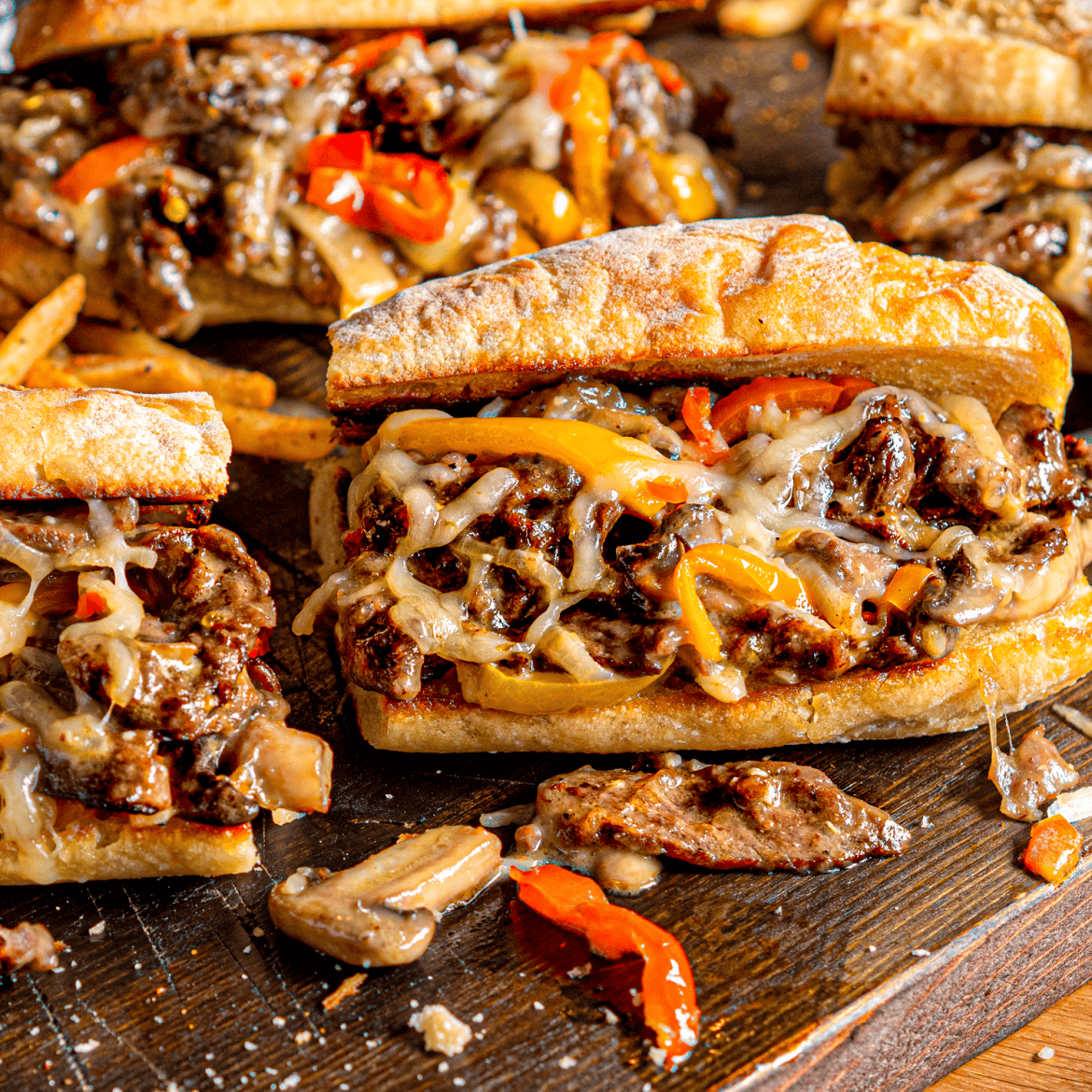
Then the move that closes it out: add the vegetables back, drop the heat, and place the hoagie rolls open-face on top of the filling with the provolone facing down. The residual heat from the pan melts the cheese into the roll while the steak and vegetables stay warm underneath. No oven, no broiler needed. Pile it high and serve immediately.
Thin-sliced ribeye. Sweet caramelized vegetables. Provolone pulled from the deli counter, fully melted before it ever leaves the pan. No going back to lesser cheesesteaks after this.
Flavor First.
Ribeye Cheesesteaks
Ingredients
Equipment
Method
- Slice the ribeye steak as thinly as possible—about 1/4 inch thick. Partially freezing the steak for 15-20 minutes beforehand makes slicing easier.
- Dice the onion, slice the bell peppers into strips, and slice the mushrooms. Have all vegetables prepped and ready to go.
- Heat 2 tablespoons of butter in a large skillet over medium-high heat.
- Add the diced onion and sliced bell peppers to the hot skillet.
- Sauté for 5 minutes, stirring occasionally, until the onions become translucent and the peppers are slightly softened.
- Add the sliced mushrooms to the pan and continue cooking for another 3-4 minutes.
- The vegetables should be tender with the onions slightly caramelized and golden. Transfer the cooked vegetables to a plate and set aside.
- Return the now-empty skillet to the heat and increase temperature to high.
- Arrange the thinly sliced ribeye steak in a single layer in the hot pan. Do not crowd the pan—work in batches if necessary.
- Cook the steak for 1-2 minutes, allowing it to develop a golden crust.
- Flip the pieces and cook the other side for another 1-2 minutes until just cooked through.
- Season the cooked steak with salt and pepper to taste.
- Reduce heat to low.
- Add the cooked vegetables back to the pan with the cooked steak.
- Cut the hoagie rolls in half lengthwise and open them flat like a butterfly.
- Place 2 slices of provolone cheese on the bottom half of each hoagie roll.
- Transfer the cheese-topped rolls to the warm skillet with the steak and vegetable mixture.
- Stir and mix the steak and vegetables together, allowing the cheese to begin melting from the residual heat.
- Once the cheese is mostly melted (about 2 minutes), divide the warm steak and vegetable mixture evenly between the two bottom roll halves, piling it high.
- Top with the remaining cheese slices if desired.
- Place the top halves of the rolls on top of the filling.
- Transfer to plates and serve immediately while warm and the cheese is still melted.
Nutrition
Notes
- Freeze before you slice — 15–20 minutes in the freezer firms the ribeye enough to cut clean, even quarter-inch slices. Thicker cuts won’t sear properly and end up chewy.
- Don’t rush the caramelization — Give the onions and peppers the full 5 minutes over medium-high heat. You want the onions golden and slightly sweet. That caramelization doesn’t happen fast, and you can’t add it back later.
- High heat, single layer — When the steak hits the pan, it needs room and heat. Crowding drops the temperature and steams the beef instead of searing it. Work in batches if your pan can’t hold everything flat.
- Deli counter provolone only — Pre-packaged slices are drier and don’t melt smoothly. Deli-sliced provolone goes soft and even under heat — that’s the pull you’re after.
- Season after the sear — Salt draws moisture out of the steak before it hits the pan. Let the crust form first, then season. Better texture, better crust.
- Cheesesteaks are a full meal on their own, but the right side makes it a proper plate.
- Shoestring fries or thick-cut steak fries are the obvious call — something crispy to balance the soft roll and melted cheese. Make them yourself or use a good frozen fry. Hot and salted.
- A vinegar-dressed cabbage slaw works well if you want something lighter. The acidity cuts through the richness of the ribeye and provolone without fighting the sandwich. A few pickled peppers on the side do the same with less prep.
- Drink-wise, go cold and simple — lemonade, iced tea, or a crisp lager. Anything that doesn’t compete with the beef.
- If you’re scaling up, double the filling and hold it in the pan over low heat for 10 minutes max before assembling. Keep extra rolls warm in a 200°F oven. The filling holds; the rolls don’t — assemble to order.
- Ribeye cheesesteaks are best eaten right off the pan. Once assembled, the rolls absorb moisture quickly and the cheese sets — don’t try to reheat a built sandwich.
- The steak and vegetable filling stores well on its own. Transfer to an airtight container and refrigerate for up to 3 days. Reheat gently in a skillet over low heat — just until warm, not bubbling. Add a small splash of water or beef broth if the filling looks dry.
- Toast or warm fresh hoagie rolls, spoon in the hot filling, and let the heat from the beef melt a fresh slice of provolone before you close it. Same result as the first time.
Tried this recipe?
Let us know how it was!Frequently Asked Questions
What’s the best cut of steak for a cheesesteak?
Ribeye is the standard, the marbling keeps it tender even when cooked fast over high heat. Shaved sirloin or beef round works in a pinch but won’t have the same richness.
How do you slice ribeye thin enough for cheesesteaks?
Freeze the steak for 15–20 minutes first. Partially frozen meat is much easier to cut thin and even. Use a sharp knife and slice against the grain.
Can I use Cheez Whiz instead of provolone?
Yes, it’s the Philly purist’s choice. Warm it in a small saucepan and pour it directly over the filled roll. Provolone is cleaner if that’s what you’re after, but both work.
What roll works best for a cheesesteak?
A soft hoagie roll with a slight crust, sturdy enough to hold the filling without going soggy, soft enough to compress when you bite. Italian hoagie rolls or bakery sub rolls both work. Avoid anything too crusty that fights back.
Can I make the filling ahead of time?
Yes. The steak and vegetable mix keeps in the refrigerator for up to 3 days. Reheat in a skillet over low heat and assemble fresh on warm rolls just before serving. Don’t pre-assemble, the rolls won’t hold.
More like this: Steak & Beef Recipes · Kinder’s Recipes
One Good Recipe a Week
No spam, no life stories. A recipe worth cooking, in your inbox.