
Pulled pork is the highest-yield cook in barbecue and the one most worth planning around. A single shoulder runs eight to twelve hours largely unattended, and what comes off it feeds people for days in forms that look nothing like each other. That is the real argument for it. You are not cooking dinner, you are cooking a week of dinners that happen to start from the same pan. Almost everything on this page after the first section is built on that idea: the cook happens once, and then it becomes sliders, then fries, then poppers, then breakfast.
The cook and the sandwich
Start here. Everything below this section is what happens next.
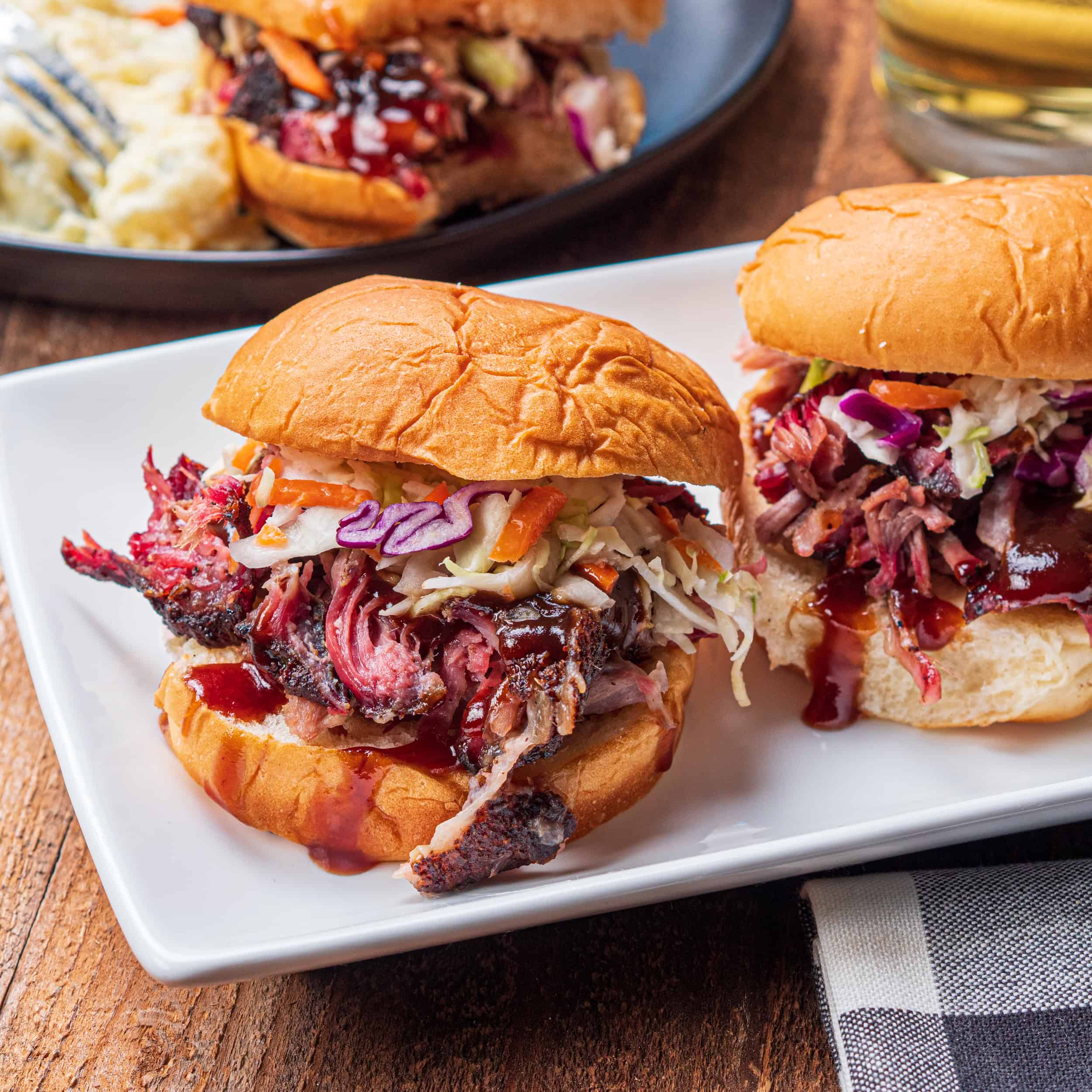
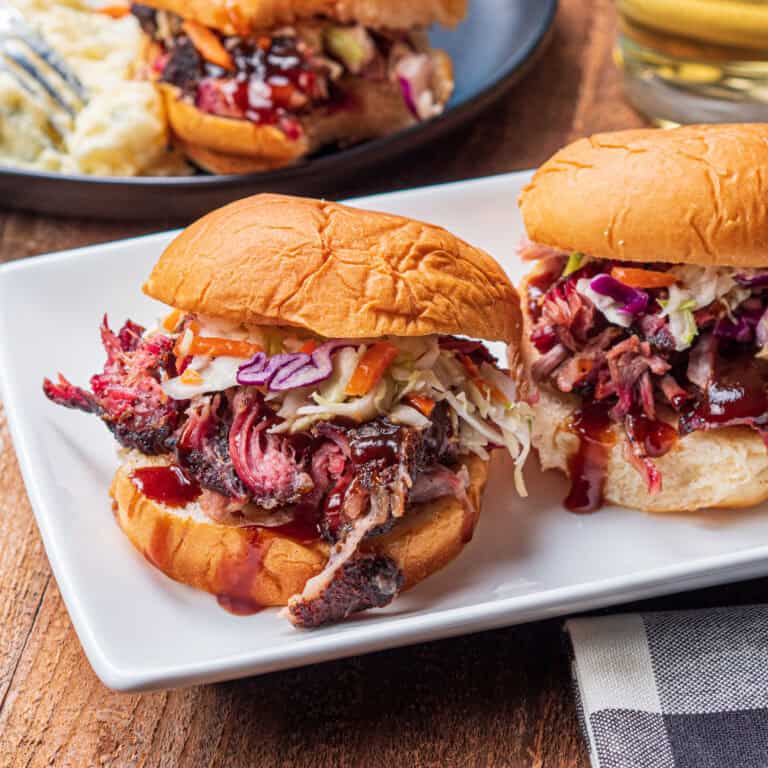
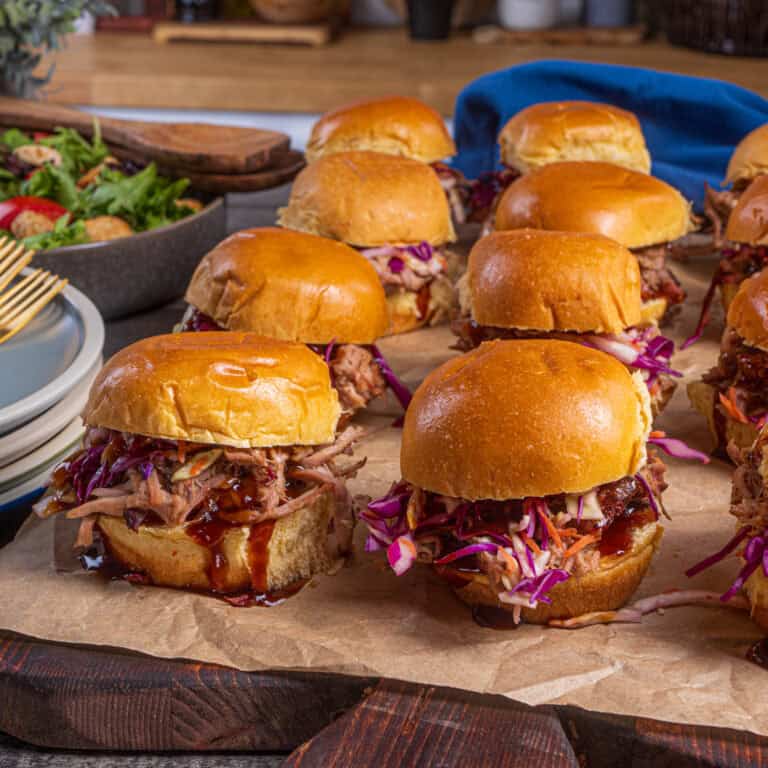
Smoked Pulled Pork Sliders
The straight version: shoulder smoked until it gives, pulled, piled on soft rolls. Sauce goes on at the table so the bread has a chance.
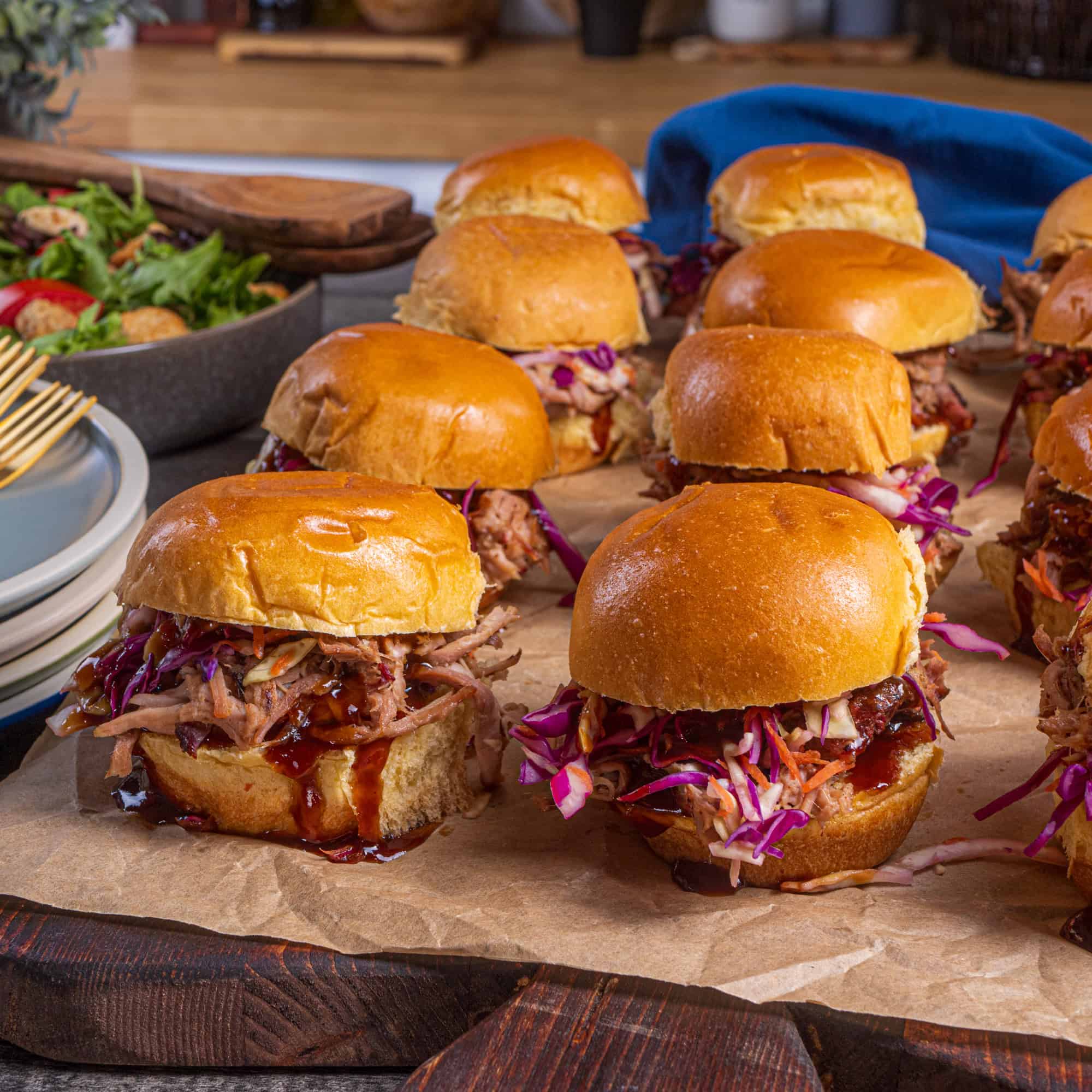
Hickory Brown Sugar Pulled Pork Sliders
Sweeter rub, same structure. The brown sugar builds a darker bark, so watch the outside more closely through the back half of the cook.
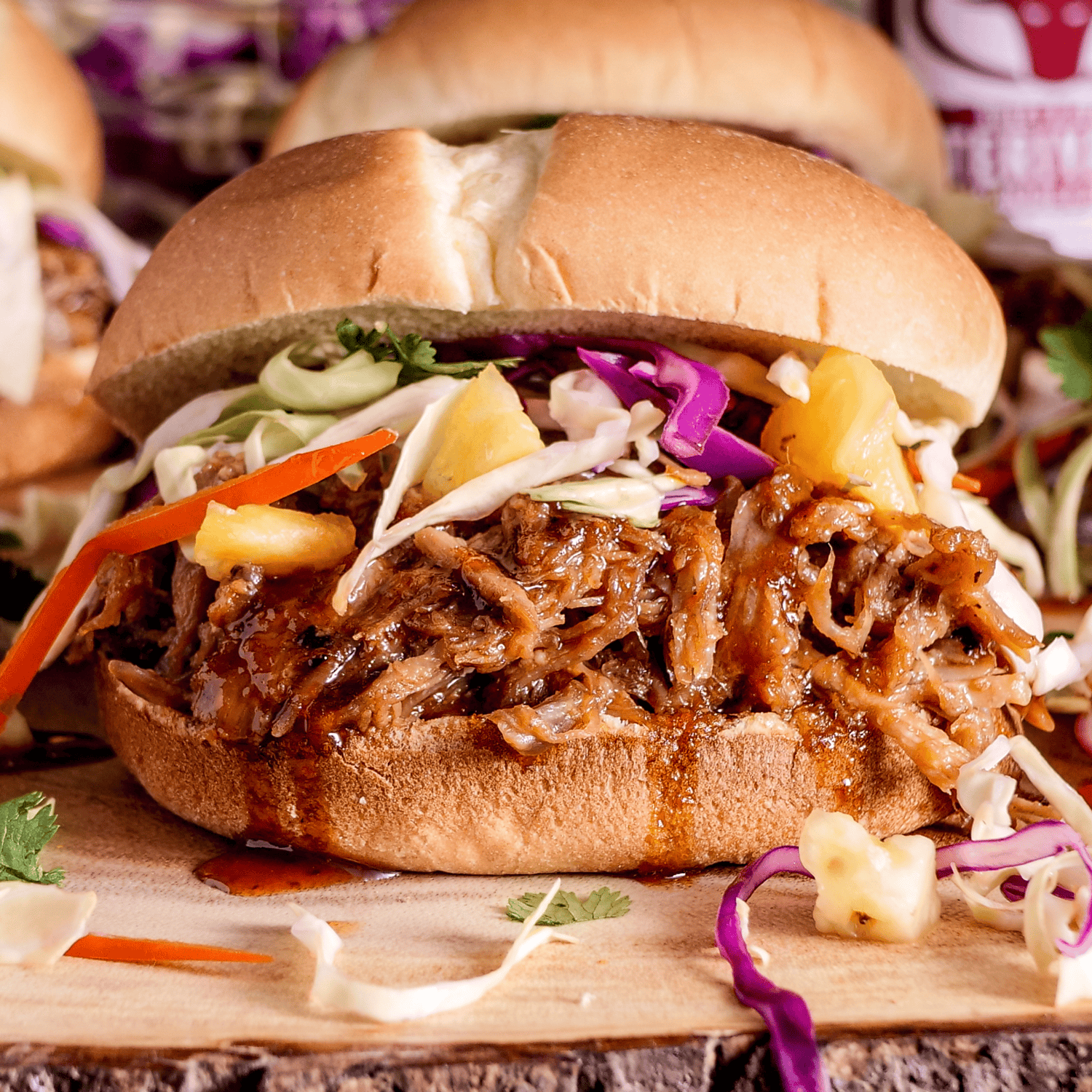
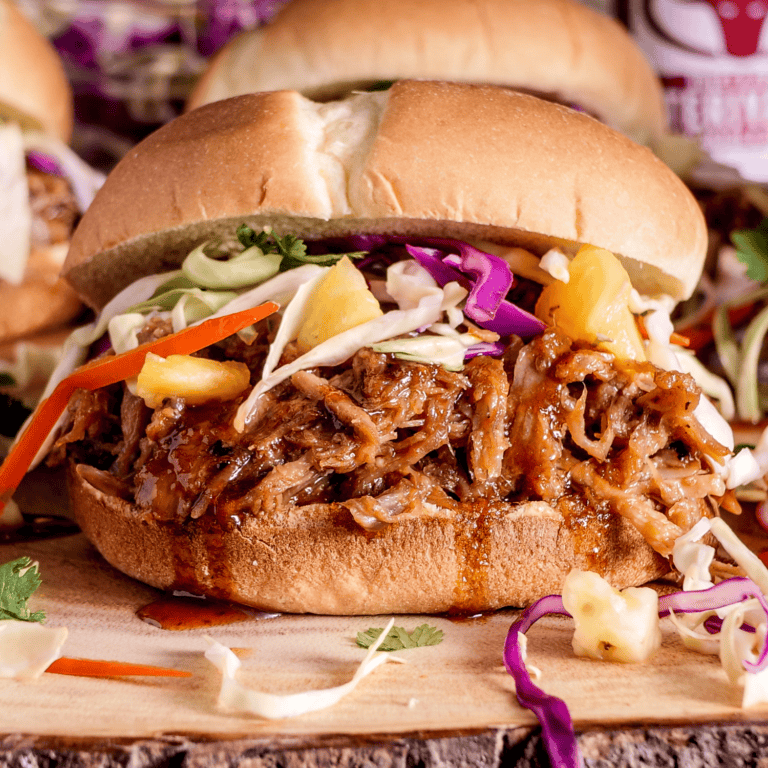
Sweet and Spicy Pulled Pork Sandwiches with Spicy Pineapple Slaw
The slaw is doing structural work here, not decoration. Acid and crunch against soft rich pork is the whole reason the sandwich holds together as an idea.
Piled on something
Where most of a shoulder actually goes, and the reason it is worth cooking a big one.
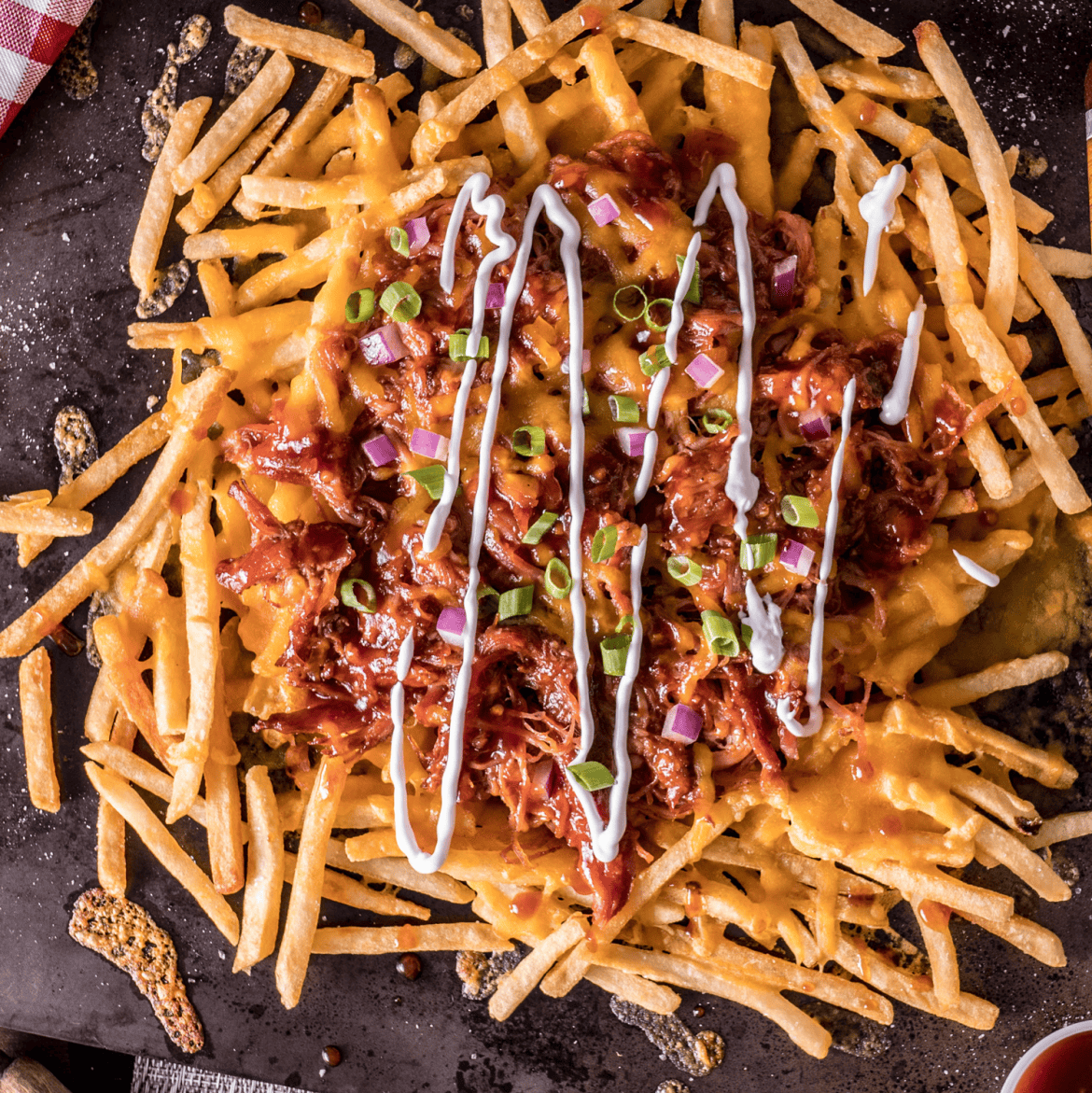
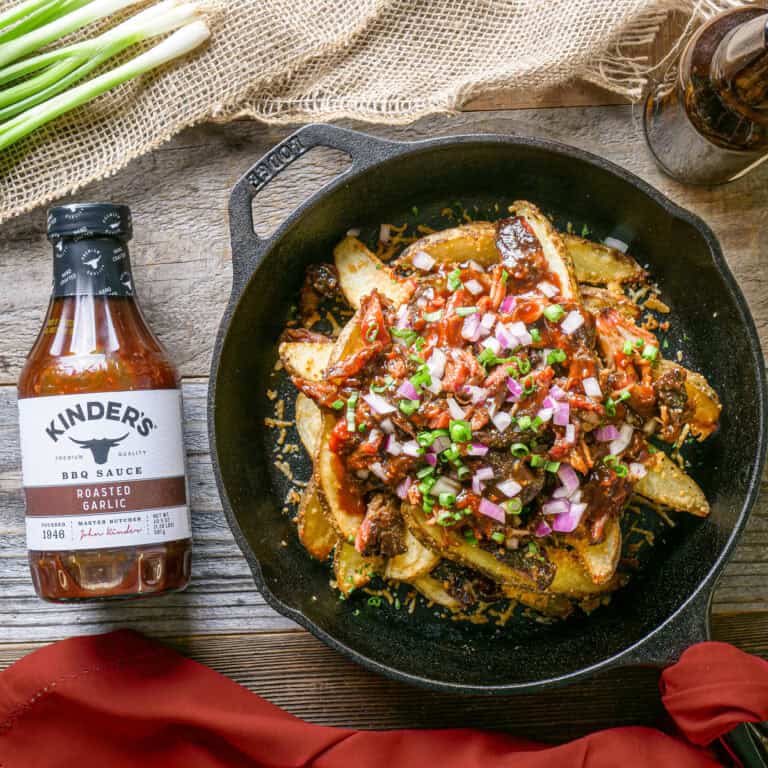
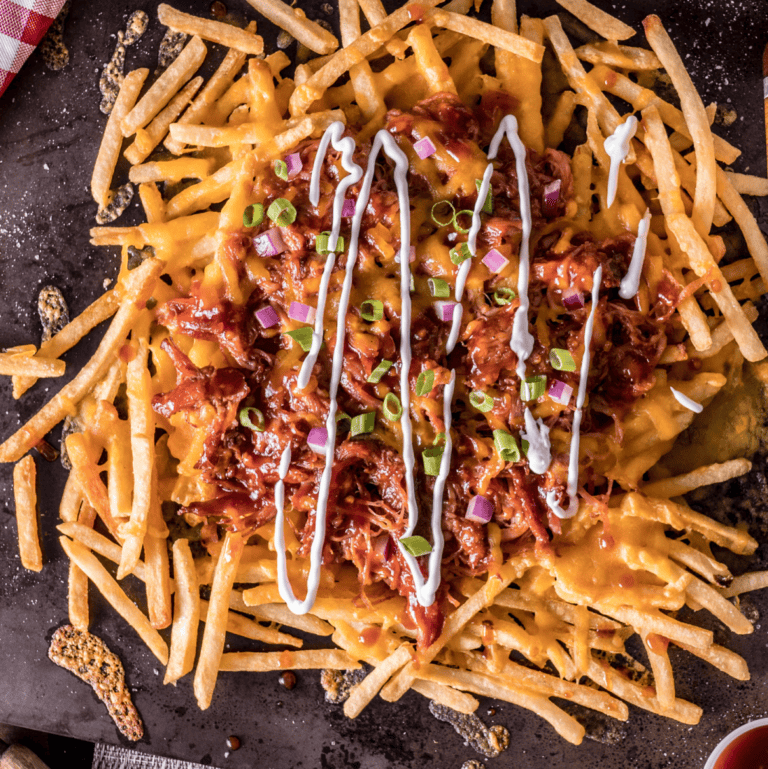
Roasted Garlic BBQ Pulled Pork Loaded Fries
Fries have to be crisp enough to survive contact, which means baking them harder than feels necessary before anything goes on top. Assemble at the last second.
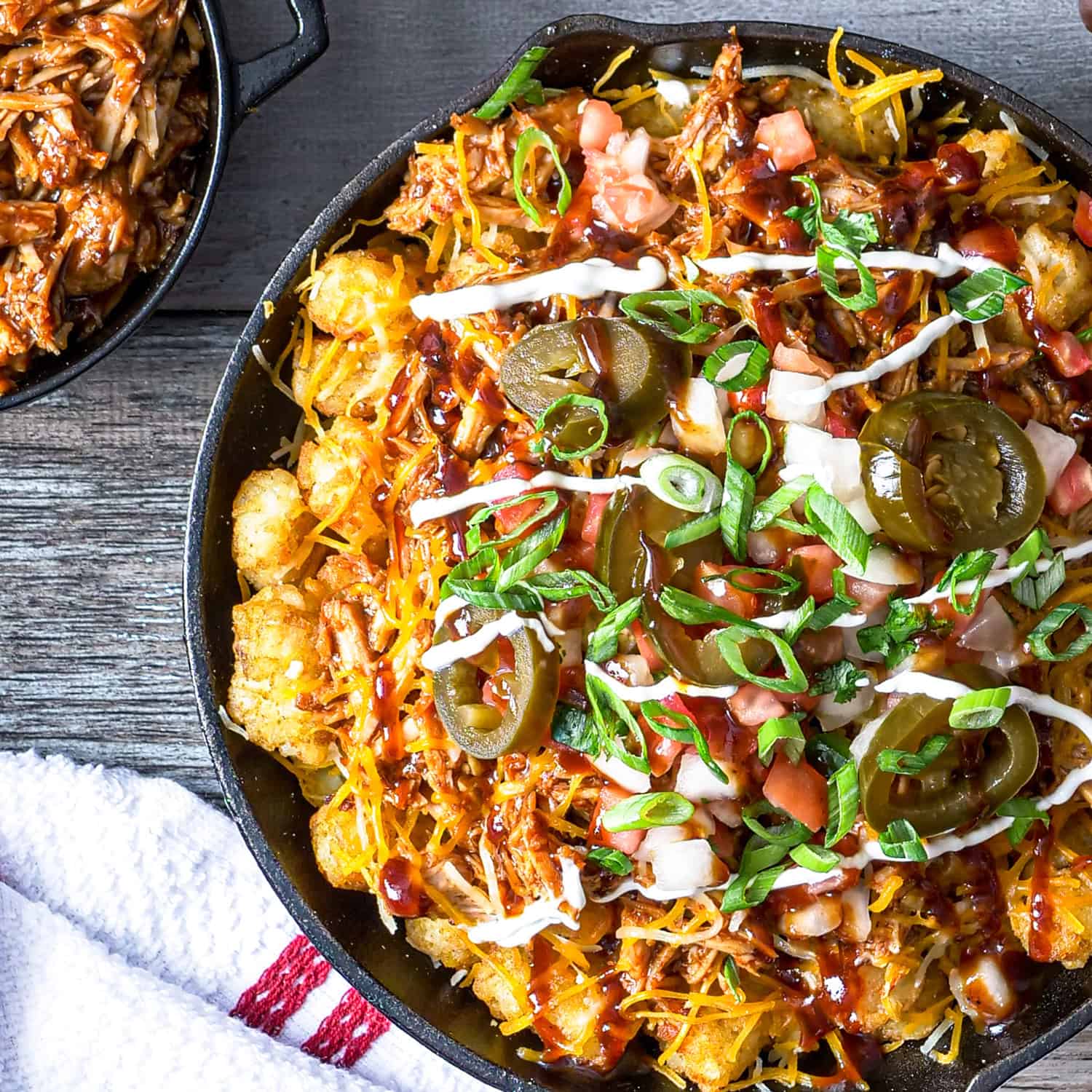
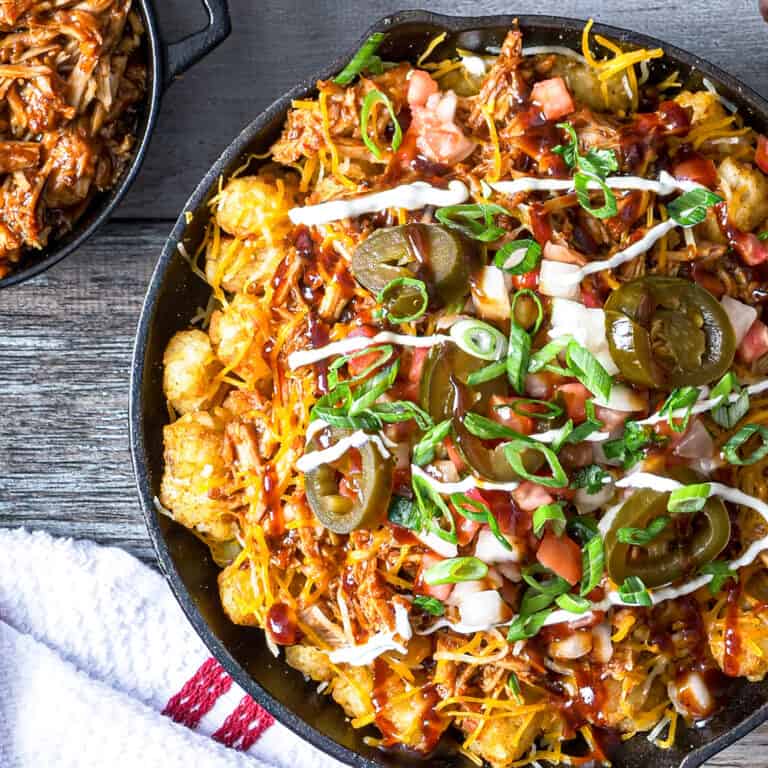
Loaded Totchos with BBQ Pulled Pork
Tots instead of chips, which hold up under weight far better. Build in a single layer rather than a pile so the middle actually gets heat.
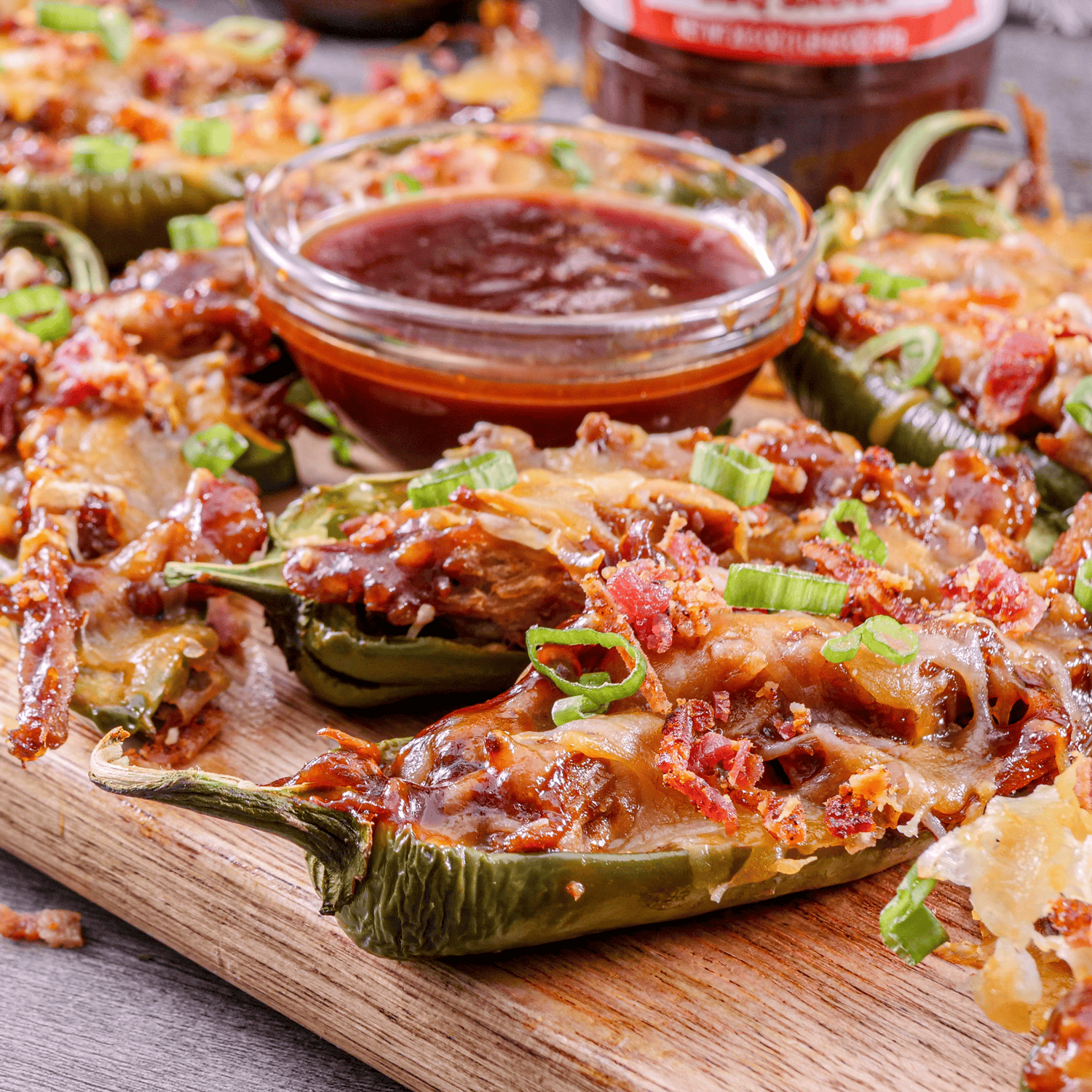
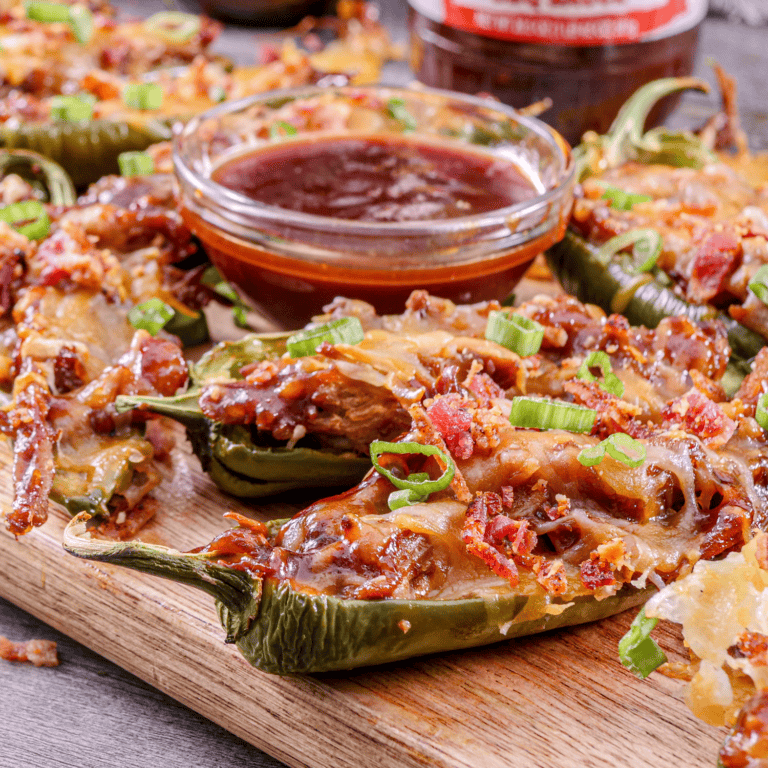
Pulled Pork Jalapeño Poppers
Leftover pork folded into the filling, which turns a starter into something substantial. Seed the peppers unless you know your crowd.
Pulled chicken, and breakfast
A faster cook and the best use of what is left in the fridge on day three.
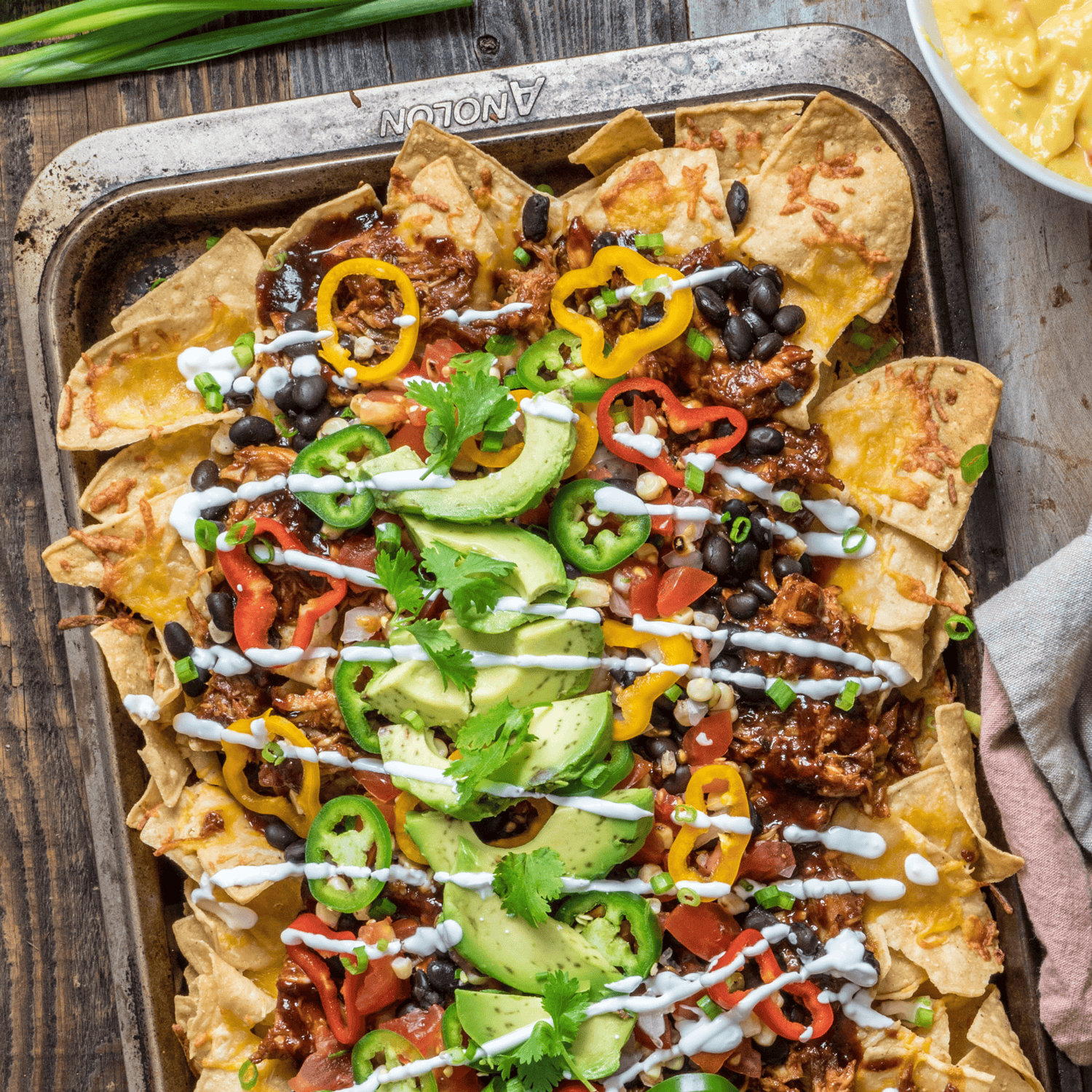
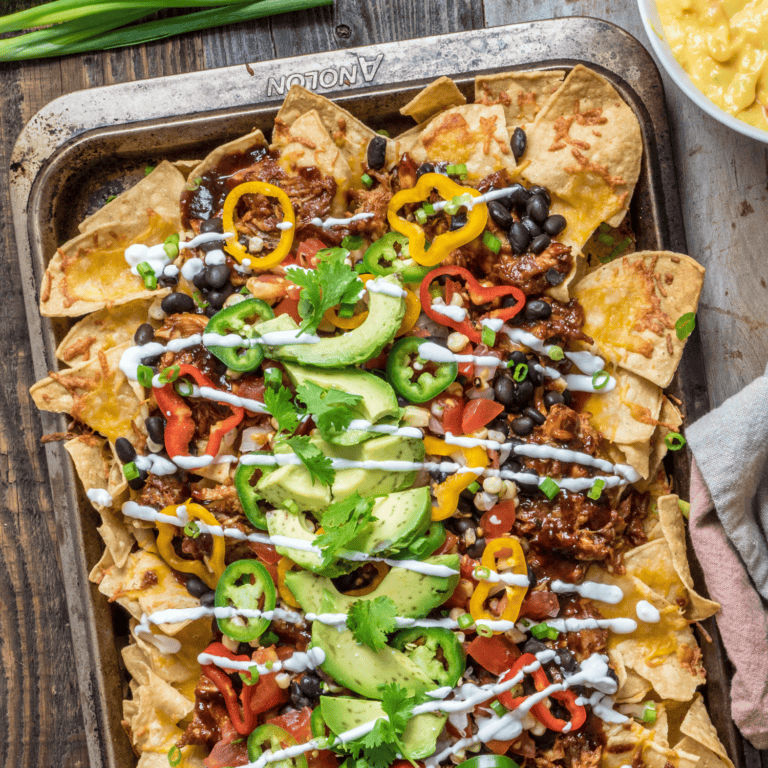
Spicy Roasted Garlic Pulled Chicken Nachos
Pulled chicken gets you most of the way to the same texture in a fraction of the time. Thighs only; breast shreds dry.
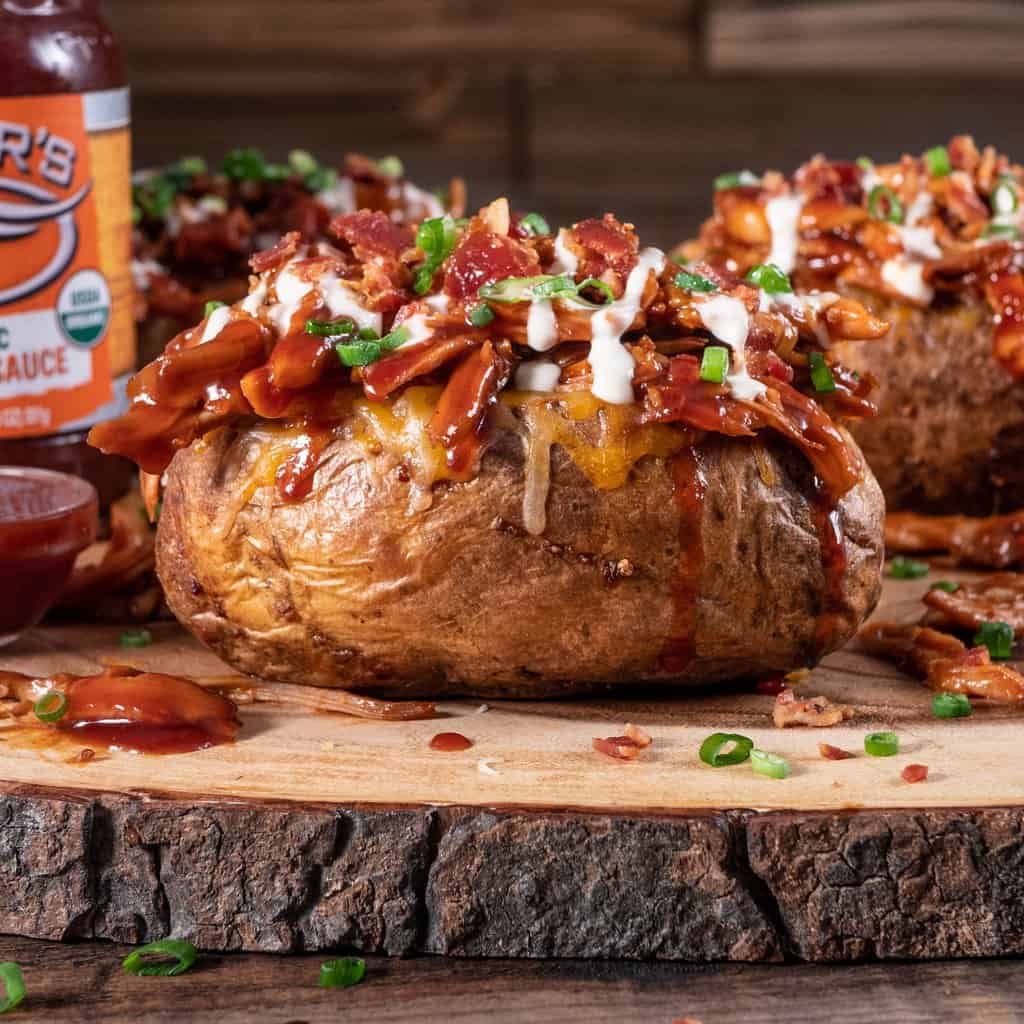
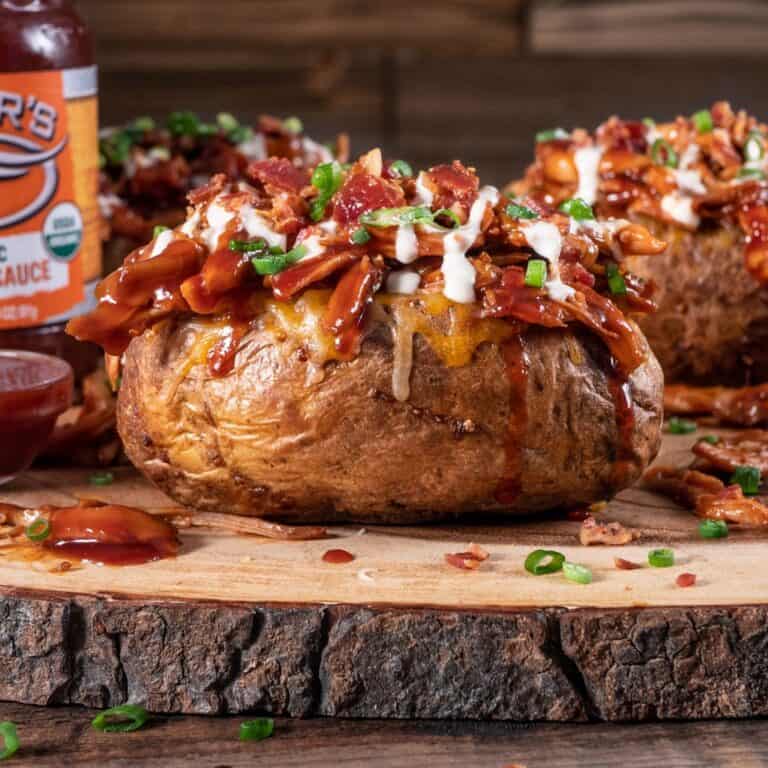
BBQ Pulled Chicken and Bacon Loaded Baked Potato
A baked potato is the most underrated vehicle on this list. Bake it dry and unwrapped so the skin is worth eating.
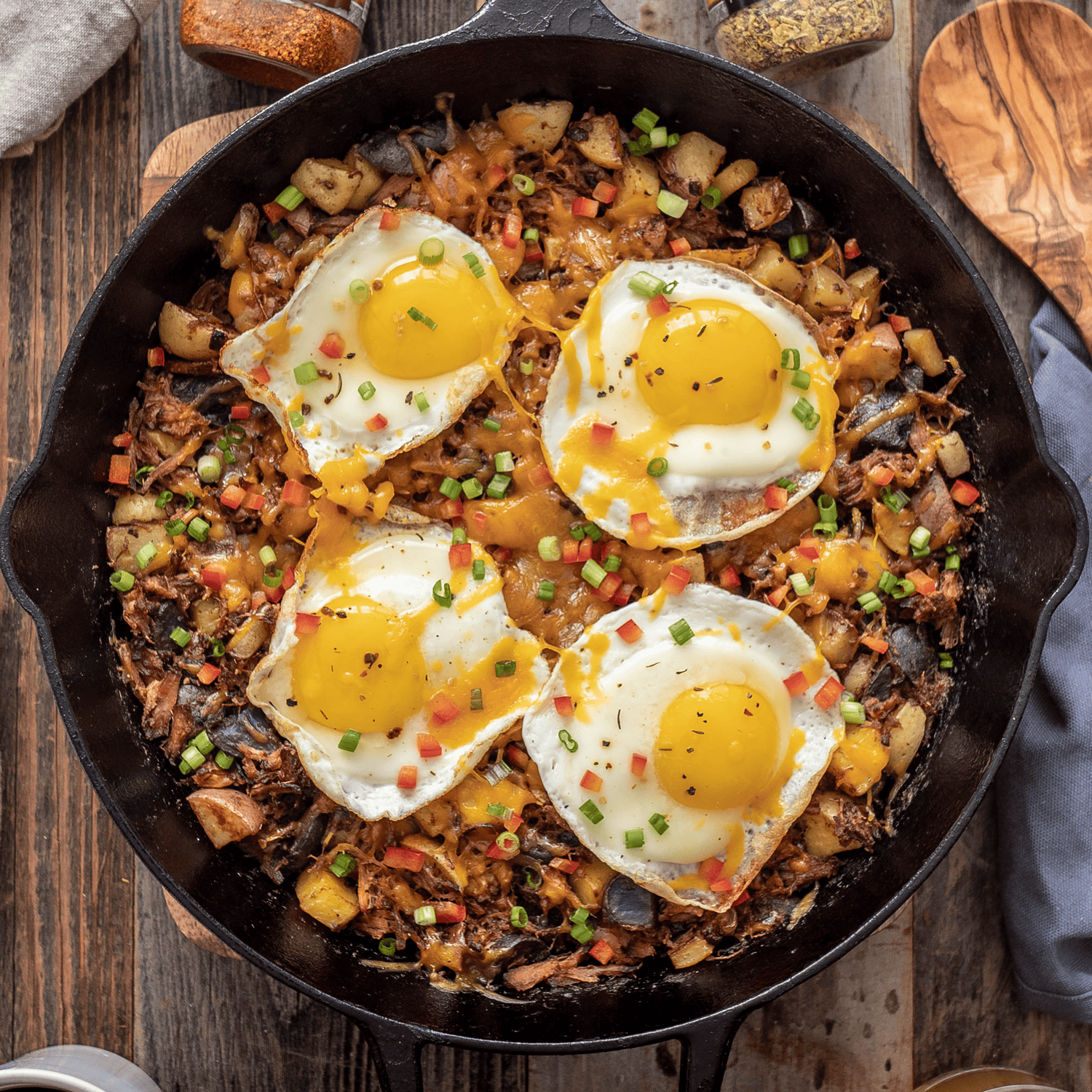
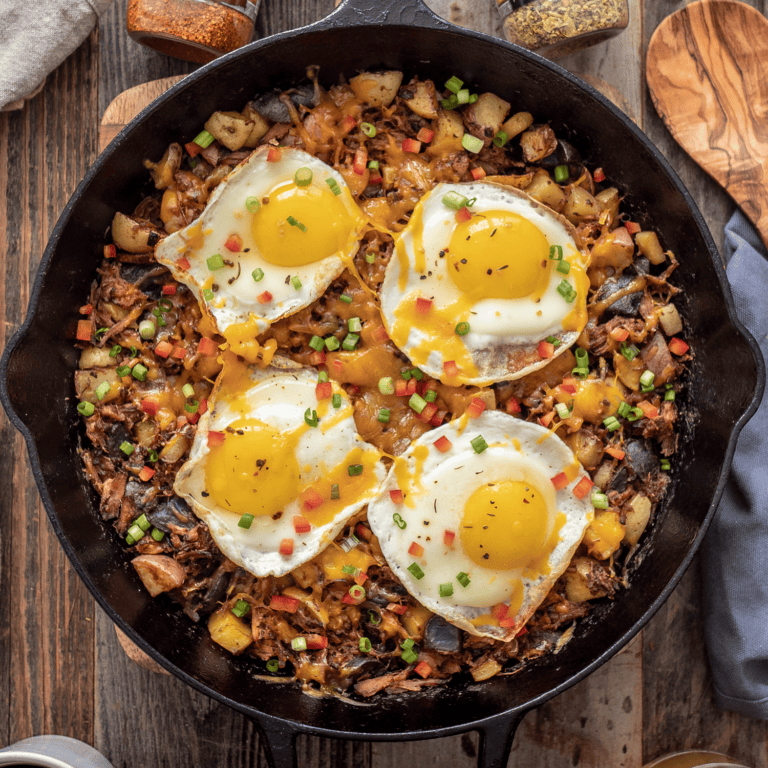
Pulled Pork Hash with Eggs Over Cheesy
Day three, and arguably the best day. Get the pork crisp in the pan before anything else joins it, because reheated pork with no crust is just warm.
How to Run a Shoulder
The cook itself is simple enough to describe in a sentence and hard to rush. Pork shoulder, seasoned heavily because it is a thick cut and salt has a long way to travel, held at a steady low temperature until the connective tissue gives up completely. That is somewhere around 203 degrees, and the number matters more here than it does with almost anything else, because shoulder does not become pullable gradually. It is tough, and then it is tough, and then it is suddenly not. Pull it early and you get sliceable pork that shreds badly. Pulled chicken is the same idea on a much shorter clock, which is why it shares this page.
Every pulled pork and pulled chicken recipe
-
Roasted Garlic BBQ Pulled Pork Loaded Steak Fries
35 min BBQ pulled pork loaded steak fries with roasted garlic crust and sharp cheddar. Two-layer build, crispy fries, melted cheese. Ready in 45 minutes.
-
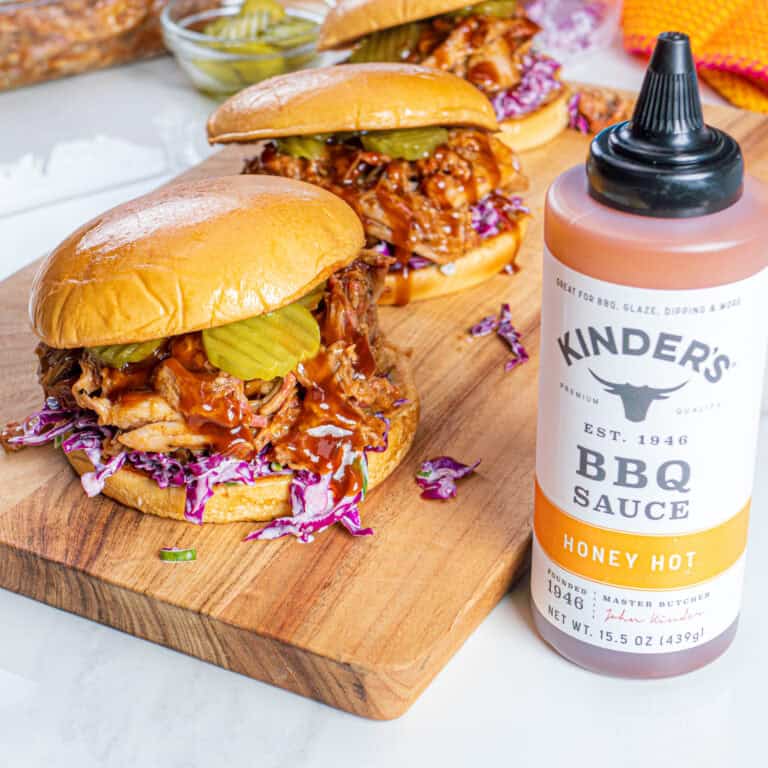
Honey Hot Pulled Pork Sandwich
8 hr 20 min Honey hot pulled pork smoked low and slow with Kinder’s rub, wrapped in beer, and tossed in Honey Hot BBQ Sauce. Served on a toasted brioche bun.
-
Smoked Pulled Pork Sliders
8 hr 20 min Classic smoked pulled pork sliders — pork shoulder rubbed with Kinder’s Brown Sugar BBQ, smoked 8–10 hours, shredded, sauced, stacked on toasted buns with slaw.
-
Hickory Brown Sugar Pulled Pork Sliders
6 hr 20 min Easy hickory brown sugar pulled pork sliders smoked low and slow with Kinder’s rub, shredded, sauced, and stacked on toasted buns with tangy slaw.
-
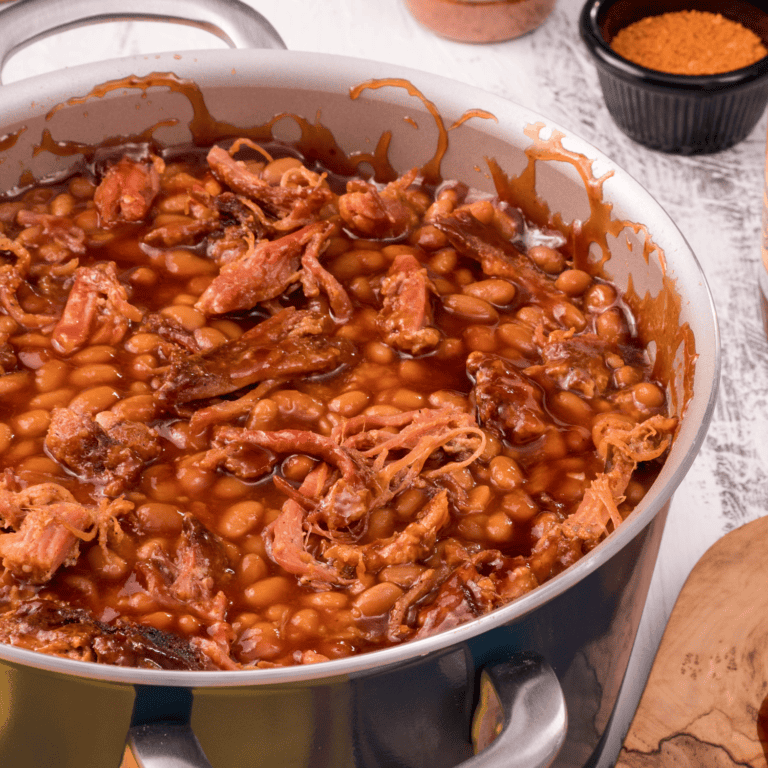
Tequila Lime Pulled Pork Baked Beans
35 min Tequila lime pulled pork baked beans: pork shoulder slow-cooked 8 hours, shredded into smoky BBQ beans with fresh lime juice cutting through every bite.
-
Sweet and Spicy Pulled Pork Sandwiches with Spicy Pineapple Slaw
35 min Sweet and spicy pulled pork sandwiches made in the Instant Pot with teriyaki, sriracha, and fresh pineapple — topped with spicy pineapple slaw.
-
Spicy Roasted Garlic Pulled Chicken Nachos
35 min Pulled chicken nachos in two layers — garlic BBQ chicken, sharp cheddar, fire-roasted corn, and jalapeño on crispy chips. Ready in 30 minutes.
-
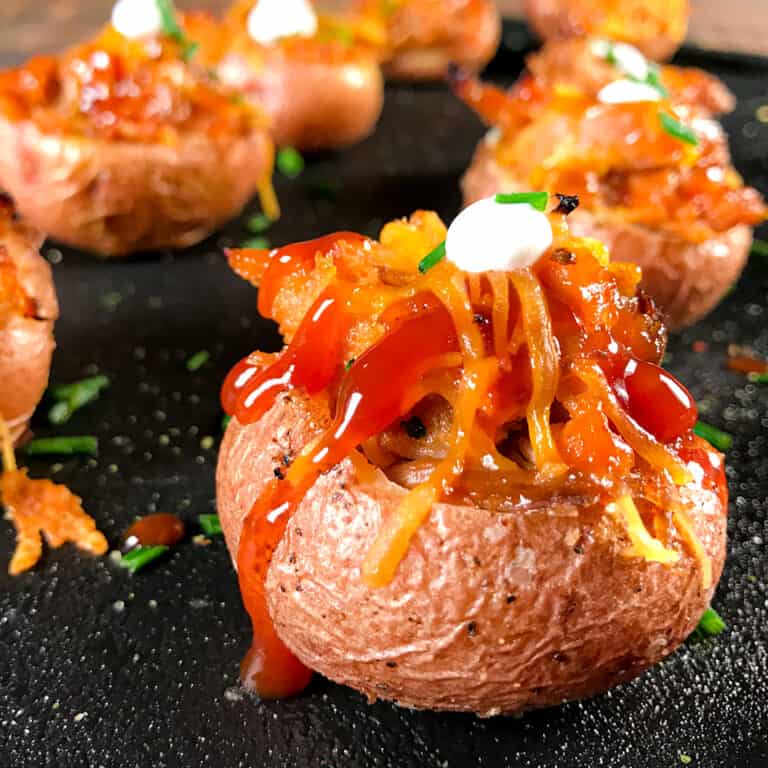
Slow Cooker Pulled Pork Mini Twice Baked Loaded Red Potatoes
35 min Slow cooker pulled pork loaded onto crispy twice-baked red potatoes with sharp cheddar, sour cream, and BBQ sauce drizzle. Make it ahead for any cookout.
-
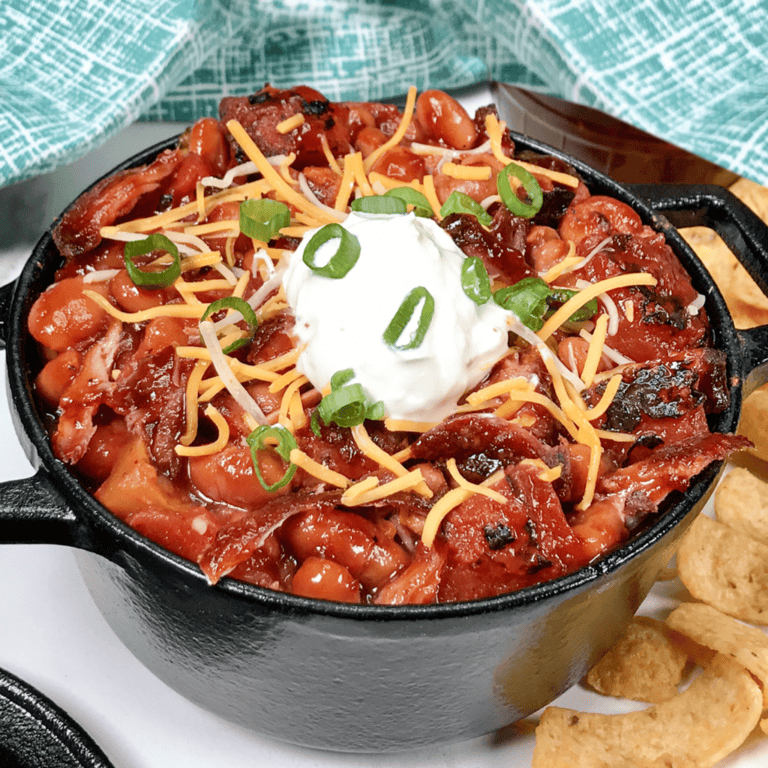
Roasted Garlic Pulled Pork Cowboy Chili
35 min Pulled pork cowboy chili — slow-cooked for 8 hours, shredded, and folded into a smoky BBQ chili base. Finish in 15 minutes and serve all week.
-
Pulled Pork Jalapeño Poppers
35 min Pulled pork jalapeño poppers loaded with BBQ-sauced pork, shredded cheddar, and crispy bacon. Bake at 375°F until the cheese is bubbly and golden brown.
-
Pulled Pork Hash with Eggs Over Cheesy
35 min Pulled pork hash with eggs in a cast iron skillet — crispy potatoes, smoky shredded pork, melted cheddar, and runny yolks. Ready in 30 minutes.
-
Loaded Totchos with BBQ Pulled Pork
35 min Loaded totchos topped with BBQ pulled pork, melted cheddar, pico de gallo, and jalapeños. Baked crispy at 450°F and on the table in under 35 minutes.
-
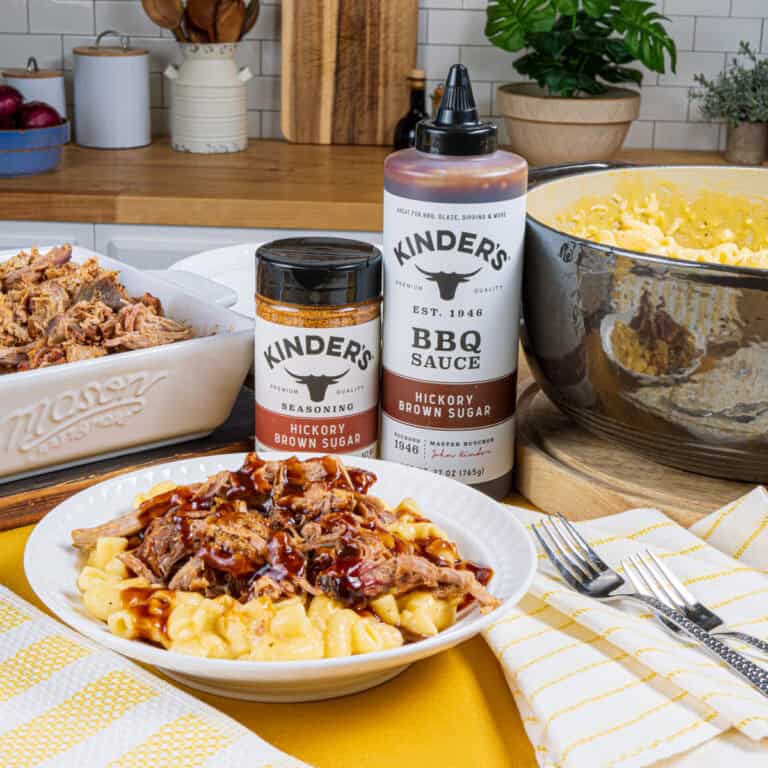
Hickory Brown Sugar Pulled Pork Mac ‘N’ Cheese
6 hr 30 min Hickory brown sugar pulled pork mac and cheese — smoked low and slow, built on Kinder’s seasoning, creamy Gruyere, and a sticky BBQ drizzle.
-
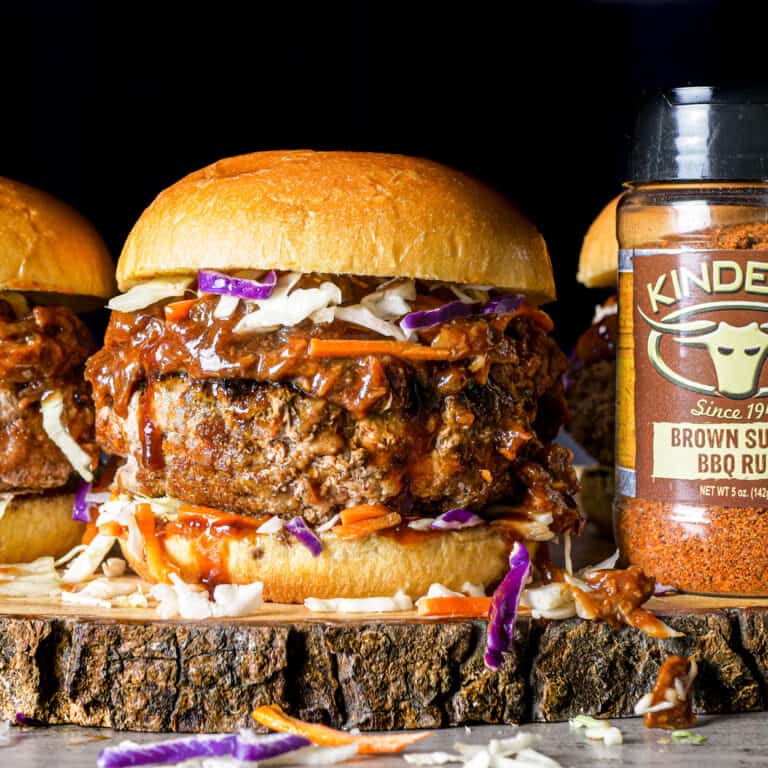
Brown Sugar Pork Burger with Pulled Pork
35 min Pork burger recipe with a Kinder’s Brown Sugar Rub crust, grilled to 145°F and topped with warm pulled pork and creamy coleslaw on a toasted bun. Serves 4.
-
Roasted Garlic BBQ Pulled Pork Loaded Fries
35 min BBQ pulled pork loaded fries built on a roasted garlic rub, sharp cheddar, and fresh onion. Slow cook the pork. Assembly takes fifteen minutes.
-
BBQ Pulled Chicken & Bacon Loaded Baked Potato
35 min Loaded baked potato recipe piled with BBQ pulled chicken, crispy bacon, and melted cheddar. Baked until skins are crackling — on the table in about an hour.
Frequently Asked Questions
What cut do I use for pulled pork?
Pork shoulder, sold as either Boston butt or picnic shoulder. Boston butt is the upper section and the better choice: it is more evenly marbled, more uniform in shape, and more forgiving over a long cook. Look for one with a solid fat cap and plenty of intramuscular fat. Loin and leg cuts are far too lean and will never pull properly no matter how long you run them.
What temperature is pulled pork done at?
Around 203 degrees internal, and this is one of the few places where the number really is the answer. Shoulder does not soften gradually, it holds tough and then transforms as the collagen finally breaks down into gelatin. Just as useful as the thermometer is the feel: the probe should slide in with no resistance at all, and the blade bone should pull clean out of the meat with almost no effort.
What is the stall, and should I wrap?
Somewhere around 150 to 165 degrees the internal temperature stops climbing, sometimes for hours. That is evaporative cooling, the meat sweating as fast as the cooker heats it, and it is completely normal. Wrapping in foil or butcher paper pushes through it faster by stopping the evaporation. The trade is bark: foil softens it considerably, paper less so, and going unwrapped gives you the best crust and the longest cook.
Can I make pulled pork without a smoker?
Yes, and two of the recipes here assume you have not got one. A slow cooker gets you genuinely tender pork with none of the smoke, so the rub and the sauce have to carry more of the flavor. A low oven, covered, works the same way and gives you better bark. If you want smoke character without a smoker, finish either one under a hot broiler or on the grill for the last stretch.
More from FlavorMade
- BBQ Rib Recipes: the other cook worth clearing a day for
- Burger & Slider Recipes: where a lot of this pork ends up
- Game Day Recipes: the spread this feeds
- Kinder’s Recipes: the rubs and sauces used here