Baked Teriyaki Salmon with Sesame and Green Onion
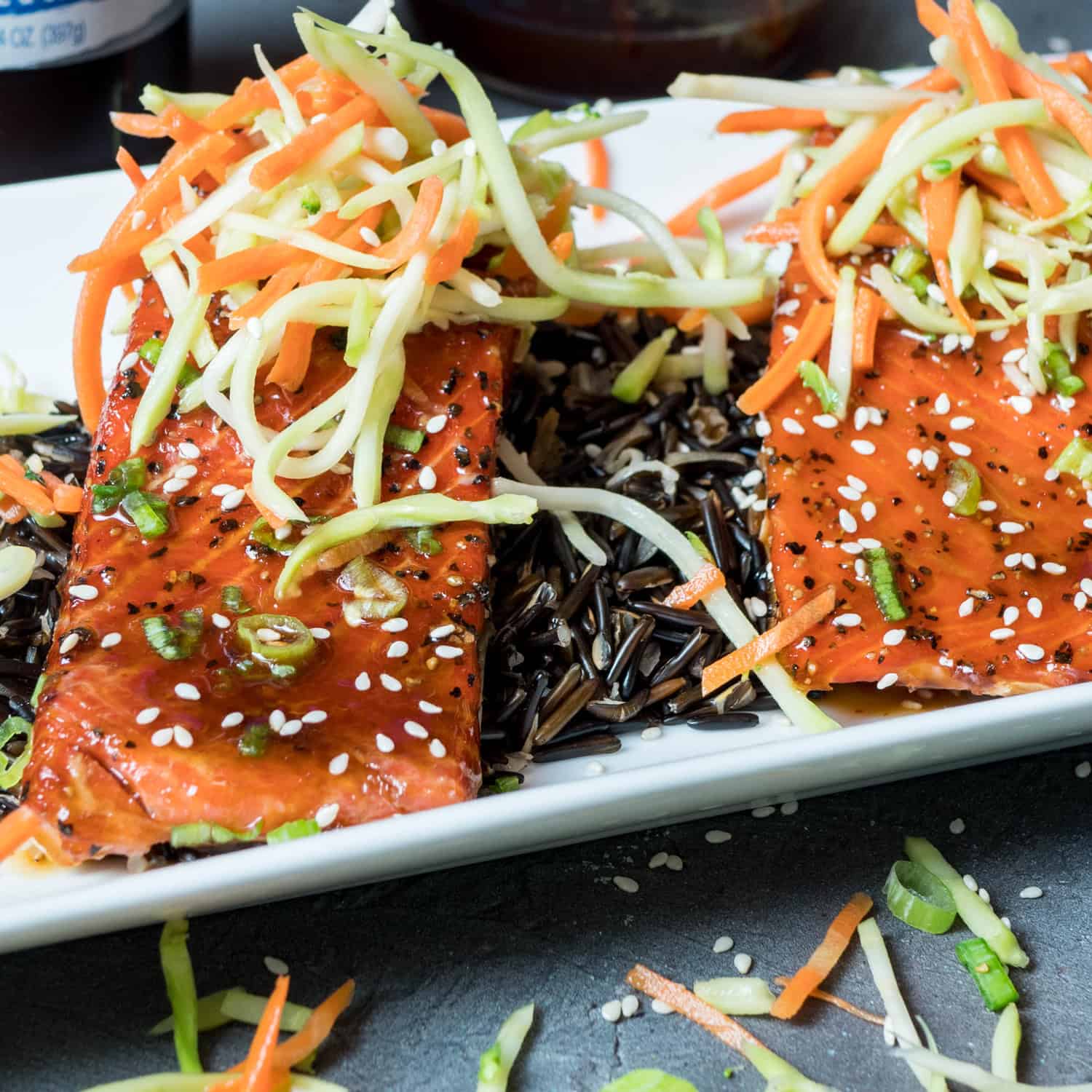
Baked Teriyaki Salmon with Sesame and Green Onion
Most baked salmon comes out dry on the edges and underseasoned through the middle. This version fixes both.
Dry edges and a bland middle, both solved by seasoning and timing. Our Kinder’s recipes live on that pair.
Wild salmon gets a 20-minute teriyaki soak before it ever touches the oven. The sauce works into the flesh, not just coating the surface but getting into the grain of the fillet. At 400°F, it bakes for 12 to 16 minutes. Right before plating, the reserved sauce goes back on as a glaze, and it tightens up on contact with the hot fish. Sesame seeds and green onions finish it.
Teriyaki on salmon is a natural pairing, the soy saltiness pulls forward the salmon’s umami, and the mirin sweetness rounds out the fat. The ratio here (3/4 sauce for the marinade, 1/4 reserved for the glaze) keeps the exterior from getting too sweet during the bake while giving you enough sauce to finish the plate properly.
Wild salmon matters here. It has deeper flavor than farmed and enough natural fat to stay moist through a 400°F bake. If wild isn’t available, Atlantic works, just watch the timing, since farmed salmon runs a little thicker and may need the full 16 minutes.
Twenty minutes in the marinade is the minimum. It’s also the window where you’re preheating the oven, so you’re not waiting on extra time. Long enough to season through, short enough that the salt in the teriyaki doesn’t start breaking down the texture.
Serve it over jasmine rice. The glaze that runs off the fillet goes into the rice. That’s the whole plate.
Flavor First.
Teriyaki Salmon
Ingredients
Equipment
Method
- Preheat the oven to 400°F.
- Place salmon in a large bowl or freezer bag and pour 3/4 of the teriyaki sauce onto it. Seal bag or cover bowl and refrigerate for 20 minutes.
- Place salmon on a baking sheet and bake for 12-16 minutes or until salmon is flaky and cooked through.
- Brush salmon with remaining teriyaki sauce and plate. Top with sesame seeds and green onions. Serve with rice or your favorite side. Enjoy!
Nutrition
Notes
- Don’t rush the marinade — 20 minutes is the minimum. It’s the difference between salmon that tastes seasoned all the way through and salmon that’s just sauced on top.
- Reserve sauce before marinating — Measure out the full cup, pour 3/4 over the salmon, and set the rest aside in a separate dish before the raw fish touches anything. Don’t cross-contaminate your finishing glaze.
- Check doneness with a fork — Press gently into the thickest part. Clean, easy flakes mean it’s done. Translucent in the center means undercooked. Chalky white throughout means overcooked.
- Pull it a minute early — Salmon carries over. At 12 minutes, check thin fillets. If it’s close, pull it and let the residual heat finish the job off the sheet pan.
- Go low-sodium if your sauce runs heavy — Different teriyaki brands hit different sodium levels. If yours is pushing past 1,000mg per serving, cut it half-and-half with low-sodium soy sauce for the same profile with more control.
- Jasmine rice is the move. Pack it into a small bowl, flip it onto the plate next to the salmon, and let the teriyaki glaze run down into it. The rice absorbs everything.
- Stir-fried vegetables round it out without competing. Bok choy, snap peas, or thin-sliced bell pepper in a hot wok with sesame oil and a splash of soy takes less time than the salmon bake. Get them started while the fish is in the oven.
- A thin-sliced cucumber salad with rice vinegar and a pinch of sesame oil cuts through the sweetness of the glaze and keeps the plate from feeling heavy. Simple, takes five minutes, and makes the whole meal feel more intentional.
- For drinks, a dry Sauvignon Blanc or a cold lager both hold up against the sweet-salty glaze.
- Store leftover teriyaki salmon in an airtight container in the refrigerator for up to 3 days. The glaze holds well — the flavor actually deepens overnight.
- Reheat in a 325°F oven for about 8 minutes, loosely covered with foil. High heat on leftover salmon dries it out fast.
- Cold leftover teriyaki salmon over rice the next day works too — chop it up, add a small spoonful of fresh teriyaki sauce, and eat it straight from the bowl.
Tried this recipe?
Let us know how it was!Frequently Asked Questions
How long do you bake teriyaki salmon?
Bake at 400°F for 12 to 16 minutes depending on fillet thickness. A 1-inch fillet is typically done at 14 minutes. Press gently with a fork, it should flake apart in clean layers.
Can I use frozen salmon for this recipe?
Yes, but thaw it completely first and pat it dry before marinating. Excess moisture dilutes the sauce and prevents the glaze from forming properly.
What teriyaki sauce should I use?
Any sauce built on soy sauce, mirin, and sugar works. Kikkoman is reliable. If sodium is a concern on your brand, cut it with low-sodium soy sauce, same flavor profile, better control.
Can I make this on the grill instead of the oven?
Yes. Grill over medium-high heat, skin-side down first, for 4 to 5 minutes per side. Brush with the reserved teriyaki sauce right before pulling off the grate.
How do I know when the salmon is done?
The flesh should flake easily with a fork and be opaque throughout. Internal temperature: 125°F for medium, 145°F for fully cooked per USDA guidelines.
Can I marinate the salmon longer than 20 minutes?
Up to an hour is fine. Beyond that, the salt in the teriyaki sauce starts breaking down the protein structure and the texture goes soft. 20 to 60 minutes is the sweet spot.
More like this: Fish & Seafood Recipes
One Good Recipe a Week
No spam, no life stories. A recipe worth cooking, in your inbox.