Lemon Pepper Chicken with Garlic Parmesan Sauce

Lemon Pepper Chicken with Garlic Parmesan Sauce
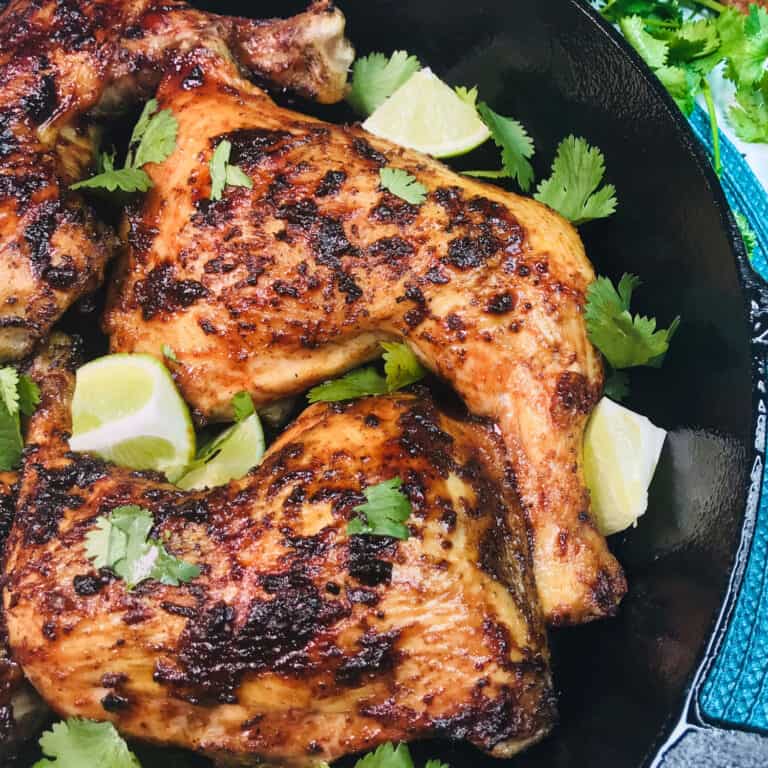
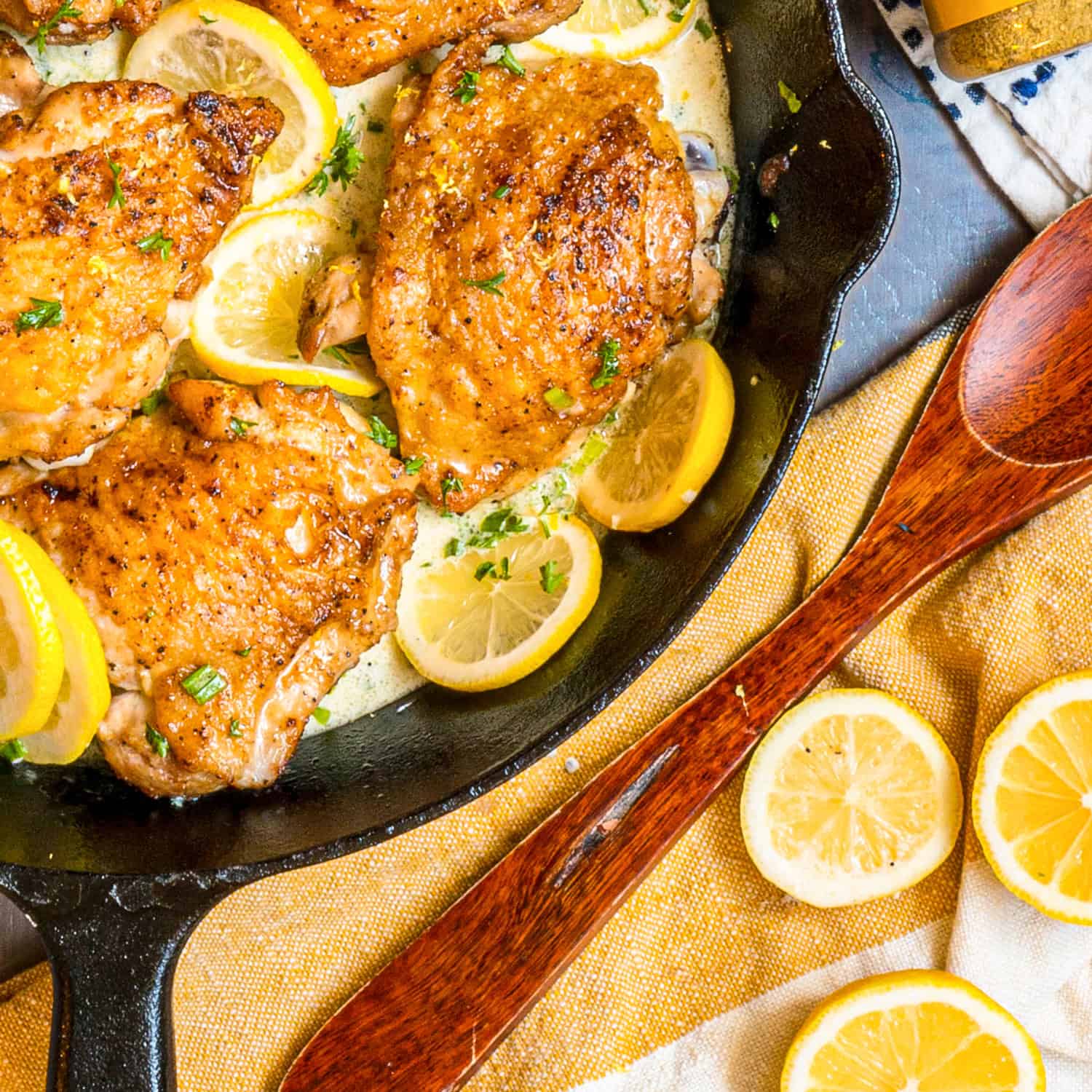
That crackle when skin hits a hot pan, that’s where this dish starts. Lemon pepper chicken thighs, dredged in seasoned flour, seared hard until the skin is deep gold and the pan is full of browned fond. Then into the oven to finish while you build the sauce right behind them in the same skillet. One pan. Forty-five minutes.
It starts with the sound of skin hitting a hot pan, as plenty of our Kinder’s recipes do.
Bone-in, skin-on thighs are the call here. The extra fat keeps the meat from drying out under oven heat and gives the skin something to render against. If you go with boneless breasts, that’s fine, just watch the clock. They’ll finish faster and go dry faster.
The flour dredge does two things: it locks the lemon pepper into the crust during the sear, and it gives the sauce something to cling to when the chicken comes back in at the end. Don’t skip it.
The sauce starts from the fond. After the chicken pulls out, garlic goes in, one minute in butter, stirring constantly. Then chicken stock, in, and reduced by half until it looks almost syrupy. That reduction step matters. If you rush it and add cream to thin stock, the sauce won’t have the body it needs. Bring the cream up to a boil, then drop the heat and stir in the parmesan until it melts smooth. Lemon juice and green onions go in last, right at the end, they keep the sauce bright and cut through the richness of the cheese.
Add the chicken back in, simmer a few minutes so the crust absorbs the sauce, and that’s the dish.
Flavor First.
Lemon Pepper Chicken with Garlic Parmesan Sauce
Ingredients
Equipment
Method
- CHICKEN — Preheat oven to 375°F.
- CHICKEN — Mix flour, 1 tsp. lemon pepper, and 1/2 tsp. salt in a shallow bowl.
- CHICKEN — Dredge chicken pieces in the flour mixture on both sides, shaking off any excess.
- CHICKEN — Heat 1 tbsp. olive oil and 1 tbsp. butter in a large skillet over medium-high heat.
- CHICKEN — Place chicken pieces skin-side down in the hot skillet and cook for 3-4 minutes until the skin is golden brown and crispy.
- CHICKEN — Flip the chicken and cook on the other side for 2-3 minutes.
- CHICKEN — Transfer chicken to a greased baking sheet and place in the preheated oven.
- CHICKEN — Bake for 10-20 minutes until the internal temperature reaches 165°F (thighs may take longer than breasts).
- GARLIC PARMESAN SAUCE — While chicken is in the oven, heat the remaining 1 tbsp. olive oil and 1 tbsp. butter in the same skillet over medium heat.
- GARLIC PARMESAN SAUCE — Add minced garlic and cook for approximately 1 minute, stirring constantly, until fragrant.
- GARLIC PARMESAN SAUCE — Pour in the chicken stock and bring to a boil.
- GARLIC PARMESAN SAUCE — Reduce heat and simmer until the sauce is reduced by approximately half.
- GARLIC PARMESAN SAUCE — Stir in the half & half or heavy cream and bring back to a boil.
- GARLIC PARMESAN SAUCE — Add the grated parmesan cheese and stir constantly until the cheese is fully melted and incorporated, creating a creamy sauce.
- GARLIC PARMESAN SAUCE — Reduce heat to low and simmer gently.
- GARLIC PARMESAN SAUCE — Stir in the freshly squeezed lemon juice and chopped green onions.
- GARLIC PARMESAN SAUCE — Season with 1/2 tsp. salt and 1 tsp. lemon pepper.
- FINAL ASSEMBLY — Remove cooked chicken from the oven and add to the sauce.
- FINAL ASSEMBLY — Simmer the chicken in the sauce for 3-4 minutes, allowing the chicken to absorb the flavors.
- FINAL ASSEMBLY — Serve the chicken and sauce over your choice of pasta, rice, or steamed vegetables.
Nutrition
Notes
- Go bone-in, skin-on — The extra fat in thighs keeps the meat moist through the oven finish. If you use boneless breasts, pull them at exactly 165°F — they go from done to dry fast past that mark.
- Don’t rush the sear — Skin-side down in a hot pan, untouched, for the full 3-4 minutes. You want a deep gold crust and a pan full of browned fond. That fond is the foundation of the sauce — don’t burn it and don’t rush it.
- Reduce the stock before adding cream — If you add cream to un-reduced stock, the sauce will be thin and won’t coat the chicken. Cook the stock down until it looks almost syrupy first, then pour in the cream.
- Add parmesan off high heat — Drop to low before you stir in the cheese. High heat causes parmesan to seize and the sauce turns grainy instead of smooth.
- Lemon juice goes in last — Adding it early blunts the brightness. Stir it in after the parmesan melts, right before the chicken goes back in.
- Taste before the final season — Parmesan and chicken stock both carry salt. Taste the sauce at step 17 before adding the full 1/2 tsp. You may need less.
- Buttered egg noodles are the move. Wide noodles soak up the garlic parmesan sauce and the whole bowl eats like a pasta dish. Toss the noodles in a little butter before plating so they don’t stick.
- For a lower-carb plate, creamy cauliflower rice works well. Keep it slightly loose — slightly undercooked so it holds its texture under the sauce rather than turning to mush.
- Roasted asparagus, green beans, or zucchini cut through the richness cleanly. Roast them at 400°F with olive oil and salt while the chicken is in the oven — they’ll finish around the same time.
- A slice of crusty bread to mop the pan is never a bad call.
- Store the chicken and sauce together in an airtight container in the refrigerator for up to 3 days.
- To reheat, use a skillet over low heat. Add a splash of cream or chicken stock to loosen the sauce as it warms — cream sauces tighten in the fridge and need a little liquid to come back. Stir gently and don’t rush the heat or the parmesan can break.
- Don’t freeze this one. Cream-based sauces separate when frozen and the texture won’t recover when thawed.
Tried this recipe?
Let us know how it was!Frequently Asked Questions
Can I use boneless skinless chicken breasts instead of thighs?
Yes. Halve the breasts crosswise so they cook evenly, and watch the oven time closely, boneless breasts hit 165°F in 10-12 minutes at 375°F. Pull them immediately; they go dry fast past that mark.
What can I substitute for heavy cream?
Half & half works and is already listed as an option in the recipe, the sauce will be slightly thinner but still coats well. For dairy-free, full-fat coconut cream adds richness without making it taste like coconut.
How do I keep the parmesan sauce from getting grainy?
Two things: lower the heat before adding the parmesan, and use freshly grated cheese, not pre-shredded. Pre-shredded parmesan has anti-caking agents that break the sauce. Buy a block and grate it fine right before using.
Can I skip the oven and finish the chicken entirely on the stovetop?
You can, but the skin won’t stay crispy, steam from the sauce softens it. If you go stovetop only, sear both sides hard, then lower the heat, cover the pan, and cook through before building the sauce.
What pasta works best with garlic parmesan sauce?
Wide, flat noodles catch the sauce best, fettuccine, pappardelle, or wide egg noodles. Avoid thin pasta like angel hair; the sauce is too heavy and it clumps.
Can I make the sauce ahead?
Make it fresh. Cream sauces don’t hold well, they thicken and separate overnight. The chicken can be seared and refrigerated uncooked for up to 24 hours if you’re prepping ahead. Build the sauce when you’re ready to eat.
More like this: Chicken Recipes
One Good Recipe a Week
No spam, no life stories. A recipe worth cooking, in your inbox.