Ingredients
Equipment
Method
- CHICKEN — Preheat oven to 375°F.
- CHICKEN — Mix flour, 1 tsp. lemon pepper, and 1/2 tsp. salt in a shallow bowl.
- CHICKEN — Dredge chicken pieces in the flour mixture on both sides, shaking off any excess.
- CHICKEN — Heat 1 tbsp. olive oil and 1 tbsp. butter in a large skillet over medium-high heat.
- CHICKEN — Place chicken pieces skin-side down in the hot skillet and cook for 3-4 minutes until the skin is golden brown and crispy.
- CHICKEN — Flip the chicken and cook on the other side for 2-3 minutes.
- CHICKEN — Transfer chicken to a greased baking sheet and place in the preheated oven.
- CHICKEN — Bake for 10-20 minutes until the internal temperature reaches 165°F (thighs may take longer than breasts).
- GARLIC PARMESAN SAUCE — While chicken is in the oven, heat the remaining 1 tbsp. olive oil and 1 tbsp. butter in the same skillet over medium heat.
- GARLIC PARMESAN SAUCE — Add minced garlic and cook for approximately 1 minute, stirring constantly, until fragrant.
- GARLIC PARMESAN SAUCE — Pour in the chicken stock and bring to a boil.
- GARLIC PARMESAN SAUCE — Reduce heat and simmer until the sauce is reduced by approximately half.
- GARLIC PARMESAN SAUCE — Stir in the half & half or heavy cream and bring back to a boil.
- GARLIC PARMESAN SAUCE — Add the grated parmesan cheese and stir constantly until the cheese is fully melted and incorporated, creating a creamy sauce.
- GARLIC PARMESAN SAUCE — Reduce heat to low and simmer gently.
- GARLIC PARMESAN SAUCE — Stir in the freshly squeezed lemon juice and chopped green onions.
- GARLIC PARMESAN SAUCE — Season with 1/2 tsp. salt and 1 tsp. lemon pepper.
- FINAL ASSEMBLY — Remove cooked chicken from the oven and add to the sauce.
- FINAL ASSEMBLY — Simmer the chicken in the sauce for 3-4 minutes, allowing the chicken to absorb the flavors.
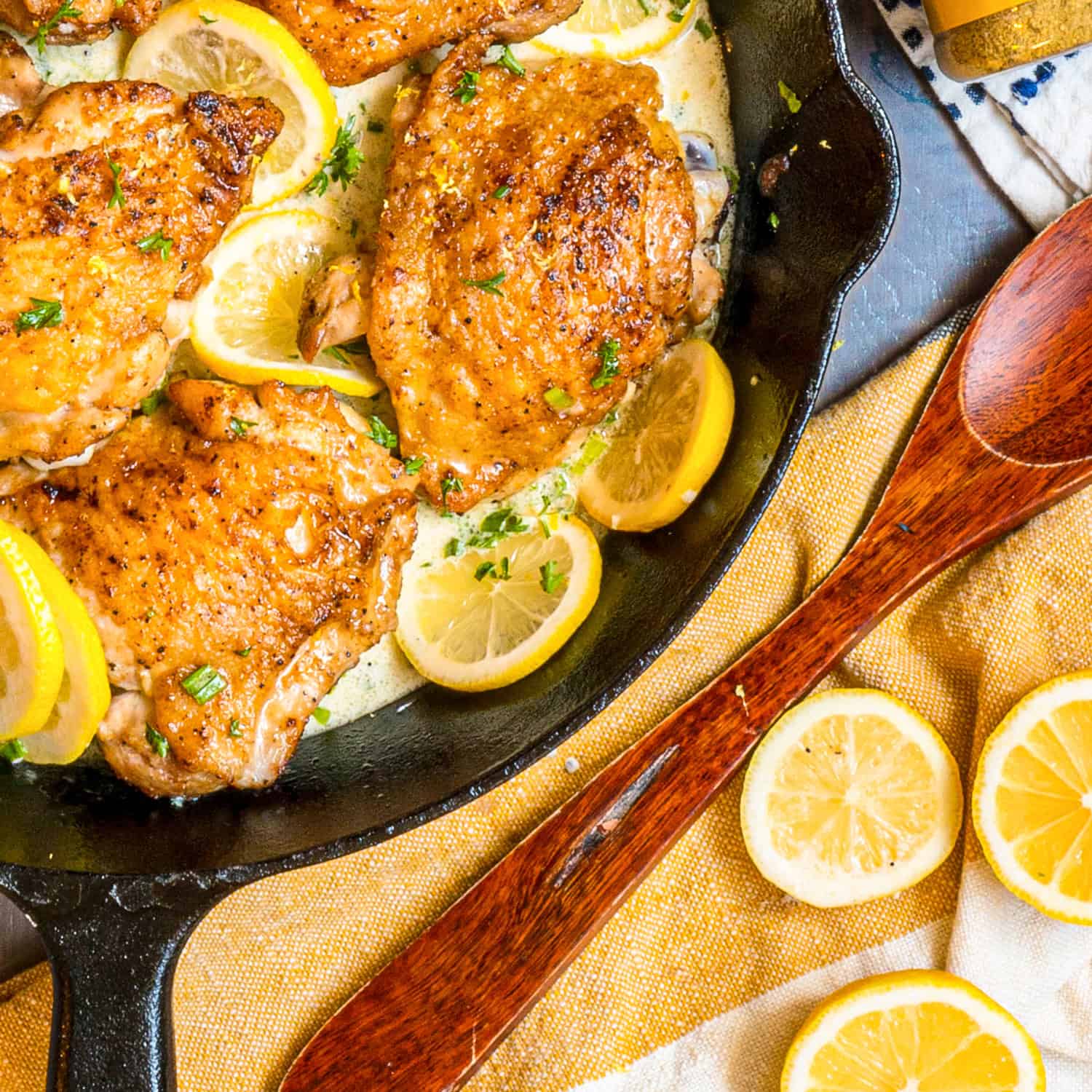
- FINAL ASSEMBLY — Serve the chicken and sauce over your choice of pasta, rice, or steamed vegetables.
Nutrition
Notes
- Go bone-in, skin-on — The extra fat in thighs keeps the meat moist through the oven finish. If you use boneless breasts, pull them at exactly 165°F — they go from done to dry fast past that mark.
- Don't rush the sear — Skin-side down in a hot pan, untouched, for the full 3-4 minutes. You want a deep gold crust and a pan full of browned fond. That fond is the foundation of the sauce — don't burn it and don't rush it.
- Reduce the stock before adding cream — If you add cream to un-reduced stock, the sauce will be thin and won't coat the chicken. Cook the stock down until it looks almost syrupy first, then pour in the cream.
- Add parmesan off high heat — Drop to low before you stir in the cheese. High heat causes parmesan to seize and the sauce turns grainy instead of smooth.
- Lemon juice goes in last — Adding it early blunts the brightness. Stir it in after the parmesan melts, right before the chicken goes back in.
- Taste before the final season — Parmesan and chicken stock both carry salt. Taste the sauce at step 17 before adding the full 1/2 tsp. You may need less.
- Buttered egg noodles are the move. Wide noodles soak up the garlic parmesan sauce and the whole bowl eats like a pasta dish. Toss the noodles in a little butter before plating so they don't stick.
- For a lower-carb plate, creamy cauliflower rice works well. Keep it slightly loose — slightly undercooked so it holds its texture under the sauce rather than turning to mush.
- Roasted asparagus, green beans, or zucchini cut through the richness cleanly. Roast them at 400°F with olive oil and salt while the chicken is in the oven — they'll finish around the same time.
- A slice of crusty bread to mop the pan is never a bad call.
- Store the chicken and sauce together in an airtight container in the refrigerator for up to 3 days.
- To reheat, use a skillet over low heat. Add a splash of cream or chicken stock to loosen the sauce as it warms — cream sauces tighten in the fridge and need a little liquid to come back. Stir gently and don't rush the heat or the parmesan can break.
- Don't freeze this one. Cream-based sauces separate when frozen and the texture won't recover when thawed.