Sticky Grilled Salmon with Kinder’s Black Garlic BBQ Glaze
Sticky Grilled Salmon with Kinder’s Black Garlic BBQ Glaze
Salmon tends to disappoint on the grill. It sticks to the grates, seeps white albumin, and overcooks before the skin ever gets right. This recipe fixes all three.
Glaze this sticky wants indirect heat until the very end, or the sugar sets long before the fillet does. Filed with the other seafood recipes.
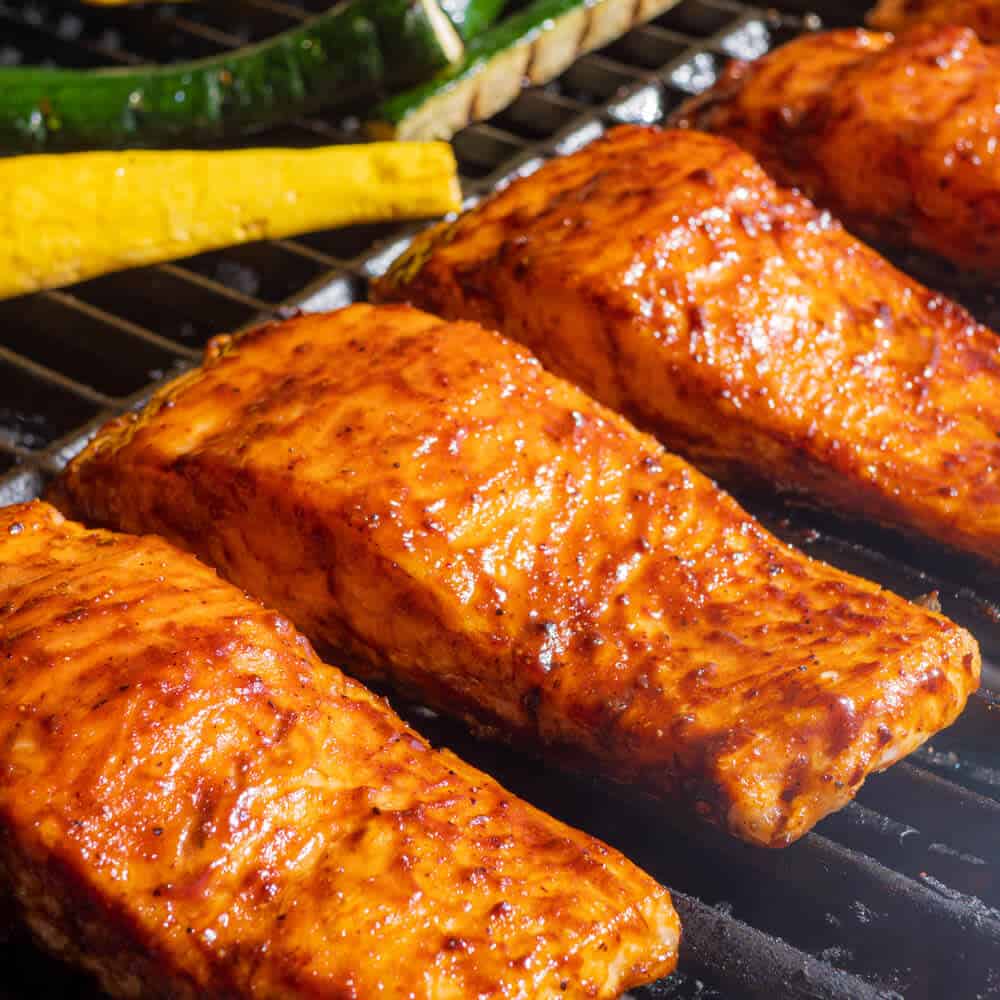
Kinder’s Hickory Brown Sugar Seasoning goes on the flesh side before the fish hits the grates, the brown sugar caramelizes against the heat while the hickory note deepens the entire flavor. Kinder’s Gold Label Black Garlic BBQ Sauce comes in twice: once when the internal temperature hits 90°F, and again right before serving. That two-stage glaze is what gives the salmon its sticky, lacquered exterior, not a sauce applied once and forgotten.
The technique is two-zone cooking. Start the salmon skin-side down on indirect heat, lid closed. The fish cooks gently from the outside in without scorching the seasoning or flaring up the grates. When it hits 90°F at the thickest part, glaze the flesh side and move to direct heat for 2-3 minutes to crisp the skin and lock the sauce in place. Pull it between 120-130°F depending on your preference, 120°F is medium-rare, barely translucent at the center, and noticeably more moist than anything pushed further.
One optional step worth doing: the quick brine. Ten minutes in a salted ice bath tightens the surface proteins and cuts down on the white albumin that seeps out when salmon hits a hot grate. It also improves the texture through the whole fillet.
Oil the fish and oil the grates. Both. Salmon skin bonds hard to a dry, hot grill surface, you’ll lose the skin and the char when you try to move it. Oiling both surfaces makes the flip clean and the skin worth eating.
This recipe serves 4 in 35 minutes. Kinder’s carries the flavor. Your job is technique and temperature.
Flavor First.
Sticky Grilled Salmon
Ingredients
Equipment
Method
- Optional brine: Dissolve 1/2 cup kosher salt in 1 liter of warm tap water, stirring until fully dissolved. Add 2 cups of ice to cool the brine rapidly. Submerge salmon fillets in the brine for exactly 10 minutes — no longer, or the fish will become too salty. Remove, rinse briefly, and pat completely dry. Refrigerate until ready to grill.
- Set up the grill for two-zone cooking: one side on high heat for direct cooking, one side with no direct flame for indirect heat. Preheat the grill for 5-10 minutes with the lid closed.
- Brush both the grill grates and both sides of the salmon fillets generously with neutral cooking oil. Season the flesh side of the salmon evenly with Kinder’s Hickory Brown Sugar Seasoning immediately before placing on the grill.
- Place salmon skin-side down on the indirect heat zone. Close the lid and cook until the internal temperature reaches 90 degrees F at the thickest part of the fillet.
- Once the salmon reaches 90 degrees F, brush the flesh side generously with Kinder’s Gold Label Black Garlic BBQ Sauce.
- Transfer the salmon skin-side down to the direct heat zone. Cook for 2-3 minutes until the skin crisps and the glaze sets. Continue cooking to your preferred doneness: 110 degrees F for rare, 120 degrees F for medium-rare, 130 degrees F for medium.
- Apply a final brush of Kinder’s Gold Label Black Garlic BBQ Sauce over the finished salmon and serve immediately.
Notes
- Brine for exactly 10 minutes — The salt-water brine is optional but it earns its keep. Ten minutes tightens the surface proteins, reduces albumin seepage, and improves the texture of the whole fillet. Don’t go longer — past 10 minutes the fish starts to over-salt.
- Oil both the grates and the fish — Salmon skin will bond aggressively to a dry, hot grill surface. Oil the grates after preheating, then oil both sides of each fillet just before seasoning. One surface oiled isn’t enough.
- Two-zone cooking is the method — Indirect heat first lets the fish cook through without burning the seasoning; direct heat at the end crisps the skin and sets the glaze. Running the full cook on high heat skips the control this recipe depends on.
- Glaze only after 90°F — Cold or cool fish surface causes the sauce to slide off before it can caramelize. The warm surface at 90°F is what allows the glaze to stick and set on the move to direct heat.
- Pull between 120-130°F — At 125°F the flesh is just set, barely translucent at the very center, and at peak moisture. Every fillet is a different thickness — trust the thermometer over the clock.
- Serve over jasmine rice or cilantro-lime rice with grilled broccolini. The sweetness of the glaze pairs well against the slight bitterness of charred broccolini, and the rice catches any glaze that runs.
- For a summer plate: grilled corn, a simple arugula salad dressed with lemon, and the salmon straight off the grill. That’s a complete backyard dinner with no extra effort.
- Flake leftover salmon cold over a grain bowl with pickled cucumbers, sliced avocado, and sesame dressing. The black garlic glaze holds up cold and reads well against those flavors. Cold soba noodle salad is another strong pairing for the same reason.
- Store leftover salmon in an airtight container in the refrigerator for up to 2 days.
- To reheat, use a covered skillet over low heat with a splash of water — 1-2 minutes per side. High heat overcooks it fast. If you’re flaking it cold into a bowl or salad, skip the reheat entirely. Cold glazed salmon works better in that context anyway.
- Not recommended for freezing after glazing and grilling. The glaze breaks and the texture degrades significantly.
Tried this recipe?
Let us know how it was!Frequently Asked Questions
What internal temperature should grilled salmon reach?
Pull the salmon between 120-130°F depending on preference. 120°F is medium-rare with a slightly translucent center; 130°F is fully set. The USDA guideline is 145°F, but most cooks pull salmon well before that to preserve moisture and texture.
Do I have to brine the salmon first?
No, but 10 minutes in a salted ice bath makes a real difference. It tightens the surface proteins, cuts down on albumin seepage, and improves texture throughout the fillet. Don’t go past 10 minutes, the fish will over-salt.
How do I keep salmon from sticking to the grill?
Oil both the grates and both sides of the fish right before cooking. Hot, dry grates are the main cause of sticking with salmon. A wide fish spatula also helps, slide it fully under the skin before lifting.
Can I use a gas grill instead of charcoal?
Yes. Set one burner to high and leave the opposite side off to create two zones. The indirect-to-direct technique works the same on gas or charcoal, the key is lid-down cooking on the indirect side.
What can I substitute for Kinder’s Gold Label Black Garlic BBQ Sauce?
Any bold, sweet BBQ sauce works as a substitute. Kinder’s Black Cherry Chipotle Wing Sauce is also a strong alternative with a slightly different flavor direction. Avoid thin, vinegar-forward sauces, they won’t glaze the same way.
When exactly should I apply the glaze?
After the salmon reaches 90°F internally, not before. The warm surface is what holds the glaze and lets it caramelize on the direct heat zone. Apply on a cold surface and it runs straight through the grates.
More like this: Grilling Recipes · Game Day Recipes · Kinder’s Recipes
One Good Recipe a Week
No spam, no life stories. A recipe worth cooking, in your inbox.