Hickory Brown Sugar Smoked Ribs
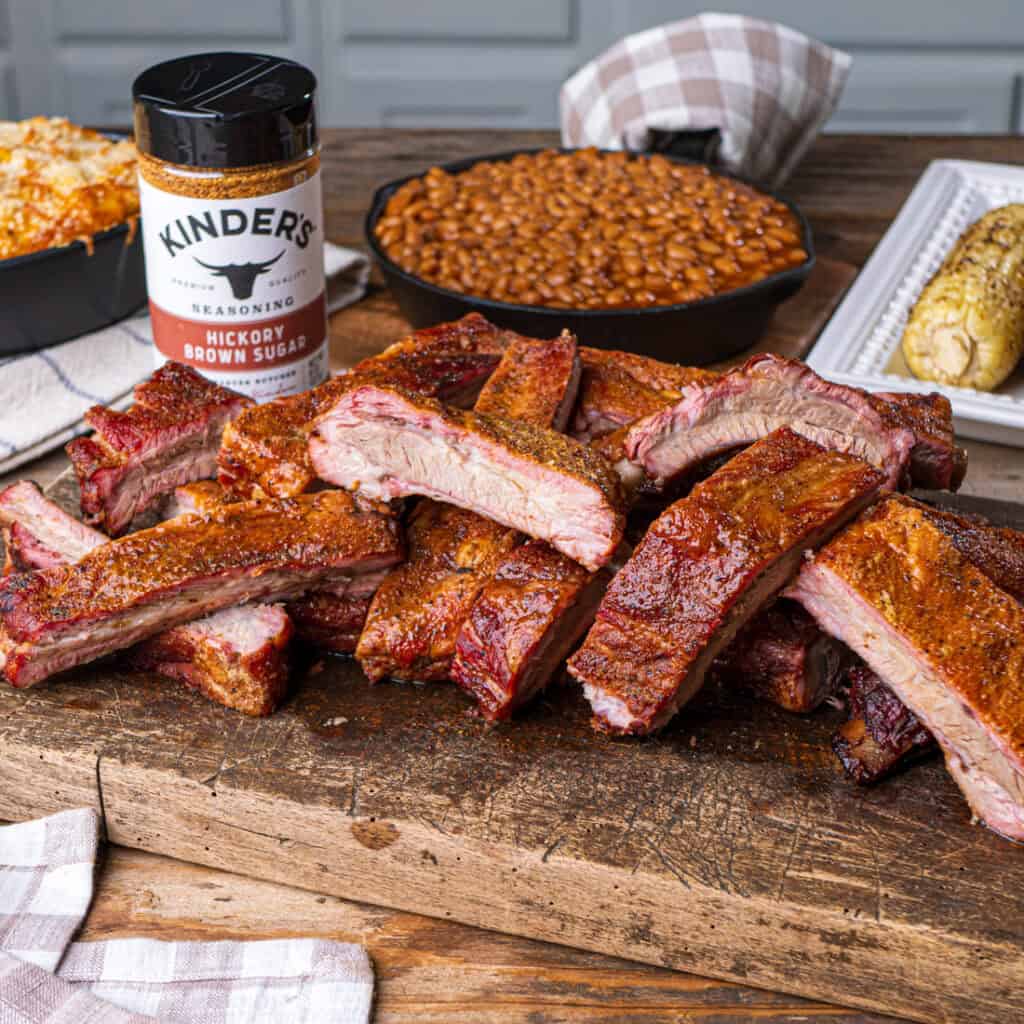
Hickory brown sugar smoked ribs live or die on three things: membrane removal, generous seasoning, and the patience to leave the smoker alone. Get those right and everything else is a detail.
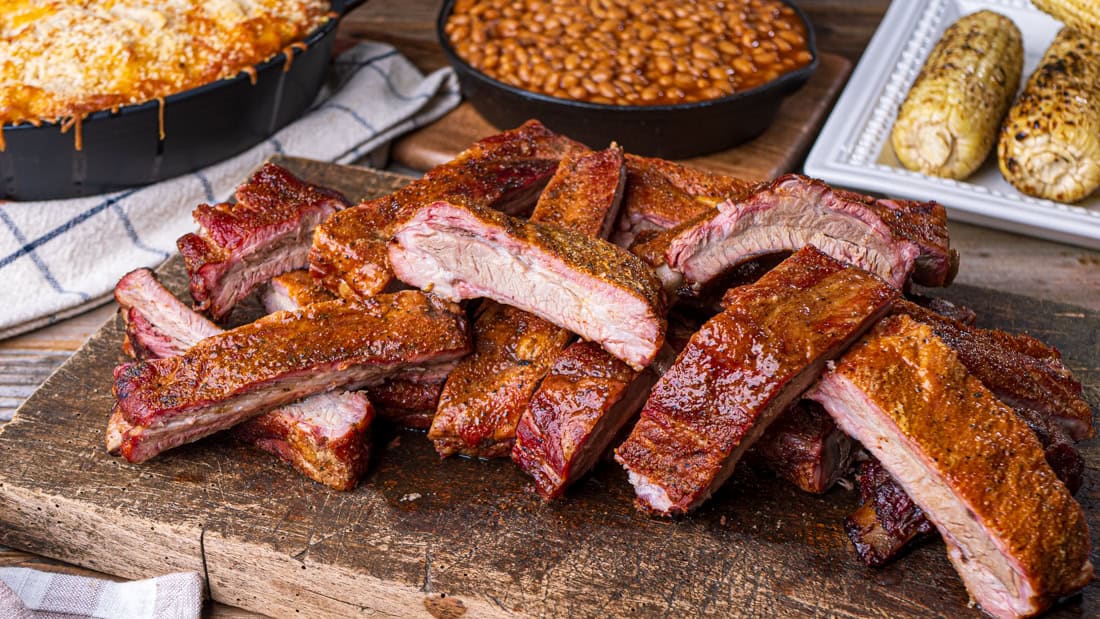
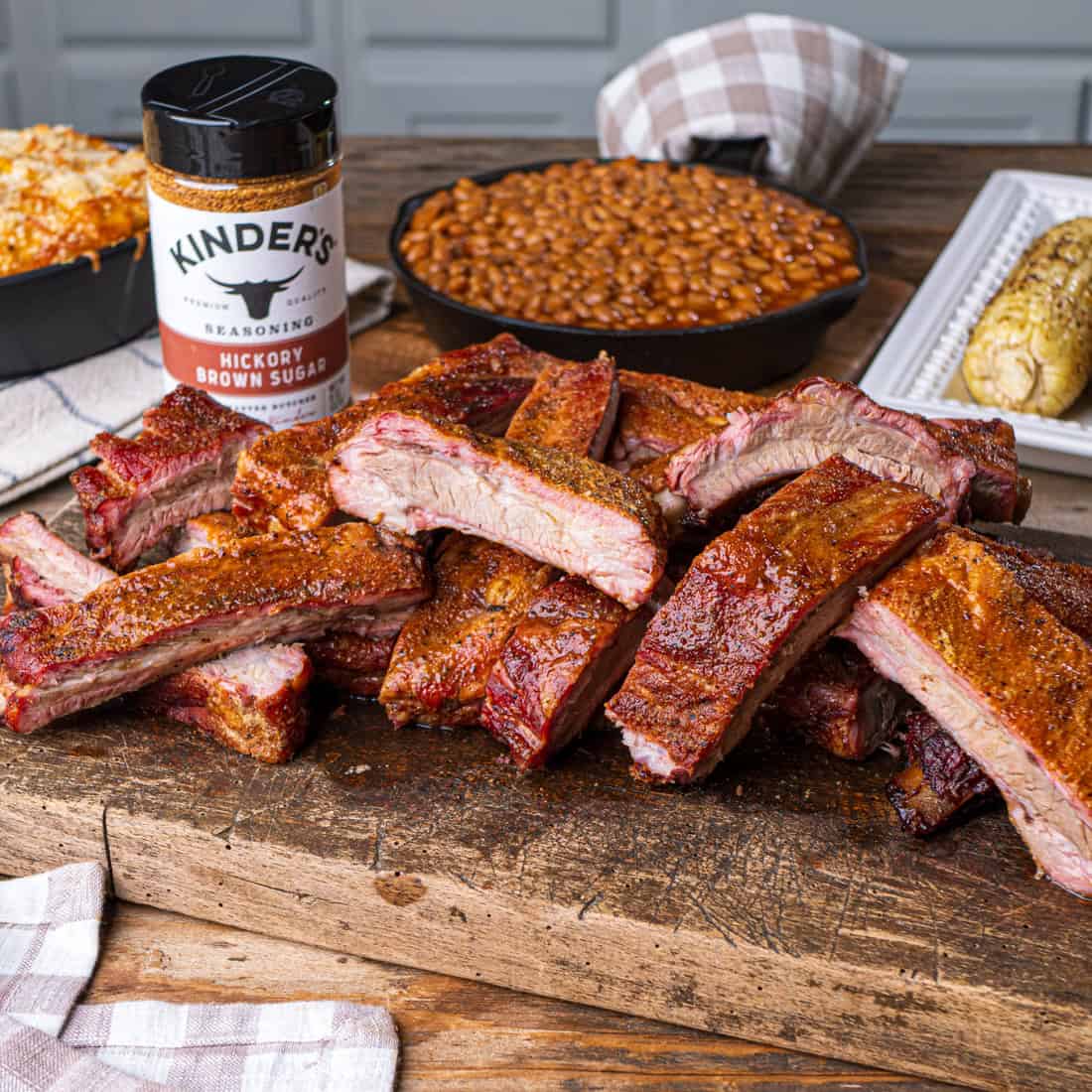
These ribs are built on a single seasoning, Kinder’s Hickory Brown Sugar, applied heavily and allowed to sit before the racks hit the smoker. Low and slow over hickory wood develops a dark bark with crackle on the outside and tender meat that pulls cleanly from the bone. Baby back ribs are the pick for their balance of meat and fat; spare ribs work with an extra 30–45 minutes on the smoke.
This one sits at the unwrapped end of the BBQ rib recipes, where the bark is the whole point and nothing gets brushed on at the end to cover it.
The unwrapped school of rib thought, from our Kinder’s recipes collection.
This version of hickory brown sugar smoked ribs is deliberately minimal. No sauce, no wraps, no layering of rubs. Kinder’s Hickory Brown Sugar is doing the work, sweet, hickory-forward, deep enough to hold up to five hours of smoke without fading. If you’ve been stacking seasonings trying to get the bark right, try going the other direction: one blend, used generously, and time on the smoker.
Apple juice spritz is optional and comes down to the bark you want. Skip it for a darker, denser crust. Use it (every hour after hour two) for a slightly softer, more even bark. Neither is wrong. Both make good ribs.
Serve them naked or sauced. The Kinder’s Hickory Brown Sugar bark is worth tasting at least once before you reach for the bottle, it’s the argument for making hickory brown sugar smoked ribs this way in the first place.
Baby back ribs, Kinder’s Hickory Brown Sugar Seasoning, hickory wood, time. That’s the list.
Hickory Brown Sugar Smoked Ribs
Ingredients
Equipment
Method
- Remove the membrane from the bone side of each rib rack. To do this, slide a small sharp knife or butter knife under the membrane at one end of the rack.
- Using a paper towel to get a good grip, firmly pull the membrane off the bone side. You should be able to remove it in one large piece or a few large pieces.
- Pat the ribs completely dry with paper towels. Removing excess moisture helps the seasoning adhere and promotes browning.
- Optional: if using a binder, lightly brush or spray the ribs with yellow mustard or olive oil on both sides. This optional step helps the seasoning adhere better and can improve bark development.
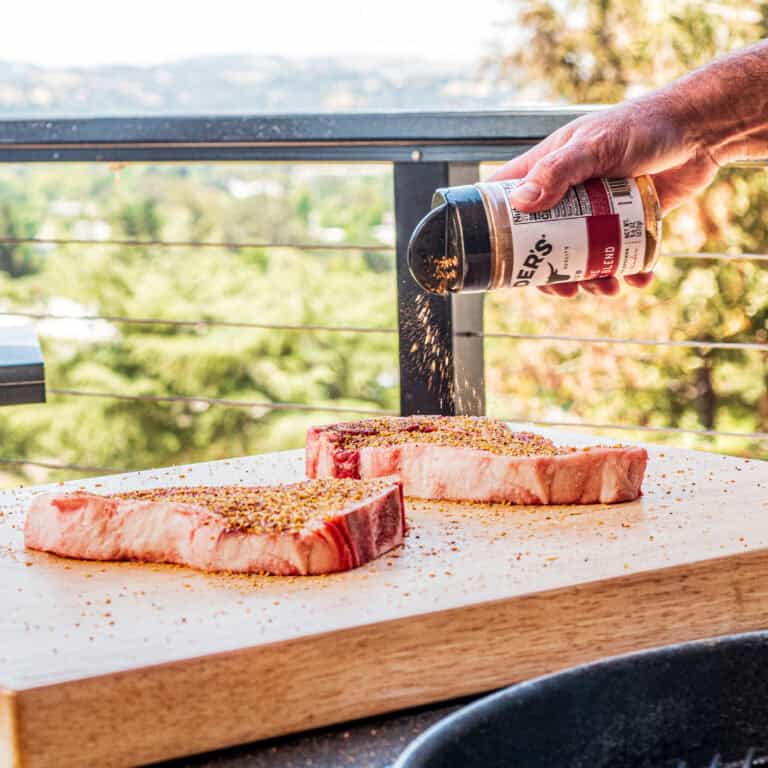
- Rub Kinder’s Hickory Brown Sugar Seasoning generously all over each rib rack, on the front, back, and around the edges. Make sure all surfaces are well covered.
- Allow the seasoned ribs to sit at room temperature for 30 minutes. Alternatively, cover them loosely and refrigerate them for up to 4 hours before smoking. If refrigerated, bring to room temperature for 15 to 20 minutes before placing in the smoker.
- Preheat your smoker to 225 to 250 degrees Fahrenheit. Use hickory wood, or a combination of hickory and apple wood for a balanced smoke profile.
- Once the smoker is preheated and producing steady smoke, carefully place the seasoned ribs on the smoker grates, bone-side down.
- Smoke the ribs for 3 point 5 to 5 hours undisturbed, depending on your smoker temperature and the size of the ribs. At 225 degrees Fahrenheit, plan for approximately 5 hours. At 250 degrees Fahrenheit, plan for approximately 3 point 5 to 4 hours.
- Optional: after the first 2 hours of smoking, you can begin spritzing the ribs with apple juice approximately every hour until the end of cooking. This optional step adds subtle flavor and helps prevent the bark from becoming too thick.
- The ribs are done when a dark caramelized bark has formed over the entire surface, the meat has pulled back one-quarter to one-half inch from the bones, and they pass the bend test: when you pick up the rack in the middle and gently flex it, the ribs should bend easily and potentially break apart.
- Remove the ribs from the smoker and let them rest loosely tented with foil for 15 to 20 minutes. This resting period allows the juices to redistribute throughout the meat.
- Carefully slice the ribs between the bones into individual portions, or serve them as full racks if preferred.
- Serve immediately while hot, enjoying the beautiful bark and incredibly tender meat.
Nutrition
Notes
- Pull the bone-side membrane. Leave the meat side alone. A butter knife under one corner, paper towel for grip, one steady pull. The membrane is the difference between ribs that eat cleanly and ribs that fight back.
- Season heavy — don’t be shy with the Kinder’s. Quarter to a third of a cup for two racks, both sides, plus the edges. Then let it sit 30 minutes at room temp (or up to 4 hours in the fridge) before smoking. That rest is when the seasoning starts to melt into the meat surface.
- Pick your bark, then pick your spritz. Skip the apple juice spritz entirely for the darkest, crustiest bark. Start spritzing at hour two for a softer, more even finish. Don’t switch mid-cook — commit to one.
- Hickory is the canonical wood for this seasoning, but it’s not the only one. Oak gives a heavier smoke, apple a lighter one, cherry adds a hint of sweet without fighting the brown sugar. A hickory-apple blend is the best of both.
- The bend test beats the clock. Ribs are done when you pick up the rack in the middle and it flexes dramatically — maybe cracks on the surface. Internal temp should read 190–203°F at the thickest spot between bones. If the meat is pulling back a quarter-inch from the bone tips and the bark looks mahogany, you’re close.
- Don’t chase the smoke with an open lid. Every time you open the smoker door you add 15 minutes. Set it, trust it, spritz through a crack if you have to.
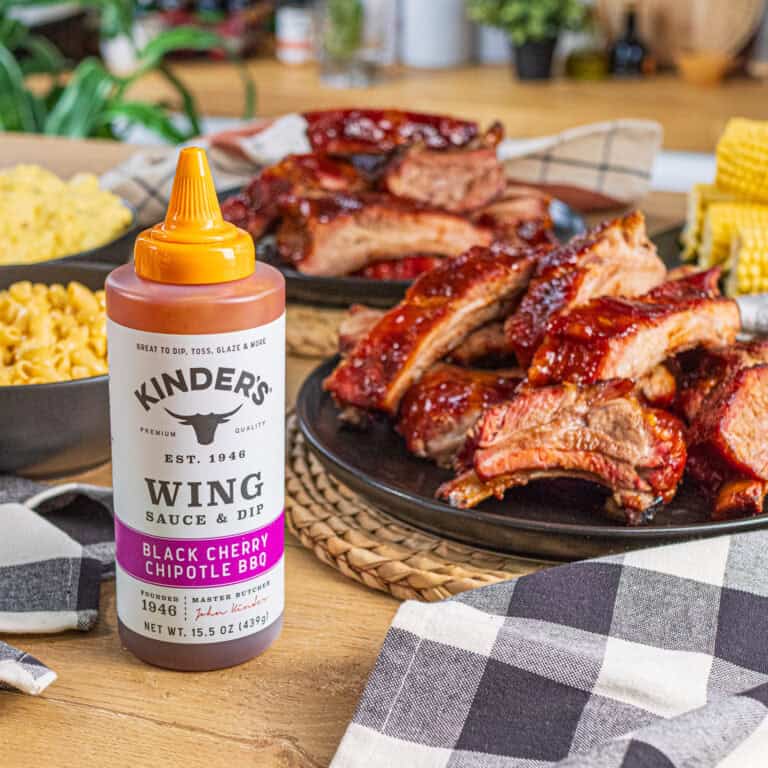
- Serve these ribs naked or sauced — they hold up either way, but the Kinder’s Hickory Brown Sugar bark is worth tasting at least once before you reach for the bottle. If you sauce, warm the sauce and brush it on in the last ten minutes of smoke, or serve it on the side so the bark stays crisp.
- Sides that earn their spot: sharp vinegar-based coleslaw to cut the richness, skillet cornbread with honey butter, smoked baked beans, grilled corn on the cob with chili-lime butter. Cold beer, bourbon on the rocks, or a Cherry Coke if you grew up on BBQ joints.
- Wrap leftover ribs tightly in foil and refrigerate for up to 4 days. Reheat by wrapping loosely in foil with a splash of apple juice and warming in a 275°F oven for 15–20 minutes — the moisture keeps the bark from going leathery. On a grill, indirect heat for 10–15 minutes with the lid down works too. Freezer-friendly: vacuum-seal or double-wrap in foil and freeze up to 3 months; thaw overnight in the fridge before reheating.
Tried this recipe?
Let us know how it was!
Q: What’s the real difference between baby back ribs and spare ribs??
A: Baby backs are shorter, leaner, and more tender, cut from the top of the rib cage near the spine. Spare ribs come from lower down, run longer, and have more fat and connective tissue. Both smoke beautifully. Plan on an extra 30–45 minutes for spare ribs to render properly.
Q: Can I use a different wood for smoking?
A: Yes. Hickory is the traditional pairing for the Hickory Brown Sugar seasoning, it doubles down on the flavor. Oak runs heavier and smokier. Apple and cherry are lighter and slightly sweet. A hickory-apple blend is a common sweet spot.
Q: Do I need to use the apple juice spritz?
A: No. The spritz is a choose-your-bark tool, not a requirement. Skip it for darker, denser bark. Use it (every hour starting at hour two) for a softer, more even finish. Pitmasters land on different sides of this all the time.
Q: How do I know when the ribs are done?
A: Three signals: the meat pulls back a quarter-inch from the bones, the rack flexes dramatically when you pick it up in the middle (maybe cracks at the surface), and the internal temp between bones reads 190–203°F. Use the bend test as your primary, temperature confirms.
Q: Do I need to use the apple juice spritz?
A: Yes, up to 24 hours ahead. Rub the seasoning on both sides, wrap loosely, and refrigerate. Pull them out 30 minutes before smoking to take the chill off. The extra time with the seasoning on the meat deepens the bark.
More like this: Grilling Recipes · Summer Grilling Recipes
One Good Recipe a Week
No spam, no life stories. A recipe worth cooking, in your inbox.