Grilled Shrimp Skewers with Carne Asada Seasoning and Chimichurri
Grilled Shrimp Skewers with Carne Asada Seasoning and Chimichurri
Carne Asada Seasoning isn’t just for beef. Kinder’s Carne Asada Seasoning works on shrimp in a way that’s frankly unfair to every other marinade in your rotation, smoky, savory, citrus-bright, and it caramelizes on a hot grill like it was built for this.
Beef seasoning on seafood is the sort of swap our grilling recipes make room for.
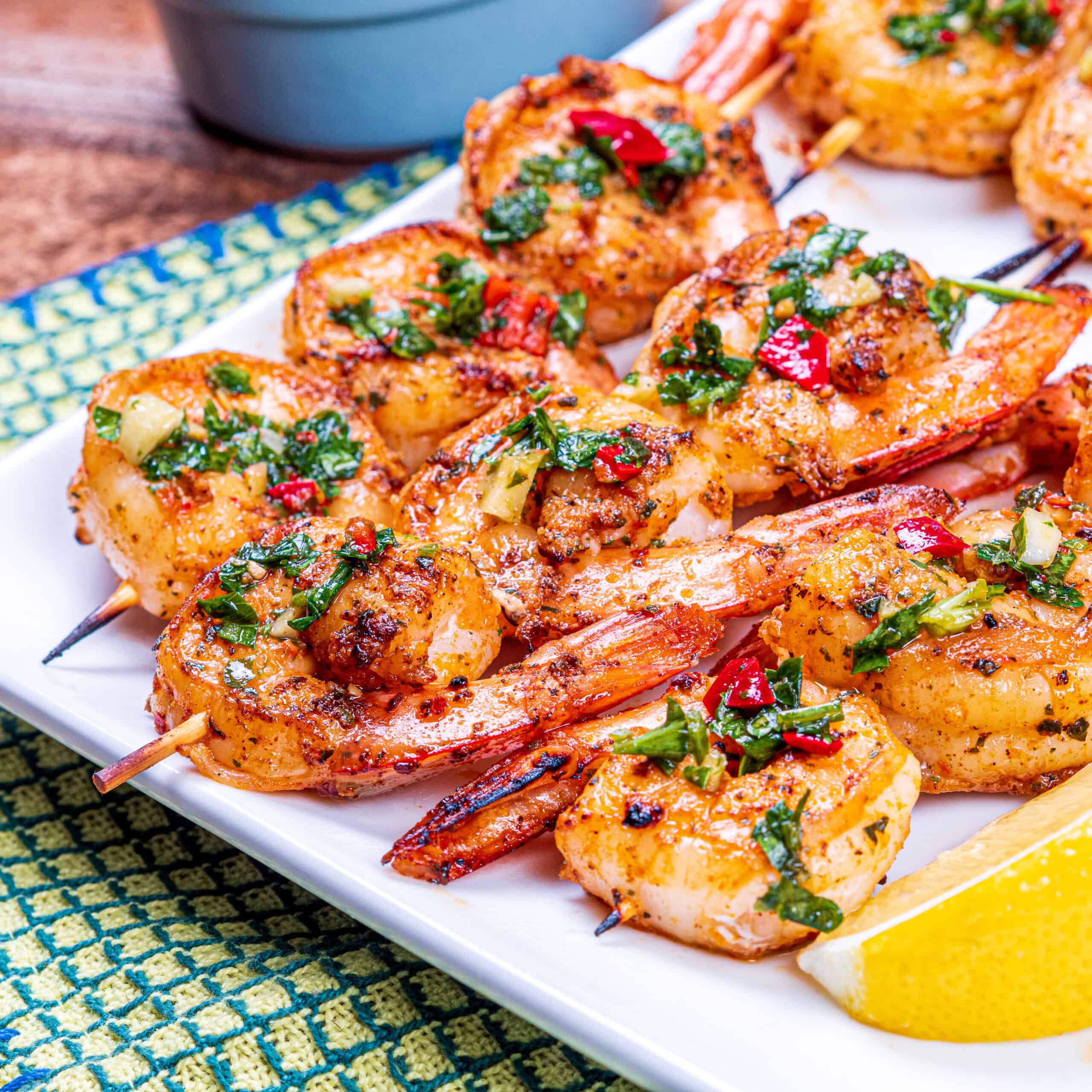
These grilled shrimp skewers with chimichurri start with a 30-minute marinade: Kinder’s Carne Asada Seasoning, olive oil, and lime juice. The lime sharpens the seasoning’s citrus edge. The olive oil keeps the shrimp from sticking and gives the surface something to char on. Then the skewers hit a 400°F grill for 3–4 minutes per side, that’s all the shrimp need.
The chimichurri is the second move. Parsley, cilantro, garlic, red wine vinegar, red pepper flakes, and good olive oil, pulsed until chunky and herb-forward. Make it while the shrimp marinate. The flavors get sharper overnight, so there’s no reason not to make it ahead.
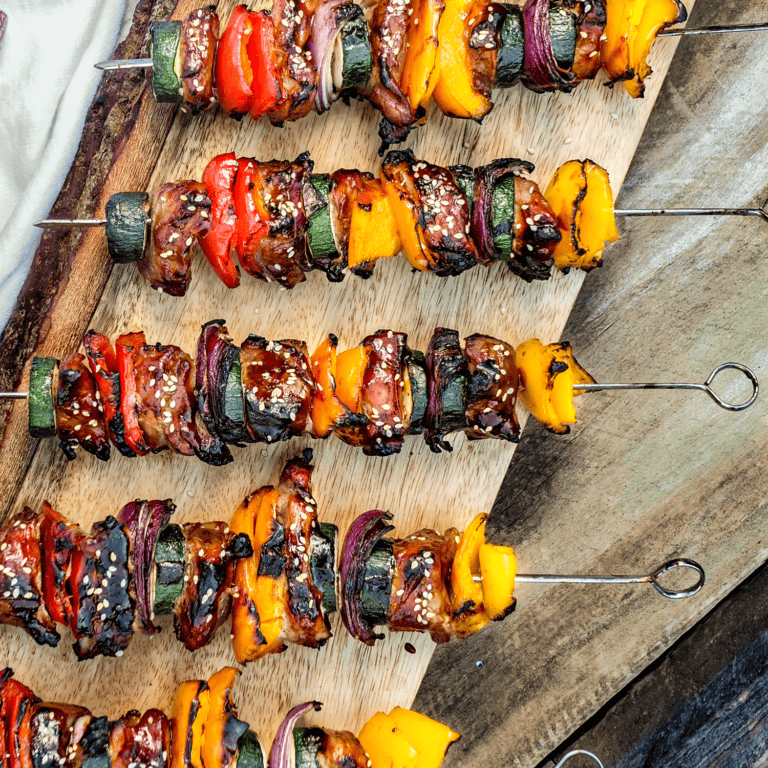
Thread the skewers with alternating bell pepper and onion between each shrimp. The vegetables pick up the Carne Asada seasoning, char at the edges, and get a little sweet. That contrast against the shrimp is the point.
This recipe serves 4. Total time is 60 minutes, 30 of that is the marinade in the fridge. Active cooking runs under 15 minutes. It fits a weeknight window and holds for game day or summer entertaining without adjustment.
Flavor First.
Grilled Shrimp Skewers with Chimichurri Sauce
Ingredients
Equipment
Method
- In a large bowl, combine shrimp with Kinder’s Carne Asada Seasoning, olive oil, and lime juice. Toss well to coat. Cover and refrigerate 30 minutes.
- While shrimp marinates, make chimichurri: add parsley, cilantro, garlic, red wine vinegar, oregano, and red pepper flakes to a food processor. Pulse until finely chopped. With processor running, slowly drizzle in olive oil until combined but still slightly chunky. Season with salt and pepper. Set aside.
- Preheat grill to medium-high (about 400°F). Clean and oil grates well.
- Thread marinated shrimp onto skewers, alternating with bell pepper and onion pieces. Leave a small space between each item for even cooking.
- Brush vegetables lightly with olive oil.
- Grill skewers 3–4 minutes per side until shrimp are pink, opaque, and slightly charred.
- Remove from grill and rest 2 minutes. Drizzle chimichurri generously over skewers or serve on the side for dipping. Garnish with lime wedges and fresh herbs if desired.
Nutrition
Notes
- Soak wooden skewers at least 30 minutes — Less than that and the tips burn before the shrimp are done. If you grill regularly, switch to metal skewers. They conduct heat more evenly and you’ll never soak again.
- Leave space on the skewer — A small gap between each shrimp and vegetable lets heat circulate around each piece. Pack them tight and you get steam, not char.
- Make the chimichurri ahead — It holds in the fridge for up to a week. The parsley and cilantro mellow into the vinegar overnight and the sauce tightens up. Make it the day before if you’re entertaining.
- Watch for the C, not the O — Shrimp tell you when they’re done. A loose C-shape means just right. A tight O-shape means overcooked. At 400°F this happens fast — check at 3 minutes and don’t walk away.
- Oil the grates before the skewers go on — Fold a paper towel, dip it in oil, grip it with tongs, wipe the grates. Clean and oiled means the shrimp release cleanly instead of tearing off the grill.
- Serve the skewers over cilantro-lime rice. Drizzle the chimichurri on top — the acidity cuts through the rice starch and the herb oil coats the whole plate.
- For tacos, pull the shrimp off the skewers and load them into warm flour tortillas with sliced avocado. Use the chimichurri in place of salsa. The Carne Asada Seasoning gives these shrimp the same profile as a beef Carne Asada — just lighter and faster off the grill.
- As a starter, plate the skewers on a long board with a small bowl of chimichurri at one end. Put out bread. The chimichurri handles both.
- Store grilled shrimp in an airtight container in the fridge for up to 2 days. To reheat, use a skillet over medium heat — 2 to 3 minutes is enough to warm them through. Shrimp overcook fast on the second pass, so stay at the stove and pull them the moment they’re hot.
- Chimichurri keeps in a sealed jar for up to 1 week. The olive oil will solidify when cold — let it sit at room temperature for a few minutes and it loosens right back up.
- The grilled peppers and onion keep alongside the shrimp in the same container. They reheat well and work in grain bowls or eggs the next morning.
Tried this recipe?
Let us know how it was!Frequently Asked Questions
Can I use Kinder’s Carne Asada Seasoning on shrimp?
Yes, and it’s one of the best ways to use it. The blend of chili powder, cumin, garlic, and citrus notes was designed for beef, but shrimp’s natural sweetness picks up the savory-smoky profile and caramelizes it fast on a hot grill. The lime juice in the marinade sharpens the citrus edge further. It’s a genuine combination.
How do I know when grilled shrimp are done?
Watch the shape. A loose C means done. A tight O means overcooked, at 400°F this happens fast. At 3–4 minutes per side on medium-high heat, start checking early. The shrimp should be pink, opaque all the way through, and release cleanly from the grates.
Can I make these without an outdoor grill?
Yes. A cast iron grill pan over high heat works, get it screaming hot before the skewers go on and cook 3–4 minutes per side. An air fryer works at 400°F for 6–8 minutes, shaking once halfway. The outdoor grill gives you more char and smoke, but both methods get you there.
How long should I marinate the shrimp?
30 minutes is the target. Don’t push past 45. The lime juice starts denaturing the shrimp’s proteins after about an hour, they’ll go soft before they hit the grill. If you’re prepping ahead, keep the shrimp out of the marinade until 30 minutes before you fire the grill.
What’s the difference between chimichurri and pesto?
Both are herb-forward sauces, but built differently. Chimichurri is South American, parsley, cilantro, garlic, red wine vinegar, and olive oil with a bright acidic bite that pairs with grilled meat and seafood. Pesto is Italian, basil, pine nuts, Parmesan, and olive oil with a richer, nuttier profile. Chimichurri is the right call for these skewers.
More like this: Shrimp Recipes · Fish & Seafood Recipes · Game Day Recipes
One Good Recipe a Week
No spam, no life stories. A recipe worth cooking, in your inbox.