Buttery Steakhouse Grilled Steak & Veggies
Buttery Steakhouse Grilled Steak & Veggies
One seasoning on the ribeyes and every vegetable on the grill. That’s not a shortcut, it’s what makes every bite feel like it belongs on the same plate.
One seasoning across the steak and the vegetables keeps the plate coherent instead of tasting like two separate dishes. More of that thinking across the steak lineup.
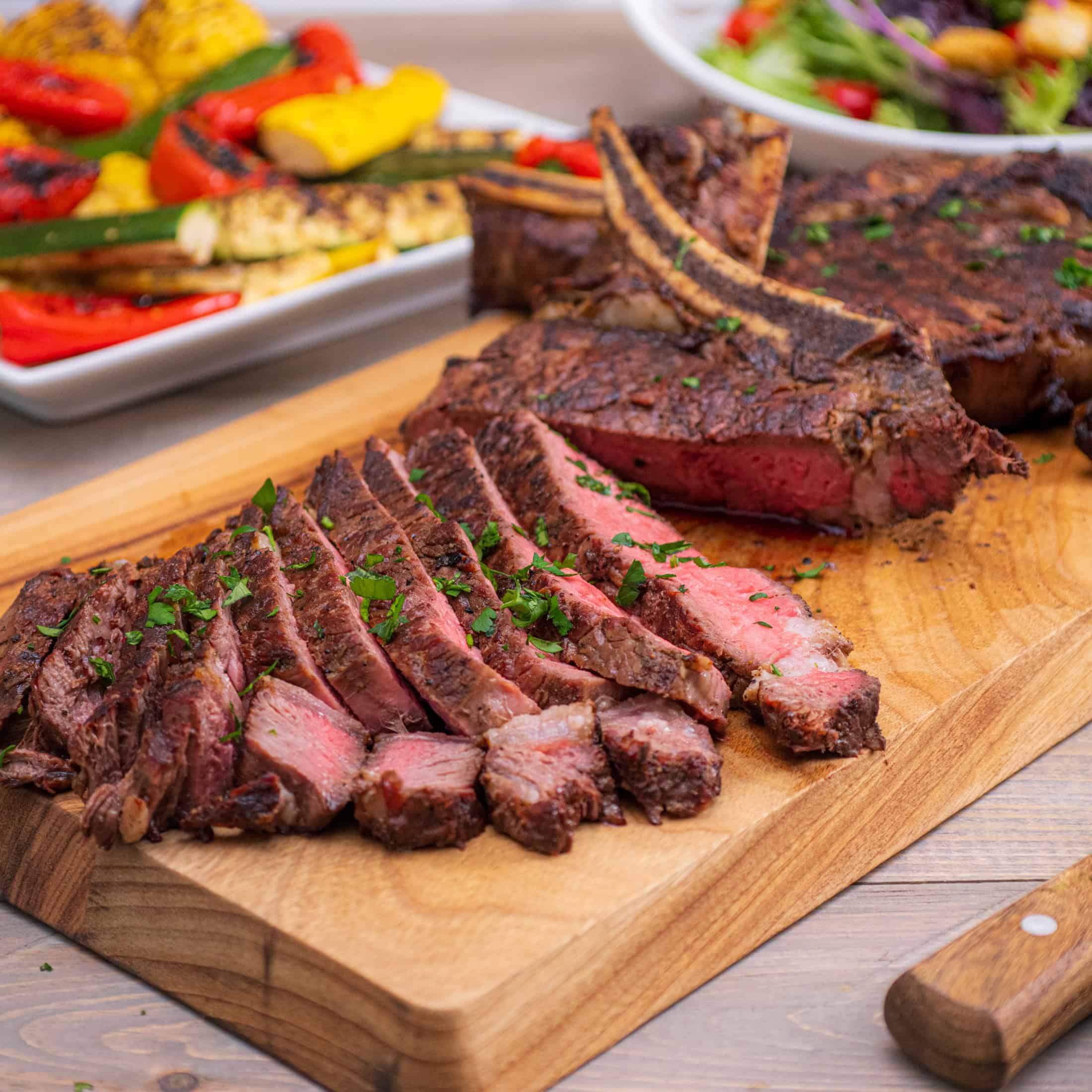
Ribeye steaks get coated in Kinder’s Buttery Steakhouse Seasoning and go over direct, high heat for a hard sear. Then they move to indirect to finish while the corn goes on, rotating every few minutes until the kernels are tender and charred. Zucchini and squash come on last, flesh-side down, and they’re off the grill in under six minutes. Everything rests, everything plates together, and that same garlic-butter-herb richness ties the whole spread.
Three ribeyes (12–15 oz each), four ears of corn, zucchini, squash, and four tablespoons of Kinder’s Buttery Steakhouse Seasoning split between the steak and the vegetables. That’s the whole list. The seasoning does the work, garlic, butter, herbs, and the grill does the rest.
Total time is 35 minutes. Serves four. The technique isn’t precious: set up two heat zones, sear hard, manage the timing. Anyone comfortable on a grill can pull this off on a weeknight, and it holds up just as well for a summer cookout.
A two-zone grill setup is the key move. Direct heat (450–500°F) builds the crust on the steaks. Indirect heat finishes them without overcooking. Corn goes on direct after the steaks move over, 12–16 minutes with four rotations for real char. Zucchini and squash are the most time-sensitive: two to three minutes per side, flesh-side first, off when the flesh is tender but the skin still holds. Watch them closely.
Pull steaks at 130°F for medium-rare. Rest them 10–15 minutes, that’s not optional. That rest is what keeps the plate juicy.
Flavor First.
Buttery Steakhouse Grilled Steak & Veggies
Ingredients
Equipment
Method
- Preheat grill for high-heat direct (450-500 degrees F) and indirect (no flame) cooking areas.
- Coat steaks generously on both sides with Kinder’s Buttery Steakhouse Seasoning (about 1 Tbsp per steak). Set aside while grill heats up.
- Brush zucchini spears, squash spears, and corn cobs with olive oil, then coat evenly with the remaining 2 Tbsp Kinder’s Buttery Steakhouse Seasoning.
- Place steaks over direct high heat. Sear 3-4 minutes per side until a deep crust forms. Move to indirect heat, close the grill, and cook until steaks reach an internal temperature of 130 degrees F for medium-rare. Remove and let rest 10-15 minutes before serving.
- When steaks move to indirect heat, place corn cobs over the direct heat area. Rotate every 3-4 minutes for even charring — about 4 rotations total. Kernels should be tender to a knife poke. If more time is needed, move corn to indirect heat and continue cooking until done.
- While steaks rest, place zucchini and squash spears flesh-side down on the indirect heat area. Grill 2-3 minutes until grill marks form and a slight char develops. Flip skin-side down and cook another 2-3 minutes. Remove when flesh is tender but skin still holds its shape — watch closely, these cook fast.
- Arrange rested steaks alongside grilled corn and vegetables on a large serving platter.
Nutrition
Notes
- Press the seasoning in — Don’t just sprinkle Kinder’s Buttery Steakhouse Seasoning on the steaks — press it firmly into both sides so it adheres before the steak hits the grate. A thick, even coat is what builds a genuine crust.
- Don’t touch the steaks — Once the ribeyes hit direct heat, leave them alone for the full 3-4 minutes. Crust needs contact time. Move them too early and you tear the sear.
- Stagger the vegetables — The corn goes on when the steaks move to indirect heat and takes about 12-16 minutes total. The zucchini and squash go on last — 2-3 minutes per side is all they need. Get the timing wrong and the vegetables go mushy.
- Rest is not optional — A ribeye cut before it rests loses most of its accumulated juices. Give it the full 10-15 minutes covered loosely with foil. Every slice will stay juicy from edge to center.
- Compound butter finish — Melt a pat of herb butter over the steaks while they rest. Softened butter worked with fresh herbs and minced garlic, set on that Kinder’s crust — it disappears into the steak and adds the kind of richness you’d get at a steakhouse finishing station.
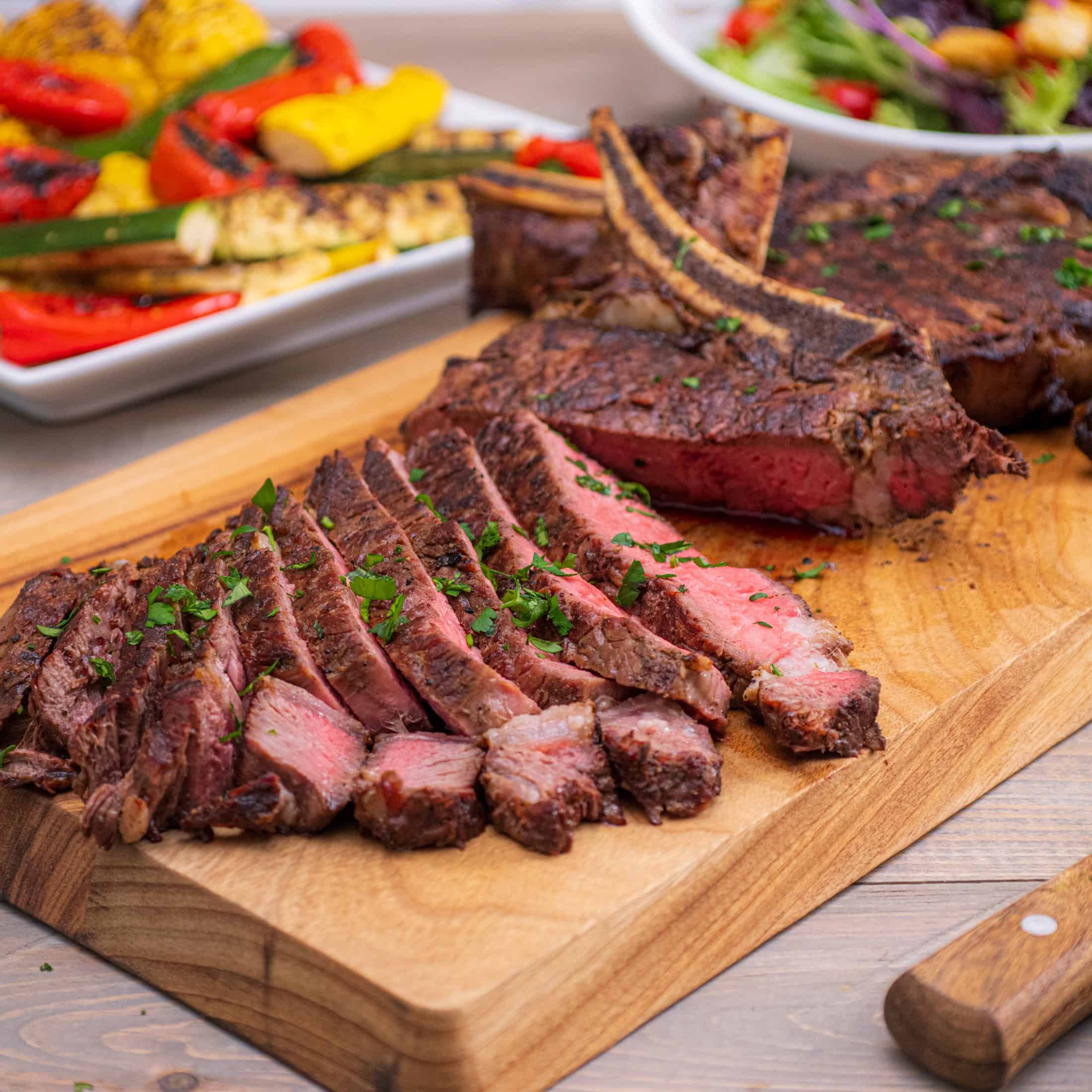
- Let the platter do the presentation work. Set the rested steaks whole on a large cutting board, then arrange the corn and vegetable spears around them before you slice. That board drop is the visual — the crust color on the ribeyes, the char on the corn, the grill marks running across the zucchini and squash.
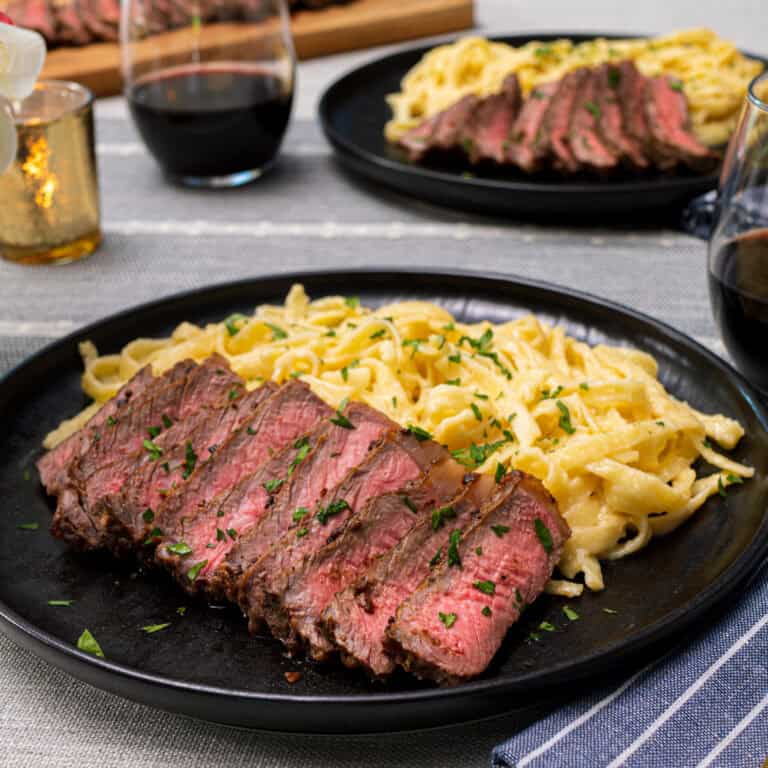
- Slice the steaks against the grain into half-inch strips at the table. Fan the slices across the platter with the corn and vegetable spears alongside. The fat rendered into those slices; don’t hide it.
- Round out the plate with garlic bread to pick up any juice from the board, or a simple arugula salad with shaved Parmesan and a squeeze of lemon. The bitterness cuts the richness of the ribeye. The vegetables are already there — you don’t need much else.
- Refrigerate steak and vegetables separately in airtight containers for up to 3 days. The steak holds better than you’d expect.
- Reheat the steak in a skillet over medium-low with a pat of butter, covered loosely, until just warmed through — about 2-3 minutes per side. Skip the microwave. The texture on a reheated ribeye is already a compromise; the microwave makes it worse.
- Cold leftover steak sliced thin goes directly into a quesadilla with the grilled vegetables and a drizzle of hot sauce. The Kinder’s seasoning on both components means the quesadilla is already built — don’t oversalt.
Tried this recipe?
Let us know how it was!Frequently Asked Questions
Do I need to oil the grill grates?
Yes. Clean, well-oiled grates prevent sticking and help build those grill marks. Oil them just before the food goes on, not during preheat.
Can I use different vegetables?
Yes. Asparagus, bell peppers, eggplant, and mushrooms all take the Kinder’s seasoning well. Adjust grill time based on thickness, thinner pieces need less time on direct heat.
What if I want the steak more well-done?
Leave it in the indirect zone longer. Medium pulls around 140°F; medium-well around 150°F. Always use the thermometer, don’t cut the steak to check.
Can I make this without a two-zone grill setup?
You can, but the sear-to-finish method is what keeps the ribeyes from overcooking. If your grill is small, sear on high heat and then pull the steak to a cooler edge of the grill, covered, to finish.
What’s the best ribeye thickness for this recipe?
One to one-and-a-half inches. Thinner steaks cook too fast on direct heat, you lose the window between a proper crust and the pull temp. Thicker cuts need more indirect time; add a few minutes and keep checking the thermometer.
More like this: Grilling Recipes · Summer Grilling Recipes
One Good Recipe a Week
No spam, no life stories. A recipe worth cooking, in your inbox.