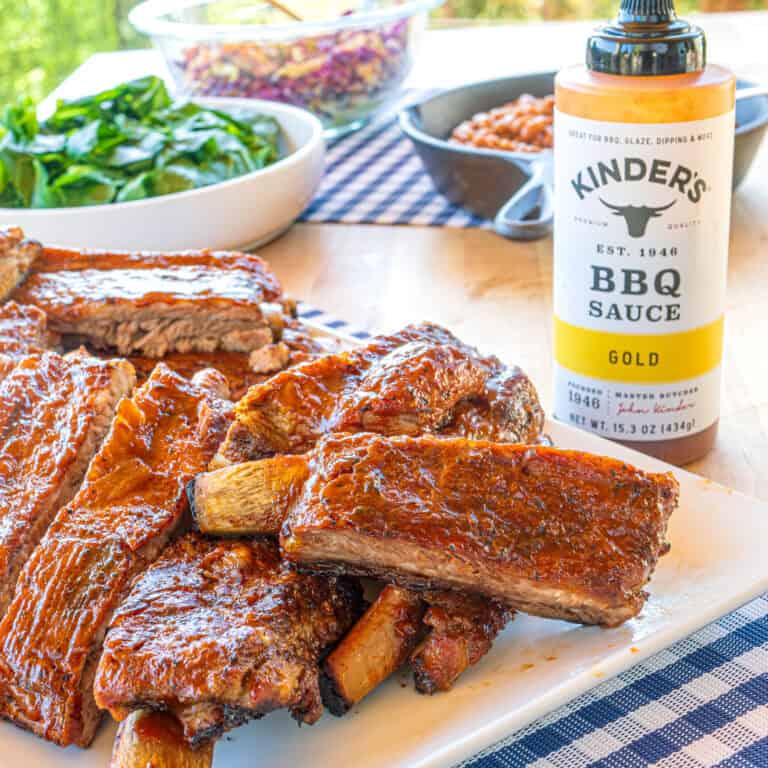
Kinder’s All-Purpose Seasoning Brine for Baby Back Ribs
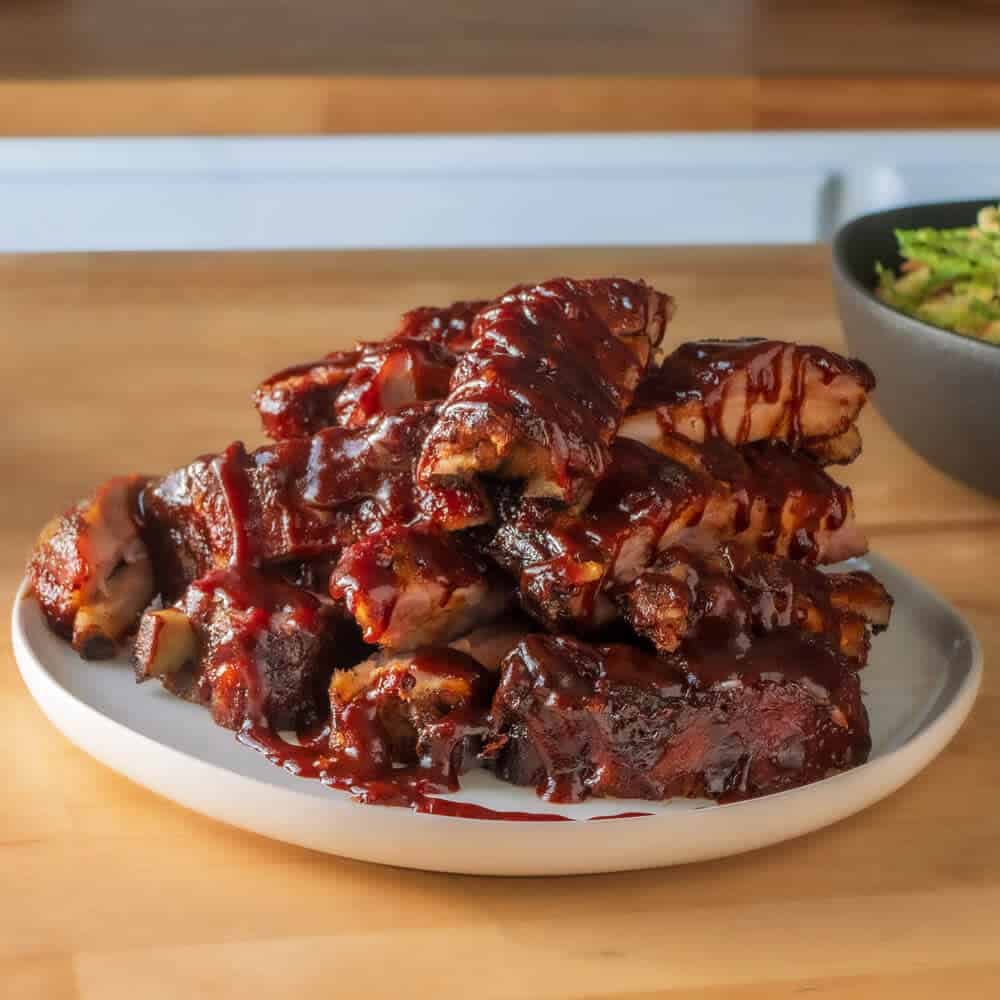
Kinder’s All-Purpose Seasoning Brine for Baby Back Ribs
Most rib rubs sit on the surface and stay there. This brine goes deeper, Kinder’s All-Purpose Seasoning gets dissolved into the meat itself overnight, so every layer of flavor you add afterward has something real to build on.
Seasoning that goes into the meat instead of onto it, a principle behind our game day recipes.
The process is straightforward. Heat cold water with kosher salt, granulated sugar, and Kinder’s All-Purpose Seasoning until everything dissolves, the liquid should reach around 160°F, no need to boil. Add 16 oz of ice water to pull the temp down fast, then refrigerate until fully chilled. Bag up two racks of baby back ribs, pour the brine over, seal tight, and let them rest overnight for 10 to 12 hours. That’s it. Everything that happens next, the rub, the smoke, the glaze, hits different because the foundation is already there.
All-Purpose Seasoning is the backbone of the brine. It’s a dialed-in blend of salt, pepper, garlic, and complementary spices built for exactly this kind of application, not just a surface coating, but a full-penetration seasoning that holds up through hours on a smoker or grill. That’s the difference between ribs that taste seasoned and ribs that taste like they were seasoned.
One note that matters: never add the ribs to warm brine. The liquid has to be fully chilled before the meat goes in. The 16 oz of ice water at step four and the fridge time after are both there to keep you out of the bacterial danger zone (40°F to 140°F). That window is where problems happen. Respect the chill step.
After the overnight rest, pull the ribs from the brine, pat them thoroughly dry, and move on to your preferred cook method, smoker, grill, oven, or slow cooker. Go lighter on added salt in any rub you apply next, since the meat is already seasoned through. Finish with Kinder’s original or honey BBQ sauce in the last stages of cooking.
Flavor First.
All Purpose Seasoning Brine for Ribs
Ingredients
Equipment
Method
- Combine the cold water, kosher salt, granulated sugar, and Kinder’s All Purpose Seasoning in a large pot over high heat.
- Warm the mixture, stirring occasionally, until the sugar and salt fully dissolve. The water should reach approximately 160 degrees F — it does not need to boil.
- Remove from heat and transfer the brine to a large container or heatproof bowl.
- Add the 16 oz of ice water to the warm brine and stir to combine. This rapidly cools the liquid.
- Refrigerate the brine for up to 3 hours, or until it is fully chilled to refrigerator temperature. Never brine with warm liquid, as this promotes bacterial growth.
- Place each rack of baby back ribs into a large zip-lock bag. Fold the racks if needed, or cut each rack in half to fit more easily.
- Pour the chilled brine evenly over the ribs, dividing it between the bags if using two. Seal each bag tightly, pressing out as much air as possible.
- Refrigerate overnight for 10 to 12 hours.
- When ready to cook, remove the ribs from the brine and discard the liquid.
- Pat the ribs dry with paper towels and place them on a paper towel-lined dish. Return to the refrigerator until you are ready to season and cook them.
Notes
- Chill the brine completely — Adding raw pork to warm liquid pushes the meat into the bacterial danger zone (40°F to 140°F). The ice water step and fridge time aren’t optional.
- 10 to 12 hours is the window — Go past 14 hours and the texture starts working against you: the meat pulls mushy and the salt load compounds. Set a timer.
- No 2-gallon bags? — Use a large airtight container with a plate weighted on top to keep the ribs fully submerged. Any air gap means uneven seasoning.
- Dry the ribs before you rub — Wet meat won’t form a bark or crust. After brining, pat every surface dry and return the racks to the fridge uncovered for at least 30 minutes before applying your rub.
- Pull back on salt in the rub — The brine already seasoned the meat internally. Treat any additional rub as flavor, not salt delivery, and taste your blend before you apply it.
- The brine is the setup, not the finish line. After 10 to 12 hours in the brine and a thorough pat-dry, season the ribs with your rub of choice and cook them however you want — smoker, grill, oven, or slow cooker. Each method produces something different; all of them benefit from what the brine already did.
- Kinder’s original BBQ sauce or honey BBQ glaze works well brushed on in the last 15 to 20 minutes of cooking, or served as a dipping sauce on the side. The brined ribs can take a heavier glaze without tasting overworked.
- For sides: coleslaw with some crunch, baked beans, cornbread, or a simple potato salad. Cold beer or sweet iced tea if you’re doing it right. This belongs at a backyard cookout or a game day spread where people are paying attention.
- Brined, uncooked ribs can sit in the refrigerator — out of the brine, patted dry — for up to 24 hours before cooking. Discard the brine once the ribs are out; it’s done its job and shouldn’t be reused.
- Cooked ribs keep in an airtight container in the refrigerator for up to 4 days. For longer storage, freeze for up to 3 months — wrap tightly in foil before bagging to prevent freezer burn.
- To reheat: wrap the cooked ribs tightly in foil and put them in a 300°F oven for 20 to 25 minutes. They come back well without drying out.
Tried this recipe?
Let us know how it was!Frequently Asked Questions
How long should I brine baby back ribs?
10 to 12 hours is the sweet spot. Below 8 hours and the seasoning doesn’t fully penetrate; above 14 hours the texture starts to break down. Overnight is the move.
Can I use a different seasoning instead of Kinder’s All-Purpose?
Yes. Sub in 1 Tbsp garlic powder, 1 tsp onion powder, 1 tsp black pepper, and 1 tsp smoked paprika alongside the kosher salt already in the recipe. It approximates the blend, but Kinder’s integrated seasoning distributes more evenly through the brine.
Why does the brine need ice water?
The brine has to be fully chilled before raw meat goes in. Ice water drops the temperature fast, without it, the liquid would need hours in the fridge to cool safely. Raw pork in warm liquid means bacterial growth.
Can I use this brine for spare ribs?
Yes, but spare ribs are thicker. Push toward the 12-hour end of the window for fuller penetration. The process is the same.
Do I still need a rub after brining?
The brine handles the interior, the rub handles bark, crust, and surface flavor. Both have a role. Just go lighter on salt in your rub since the meat is already seasoned through.
Can I reuse the brine?
No. Discard it after the ribs come out. Brine that’s been in contact with raw pork is a food safety issue and shouldn’t be reused.
More like this: BBQ Rib Recipes · Kinder’s Recipes
One Good Recipe a Week
No spam, no life stories. A recipe worth cooking, in your inbox.