Spicy Teriyaki Pork Tenderloin Skewers
Spicy Teriyaki Pork Tenderloin Skewers
Spicy teriyaki pork skewers are easy to get right, and just as easy to pull too sweet or too dry. The fix for both: sriracha goes into the marinade, not on top at the end, and the pork comes off the grill at 145°F, not 165°F.
Heat goes into the marinade, not on top at the end. A correction our grilling recipes make often.
Pork tenderloin is the right cut for this. Lean enough to thread cleanly and handle a hot grill, but forgiving enough that a five-minute rest keeps it tender all the way through. Chicken thigh works too, but tenderloin takes the char without drying out the way breast would.
The marinade is simple: teriyaki, sriracha, at least 30 minutes. Overnight is better. More time means the heat and the salt work all the way through the meat instead of just coating the surface, every bite carries the flavor, not just the outside.
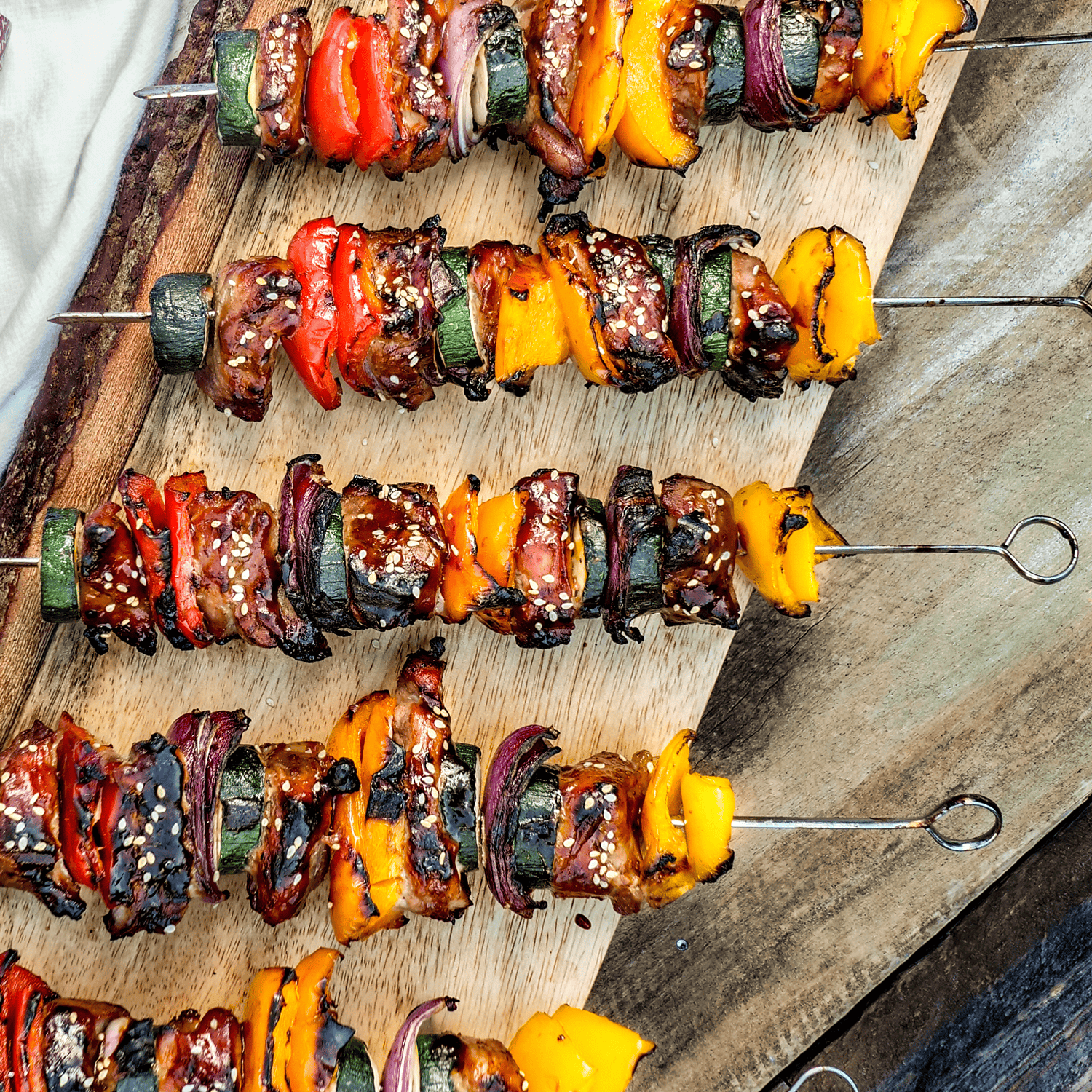
Three colors of bell pepper aren’t just visual. Red, yellow, and orange each caramelize differently over direct heat. The char on the edges adds a bitterness that cuts the sweet glaze. Zucchini and red onion fill the skewers out and soak up the drippings as they cook.
Grill at 425°F, hot enough to build real color, fast enough to keep the center tender. Rotate every five minutes and pull at 145°F internal. Five minutes of rest, then finish with a brush of fresh teriyaki over the grilled surface. That last coat is what closes the dish.
Sesame seeds last. Against the dark glaze and charred vegetables, they add the crunch right where it matters.
Flavor First.
Spicy Teriyaki Pork Tenderloin Skewers
Ingredients
Equipment
Method
- Place pork tenderloin cubes in a large bowl or zip-lock bag.
- Pour 3/4 cup teriyaki sauce and all 3 tsp. sriracha sauce over the pork and toss until completely coated.
- Seal and refrigerate for at least 30 minutes, or preferably overnight for deeper flavor.
- Preheat grill to 425°F.
- Remove pork from marinade and reserve remaining liquid.
- Thread pork tenderloin cubes onto skewers alternating with zucchini, bell peppers, and red onion pieces.
- Place skewers directly on the grill grates and cook for 15-20 minutes, rotating every 5 minutes for even cooking.
- Check that the internal temperature of the pork reaches 145°F before removing from the grill.
- Transfer skewers to a serving platter and let rest for 5 minutes.
- Brush skewers generously with remaining teriyaki sauce.
- Garnish with sesame seeds and serve warm.
Nutrition
Notes
- Soak wooden skewers long enough — Two hours minimum in water, not 20 minutes. Skewers that aren’t fully saturated will start charring before the pork is halfway done. Metal skewers skip this entirely and conduct heat through the meat for faster, more even cooking.
- Uniform cuts on everything — 2-inch pieces on the pork and all the vegetables. Inconsistent sizing means some pieces overcook before others are done. Do a quick eye check before threading — if something’s visibly bigger, trim it down.
- Set aside fresh sauce for finishing — Don’t brush with the marinade the raw pork sat in. Before you marinate, pour off a separate portion of clean teriyaki sauce for the final brush. The liquid from the marinade bag has been in contact with raw pork and needs to reach a full rolling boil before it’s safe to apply to cooked food.
- Use a thermometer, not the clock — 145°F internal is the target. Skewers cook unevenly depending on grill hot spots and how tightly you thread the pieces. The clock tells you roughly how long; the thermometer tells you when to pull.
- Rest before the final brush — Five minutes off the grill before you add the finishing sauce. The skewers are still hot enough to absorb the glaze without burning it on the platter.
- Overnight marinade is worth the plan — The flavor shift from 30-minute to overnight is real. Sriracha and teriyaki penetrate all the way through the tenderloin instead of just the surface. If you’re cooking Saturday, throw the bag in the fridge Friday night.
- Jasmine rice is the obvious call — it soaks up the teriyaki drip without competing with the glaze. Steamed, not fried. You want the rice neutral against the sauce.
- For noodles, soba works better than ramen here. The buckwheat note plays off the char and doesn’t fight the sweet heat.
- A cold cucumber salad cuts through the richness: thin-sliced cucumbers, rice vinegar, fresh ginger, a little sesame oil. Let it sit while the pork marinates — by the time you’re done grilling, the cucumbers have absorbed the dressing.
- Grilled pineapple on a separate skewer is a strong side. The caramelized sugar mirrors the teriyaki glaze, and the acidity keeps the plate from going flat. Four or five chunks per skewer, two minutes per side.
- Cooked skewers keep in an airtight container in the fridge for up to 3 days. Pull the pork and vegetables off the skewers before storing — they stack better and reheat more evenly without the metal or wood in the way.
- Reheat on a grill over low heat (around 300°F) for 5–6 minutes, or in a 325°F oven for 8–10 minutes covered with foil. A light brush of fresh teriyaki before reheating brings back the glaze.
- Raw marinated pork keeps for up to 2 days in the fridge. After that, cook it or freeze it — the acid in the marinade starts to break down the texture if it sits much longer.
Tried this recipe?
Let us know how it was!Frequently Asked Questions
How long should I marinate pork for teriyaki skewers?
Minimum 30 minutes, but overnight gives noticeably better flavor. More time means the sriracha and teriyaki work all the way through the meat instead of just coating the surface. If you’re short on time, 30 minutes works, make sure every piece is fully coated before you seal the bag.
What internal temperature should pork skewers reach?
145°F. That’s the USDA standard for whole cuts of pork, still slightly pink at the center, fully safe, and far more tender than cooking to 165°F. Use a meat thermometer rather than cutting into the pieces to check.
Can I make these skewers without a grill?
Yes. A grill pan over high heat on the stovetop gets you close, you won’t have the smoke, but you’ll get char marks and a caramelized glaze. A broiler on high also works: 4–5 minutes per side, positioned 6 inches from the element. Rotate once.
Can I substitute chicken for pork?
Boneless, skinless chicken thighs work well, same 2-inch cuts, same marinade, same grill temp. Thighs are more forgiving than breast on high heat. Pull chicken at 165°F internal.
Why are my pork skewers drying out on the grill?
Two likely reasons: you’re cooking past 145°F, or you’re skipping the rest after pulling. Tenderloin finishes fast, monitor the internal temp and pull the moment it hits 145°F. Rest five minutes before serving.
Is teriyaki sauce gluten-free?
Most commercial teriyaki sauces contain soy sauce, which has wheat. For a gluten-free version, use tamari or a certified gluten-free teriyaki sauce, both work the same way in this recipe.
More like this: Summer Grilling Recipes · Kinder’s Recipes
One Good Recipe a Week
No spam, no life stories. A recipe worth cooking, in your inbox.