Lemon Pepper Parmesan Crusted Tilapia
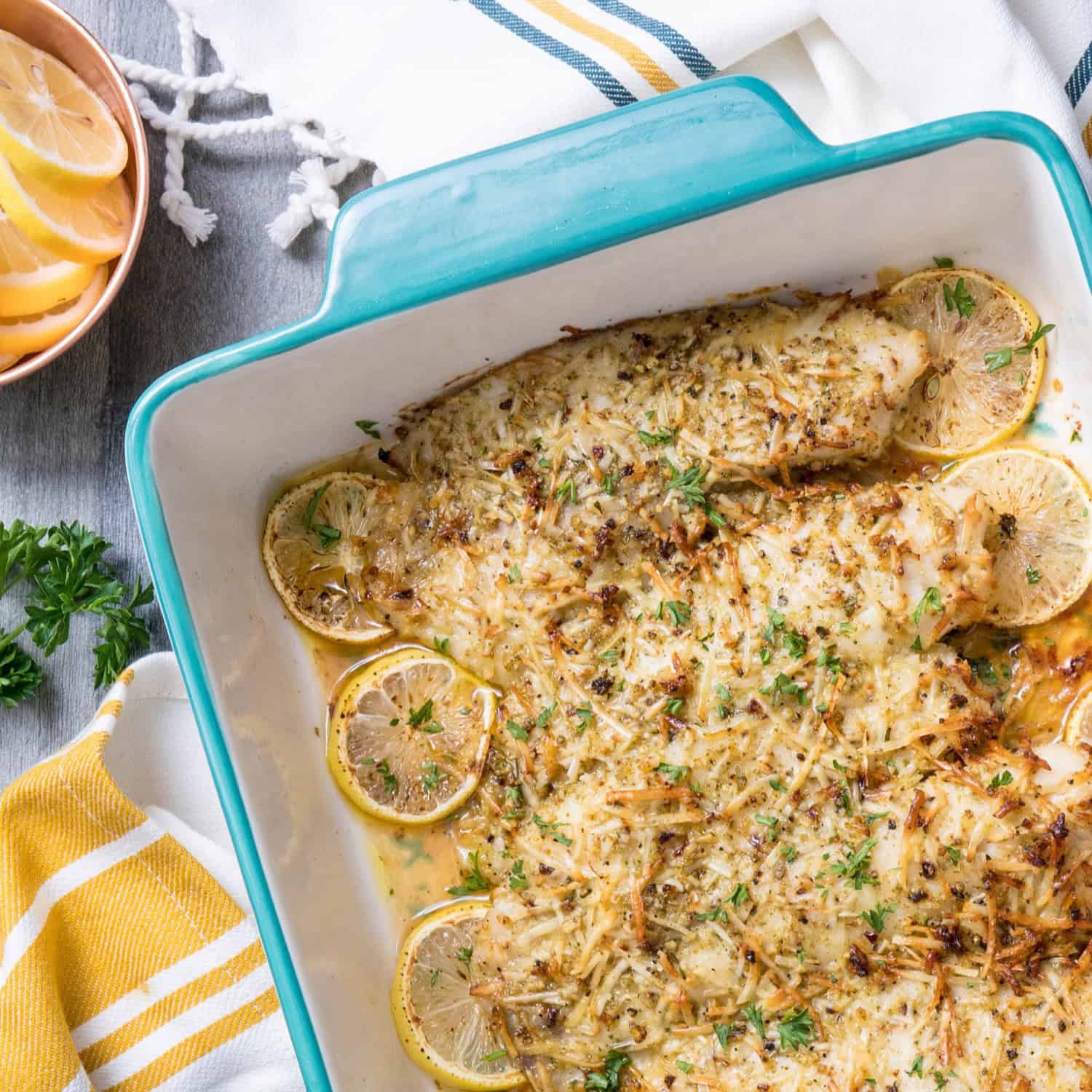
Lemon Pepper Parmesan Crusted Tilapia
Most baked tilapia comes out pale, soft, and underseasoned. This version has a crust.
Crust on a mild fish is the whole job, and our Kinder’s recipes treat it that way.
Two types of parmesan work together here, grated for the coating, shredded for the top. The grated parmesan gets mixed with lemon pepper seasoning, salt, and minced garlic into a dry mixture. Press each fillet firmly into it on both sides. Don’t just dredge, full contact so the crust grips and bakes into the fish instead of sliding off. Then shredded parmesan goes over the top before it hits the oven, melting into a second layer of crust as it browns.
Tilapia is mild by design. That’s not a flaw, it means the lemon pepper and garlic you put into the crust actually land. The parmesan brings salt and fat the fish doesn’t have on its own. Lemon pepper cuts through the richness. Together they give the dish a clean, sharp finish.
Fresh parsley at the end isn’t decoration. It adds a brightness that rounds out the lemon pepper and keeps the whole plate from reading too rich.
At 400°F, the fish bakes in 10 to 12 minutes. The outside develops a golden parmesan crust while the inside stays flaky and moist. Pull it when a fork splits the fillet cleanly, or when a thermometer reads 145°F. Rest for a minute before plating.
One baking sheet. Minimal cleanup. Done in about 25 minutes including preheat. This is what a weeknight fish dinner should actually taste like.
Flavor First.
Lemon Pepper Buttery Parmesan Crusted Tilapia
Ingredients
Equipment
Method
- Preheat oven to 400°F.
- In a small bowl, whisk together the grated parmesan cheese, lemon pepper seasoning, salt, and minced garlic until well combined.
- Coat each tilapia fillet lightly with olive oil on both sides.
- Press each oiled fillet firmly into the parmesan seasoning mixture, coating both sides generously.
- Arrange the coated fillets on a lightly greased baking sheet, spacing them about 1 inch apart.
- Sprinkle the shredded parmesan cheese evenly over the top of each fillet.
- Place the baking sheet in the preheated oven.
- Bake for 10-12 minutes until the fish flakes easily with a fork and is cooked through (internal temperature 145°F if using a thermometer).
- Remove from the oven and garnish with fresh chopped parsley.
- Serve immediately while hot.
Nutrition
Notes
- Press, don’t dredge — Hold each fillet in the parmesan mixture for 2 to 3 seconds per side with firm pressure. That contact is what builds the crust.
- Pat the fillets dry first — Moisture is the enemy of a crispy coating. A few passes with a paper towel before you start keeps the parmesan mixture from turning pasty.
- Space the fillets on the pan — Leave at least an inch between pieces. Crowded fish steams instead of bakes, and the crust won’t set.
- Check at 10 minutes — Tilapia goes from perfect to overcooked fast. The fillet should flake at the thickest point when pressed with a fork. Don’t wait for visible browning on the sides.
- Build heat into the coating — A pinch of cayenne or smoked paprika mixed into the parmesan adds depth. It doesn’t change the character of the dish — it sharpens it.
- Plate it immediately — The crust softens as it sits. Get it on the plate straight from the oven for the best texture.
- Roasted asparagus is the natural pairing — both cook at 400°F, so run them on the same sheet pan and have everything ready at the same time. A squeeze of lemon over both ties the plate together.
- For a low-carb plate, cauliflower rice works well. It absorbs the olive oil and parmesan drips from the fish and fills out the plate without adding weight.
- If you want something more substantial, roasted baby potatoes and a simple arugula salad with lemon vinaigrette round out the meal cleanly. The lemon pepper in the crust is flexible — it pairs with most vegetables without conflict.
- Tilapia is best eaten fresh. The parmesan crust softens in the refrigerator, and reheating it recovers some crispness but not all.
- Store leftovers in an airtight container for up to 2 days. Reheat in a 300°F oven for 5 to 7 minutes — enough to warm through without drying the fish out. Skip the microwave; it turns the crust rubbery.
- Freezing isn’t recommended. Tilapia loses its texture when frozen and thawed, and the parmesan crust doesn’t survive the process intact.
Tried this recipe?
Let us know how it was!Frequently Asked Questions
What temperature should you bake parmesan crusted tilapia?
400°F is the target. Hot enough to set the crust and cook the fish through in 10 to 12 minutes without drying it out.
How do you keep parmesan from falling off tilapia?
Press the fillet firmly into the coating mixture, full contact on both sides for a few seconds each. Pat the fish dry first so the crust grips instead of sliding.
Can you use frozen tilapia for this recipe?
Yes, but thaw it completely and pat it dry before coating. Excess moisture from frozen fish prevents the crust from adhering and causes it to steam instead of bake.
What’s the safe internal temperature for tilapia?
145°F. At that point the fish will also flake easily when pressed with a fork at the thickest part.
Can you make parmesan crusted tilapia in an air fryer?
Yes. Air fry at 400°F for 8 to 10 minutes. The circulating heat is well-suited for this crust, you may get slightly more even browning than in the oven.
What sides go with lemon pepper parmesan tilapia?
Roasted asparagus, cauliflower rice, steamed broccoli, or roasted potatoes all work. The lemon pepper keeps the flavor clean, so it pairs with most vegetables without competing.
More like this: Fish & Seafood Recipes
One Good Recipe a Week
No spam, no life stories. A recipe worth cooking, in your inbox.