Carne Asada Rollitos de Carne with Spanglish Asadero Seasoning
Carne Asada Rollitos de Carne with Spanglish Asadero Seasoning
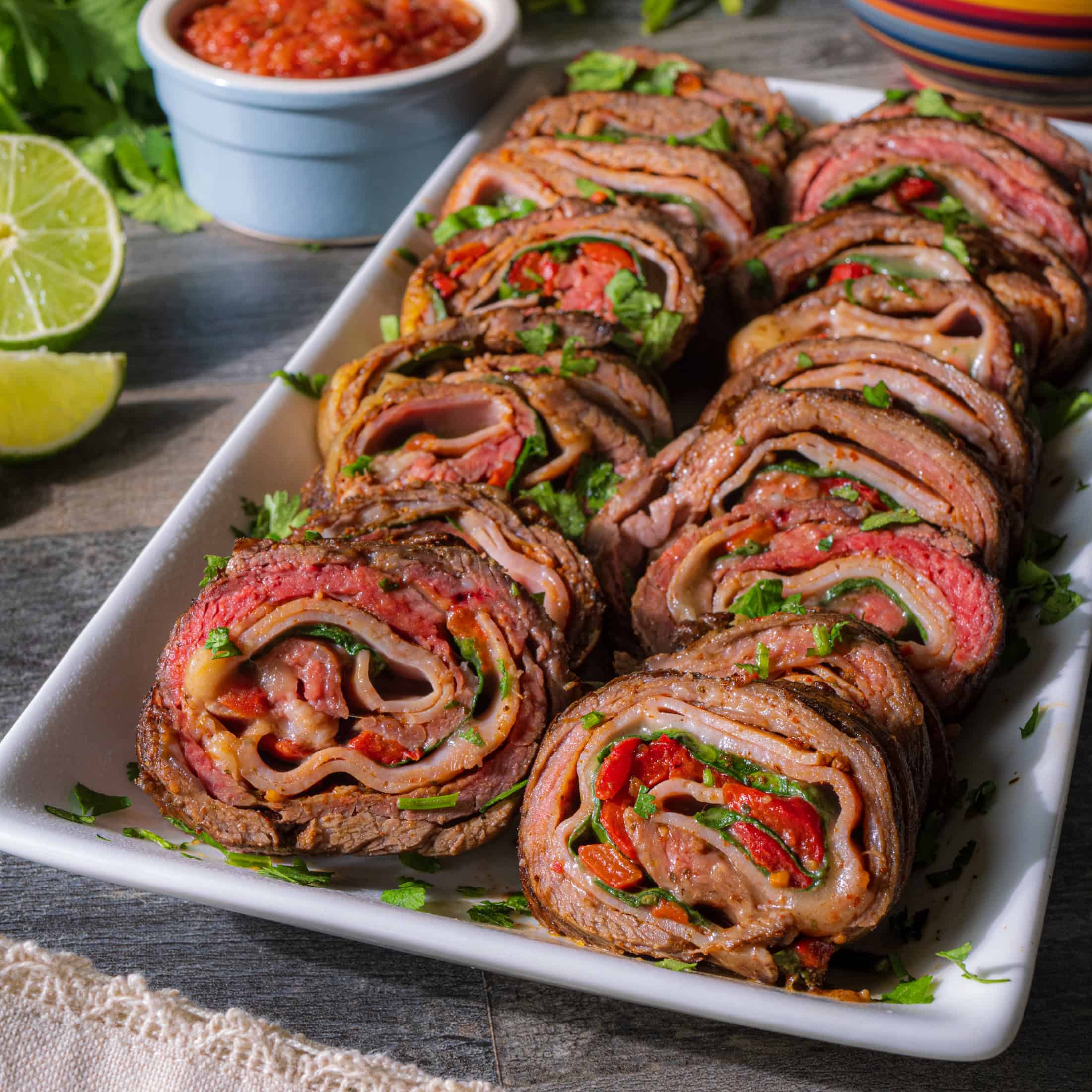
Carne asada rollitos de carne: the cross-section tells the story. Thin-sliced flap meat, pounded flat and seasoned generously with Spanglish Asadero Carne Asada Seasoning, rolled tight around ham, melted cheese, wilted spinach, and roasted red peppers. Sear it until browned on all sides, roast to 135°F, rest 10 minutes, and slice. The layered filling does the explaining.
Rolling beef around a filling means slicing it thin enough to bend without tearing. One of the more involved builds in the steak recipes.
The Spanglish Asadero Carne Asada Seasoning does real work here. It’s built around citrus, chili, and garlic, the combination that separates carne asada from generic seasoned beef. Applied to both sides of the flap meat before rolling, it penetrates through the entire roll during the roast, not just the exterior. No overnight marinade. No complicated prep.
Technique is direct: pound the beef to ¼-inch, season both sides, layer the filling, roll tight from the long side, tie or pin every inch or two. Sear seam-side down first, that’s what holds the shape. Then 375°F for 20–25 minutes. Pull at 135°F. Flap meat holds at medium-rare. Carryover during the 10-minute rest brings it the rest of the way.
The combination, carne asada bark on the outside, ham and melted cheese through the middle, roasted red pepper and spinach woven in, reads like more effort than 50 minutes on a Tuesday. Spoon the pan juices over the rounds before serving. They carry everything from the sear and the roast.
Scales clean. Double the batch for a group and slice at the table. Serve over mashed potatoes and spoon the pan juices over everything.
Flavor First.
CARNE ASADA ROLLITOS DE CARNE
Ingredients
Equipment
Method
- Prep: Lay beef slices flat on a cutting board. If needed, pound to ¼-inch thickness and overlap pieces to form a large rectangle (about 12×8 inches). Season both sides generously with Spanglish Asadero Carne Asada Seasoning.
- Add filling: Layer ham slices evenly over the beef, leaving a 1-inch border. Sprinkle shredded cheese over the ham, then add a layer of spinach and chopped roasted bell peppers. Press down lightly.
- Roll: Starting from a long side, tightly roll the beef into a log, tucking in the filling as you go. Secure with kitchen twine every 1–2 inches or use toothpicks to pin the seam.
- Sear: Preheat oven to 375°F. Heat olive oil in a large skillet over medium-high until shimmering. Sear the roll seam-side down for 2–3 minutes per side (8–10 minutes total) until browned on all sides.
- Roast: Transfer seared roll to a foil-lined baking dish or sheet pan. Roast in the oven 20–25 minutes, until internal temperature reaches 135°F for medium-rare or 145°F for medium (insert thermometer into the thickest part of the beef, avoiding the filling).
- Rest: Remove from oven and tent loosely with foil. Rest 10 minutes.
- Slice: Remove twine or toothpicks. Slice into 1-inch rounds with a sharp knife. Spoon pan juices over the top.
- Serve immediately with mashed potatoes, roasted vegetables, or a simple green salad.
- PRO TIPS & DIAL-INS
- Seasoning: Use 3 tbsp Spanglish Asadero Carne Asada Seasoning for bold flavor that really shines through the roll.
- Cheese & spinach: Pat spinach very dry (or quickly sauté) to prevent sogginess. Mozzarella gives great melt; provolone adds nice tang.
- Doneness: Flap meat stays tender at medium-rare to medium. Pull at 135°F — it will carry over to perfect temp during rest.
- Make-ahead: Assemble and roll the night before, wrap tightly in plastic, and refrigerate. Sear and roast the next day.
- Slicing: Use a sharp serrated knife for clean cuts after resting.
Nutrition
Notes
- Season both sides of the beef — Apply Spanglish Asadero Carne Asada Seasoning to both the outside surface and the inside-facing surface before rolling. Seasoning only the exterior means the center slices taste flat.
- Pat the spinach completely dry — Wet spinach steams inside the roll and makes the filling soggy. Pat dry with paper towels, or sauté quickly, cool it down, then layer it in.
- Sear seam-side down first — The seam is what holds the roll together. Searing it first locks the shape before the other sides go in. Start anywhere else and the roll opens up in the pan.
- Pull at 135°F, not 145°F — Carryover during the 10-minute rest brings flap meat from 135°F to around 140–145°F. Pull at 145°F and you overshoot into well-done — the texture tightens fast at that point.
- Use a serrated knife to slice — A straight-edge knife compresses and drags the roll on the cut. A serrated blade goes through the seared crust and filling cleanly.
- Make it the night before — Assemble, roll, and tie. Wrap tight in plastic and refrigerate overnight. Sear and roast the next day — the overnight sit also helps the seasoning penetrate deeper into the meat.
- Mashed potatoes are the natural pairing — the pan juices reduce as they rest and become a loose sauce right in the dish. Spoon them over the rounds and the potatoes together. Roasted vegetables work the same way: the juices coat everything and pull the plate together without extra sauce work.
- Slice at the table if the setting allows. The cross-section — seared exterior, layered ham, cheese, red pepper, and spinach — is part of the presentation. Spoon the pan juices over each round right before serving.
- For a more casual setup, skip the potatoes and serve with warm flour tortillas, fresh salsa, diced white onion, and a squeeze of lime. The carne asada seasoning holds up well in that format and the roll slices work as a taco filling without falling apart.
- Refrigerate leftovers in an airtight container for up to 3 days. Store sliced rounds intact rather than breaking them apart — they hold their shape better and reheat more evenly.
- Reheat in a covered skillet over medium heat with a splash of broth or water. Two to three minutes per side is enough. Avoid high heat — flap meat that goes past medium gets tight and dry fast, and the seasoning fades with it.
- Leftovers hold well for meal prep. Slice thin for a beef sandwich or wrap, or reheat rounds whole and serve over rice. Add any fresh garnishes (cilantro, lime, diced white onion) after reheating, not before.
Tried this recipe?
Let us know how it was!Frequently Asked Questions
What cut of beef works best for carne asada rollitos de carne?
Flap meat is the first choice, it’s thin enough to pound to ¼-inch without much resistance and stays tender at medium-rare. Skirt steak works too, but the pronounced grain can affect how cleanly the roll holds when sliced. Either way, buy thin-sliced if your butcher carries it.
Do I have to use Spanglish Asadero Carne Asada Seasoning?
The ingredient list includes an exact substitute: chili powder, garlic powder, cumin, dried oregano, salt, pepper, cayenne, and fresh lime. It replicates the core profile. If you can find the Spanglish Asadero, use it, the citrus-forward base is harder to rebuild from pantry staples than it looks.
Can I make carne asada rollitos de carne ahead of time?
Yes. Assemble, roll, and tie the night before. Wrap tight in plastic and refrigerate. Sear and roast the next day, the overnight sit also helps the seasoning penetrate deeper. Don’t skip the sear; it’s what locks the shape and builds the crust.
What internal temperature should I pull the roll from the oven?
135°F at the thickest part of the beef, avoiding the filling. Carryover during the 10-minute rest brings it to around 140–145°F. Pull at 145°F and you’ll land well past medium after the rest, flap meat gets tough at that temperature.
How do I keep carne asada rollitos from unraveling while searing?
Tie the roll with kitchen twine every 1–2 inches before it hits the pan. Sear seam-side down first and hold it there for the full 2–3 minutes, that seals the seam before you rotate. Toothpicks work as backup if you’re out of twine, but tie both ends at minimum.
Can I finish this in an air fryer instead of the oven?
After searing, yes. Set to 375°F and reduce the roast time by 20–25%, start checking at 15 minutes. Air fryers run hot and the confined space accelerates cooking. The exterior will crisp more than the oven version, which works with the carne asada bark.
More like this: Kinder’s Recipes
One Good Recipe a Week
No spam, no life stories. A recipe worth cooking, in your inbox.