Grilled Carne Asada Flank Steak and Veggies
Grilled Carne Asada Flank Steak and Veggies
Carne asada isn’t complicated, it’s unforgiving. The difference between flank steak that chars right and flank steak that ends up tough and gray comes down to three things: seasoning that penetrates, a pan that’s properly hot, and knowing when to pull it.
Peppers and onions go on the grate first because they take roughly twice as long as the flank does. The whole beef lineup runs on that kind of ordering.
Spanglish Asadero Carne Asada Seasoning handles the first one. Built on citrus, chili, and garlic (the core combination that traditional carne asada marinades rely on), it works from the inside out as a dry blend. You’re getting marinade-level flavor without the overnight soak. Season both sides generously, let the steak rest in the fridge for at least an hour, and the foundation is set before the pan heats up.
From there, it’s technique. Get the pan or grill to temperature before anything goes on it. A hot surface builds the crust, the sear, the color, the char that defines carne asada. Sear 3–4 minutes per side until that crust is set, then reduce heat and cook to your target temp. Pull at medium-rare (135°F) for the best result. Rest the steak ten full minutes before the knife goes near it.
While the steak rests, the vegetables go into the same pan. Bell peppers and red onion pick up every bit of seasoning and fond the steak left behind. Seven to eight minutes over medium heat until they soften and char at the edges.
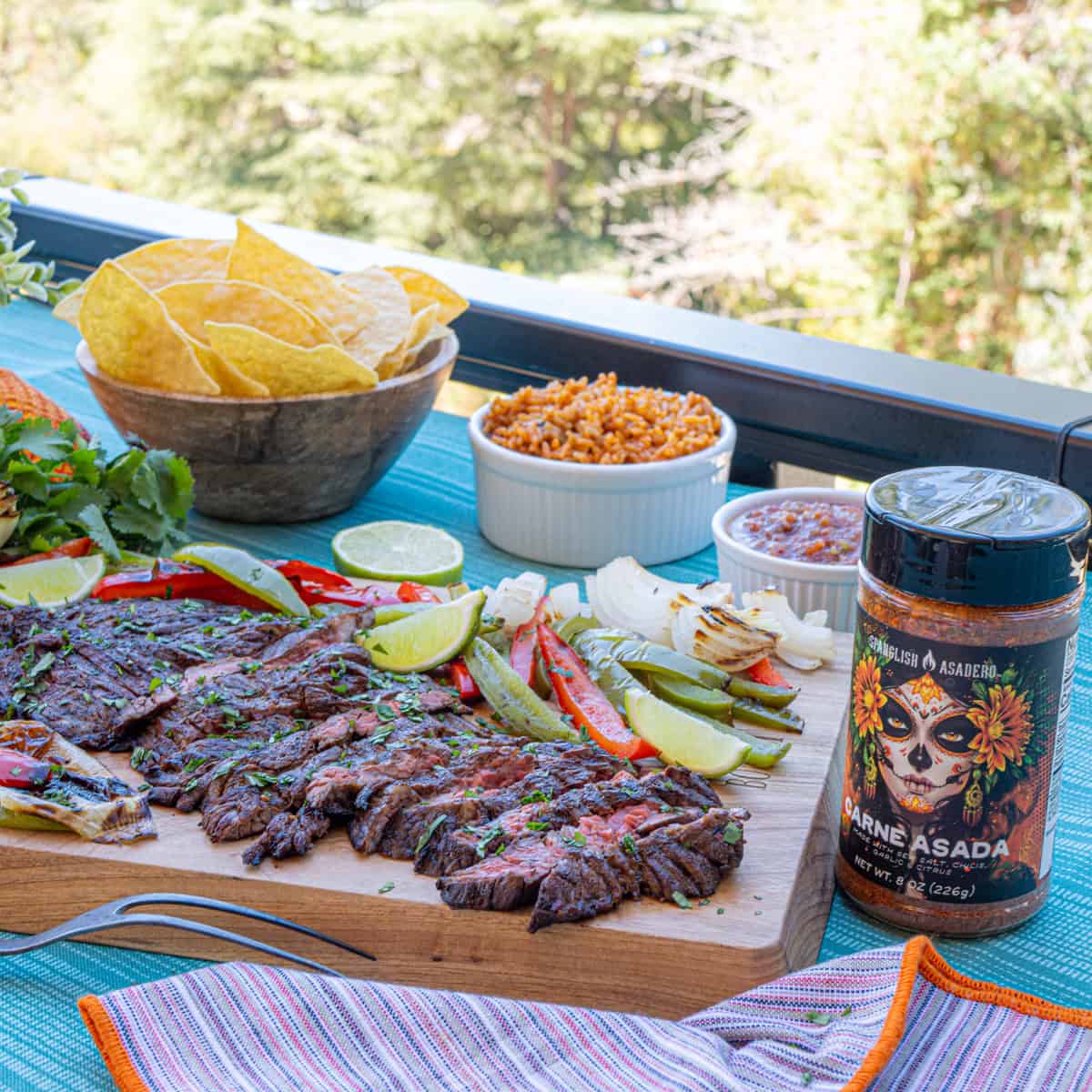
Slice against the grain. Flank steak is long-fibered, and cutting with the grain makes it tough no matter how well it cooked. Thin, angled slices across the muscle. That’s the move.
Serve with warm tortillas, over rice, or straight off the cutting board with lime wedges. This is the plate you make on a Tuesday when you want something that actually tastes like you put thought into it.
Flavor First.
CARNE ASADA FLANK STEAK & VEGGIES
Ingredients
Equipment
Method
- Season flank steak generously on both sides with Spanglish Asadero Carne Asada Seasoning. Wrap and refrigerate at least 1 hour (or up to overnight).
- Remove steak from refrigerator 15–20 minutes before cooking to reach room temperature.
- Heat a large skillet or grill pan over high heat with 1½ tbsp olive oil until shimmering.
- Place flank steak in the hot pan. Sear 3–4 minutes per side until a deep crust forms.
- Reduce heat to medium and cook until desired doneness: rare 125°F, medium-rare 135°F, medium 145°F (total cook time ~8–12 minutes).
- Remove steak from pan and rest 10 minutes before slicing.
- In the same pan, add remaining 1½ tbsp olive oil. Add sliced bell peppers and red onion. Cook 7–8 minutes, stirring occasionally, until vegetables soften and develop char.
- Thinly slice rested flank steak against the grain.
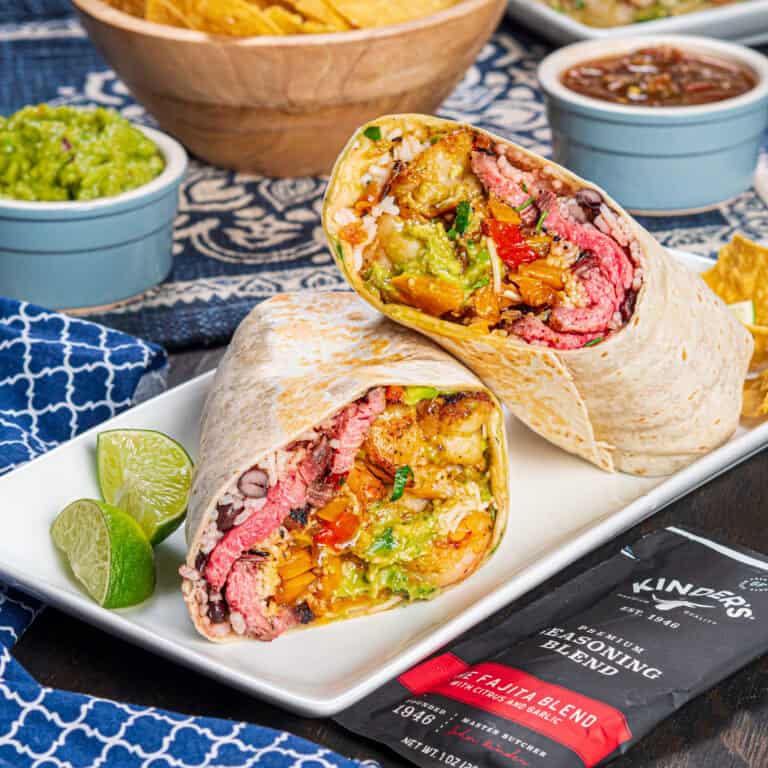
- Serve sliced steak and grilled vegetables together. Great in warm tortillas, as a fajita bowl over rice, or enjoyed as is with lime wedges.
Nutrition
Notes
- Season ahead and let it work — Pat the steak dry, coat both sides with the full amount of Spanglish Asadero, wrap, and refrigerate for at least one hour. The dry environment lets the seasoning penetrate instead of just sitting on the surface.
- Dry it again before cooking — Even after refrigerating, pat the steak dry right before it goes in the pan. Surface moisture creates steam. Steam kills a sear.
- Heat the pan first, not after — Get the pan or grill to full temperature before the steak goes on. 400°F for a grill; shimmering-hot for cast iron or a skillet. A cold surface means gray, steamed meat instead of a crust.
- Use a thermometer, not a timer — Steak thickness varies. Pull at 135°F for medium-rare. Carryover heat adds about 5°F during the rest, so don’t wait for the number to climb to your target.
- Slice perpendicular to the grain — Look at the muscle fibers before the knife goes down. Flank steak is long-fibered — slicing with the grain makes every bite chewy regardless of how well it cooked. Go across at a slight angle, thin slices.
- Don’t clean the pan between steak and veggies — The fond and residual seasoning left in the pan are flavor. Bell peppers and onion absorb all of it as they cook down.
- Warm tortillas are the obvious call — flour or corn, charred briefly on the same pan or grill. Load with sliced steak, charred peppers and onion, fresh cilantro, diced white onion, and a squeeze of lime. The acid cuts through the char and lifts the whole plate.
- Over rice works just as well. White rice or cilantro-lime rice under the steak and vegetables makes a clean bowl without needing anything else.
- For a backyard cookout or summer grill night, double the steak and set out toppings separately: cotija, sliced avocado, pickled jalapeños, salsa roja. Let people build their own plates.
- Refrigerate leftovers in an airtight container within two hours. Steak and vegetables keep up to three days.
- Reheat the steak in a skillet over medium heat with a small splash of broth or water — just enough to prevent drying out. Two to three minutes per side. High heat at this stage toughens the protein and fades the seasoning.
- Keep any fresh toppings separate and add them after reheating. Cilantro, lime, and white onion are all better fresh.
Tried this recipe?
Let us know how it was!Frequently Asked Questions
Can I use a different cut if I can’t find flank steak?
Skirt steak is the closest substitute, same long grain, similar thickness, same slicing rule. Hanger steak works too. Both take the seasoning well and cook fast over high heat. Avoid thicker cuts like ribeye or sirloin; the technique and timing don’t translate.
What internal temperature should I pull the flank steak at?
135°F for medium-rare, which is the sweet spot for flank steak. Rare is 125°F, medium is 145°F. The steak carries over about 5°F during the 10-minute rest, so pull it before you hit your target number.
Can I use a different seasoning if I don’t have Spanglish Asadero Carne Asada Seasoning?
Yes, the ingredients list includes an exact substitution using pantry staples: chili powder, garlic powder, cumin, oregano, salt, pepper, cayenne, and a squeeze of lime. It replicates the core flavor profile. If Spanglish Asadero is available locally or online, it’s worth keeping on hand.
Can I cook this on a stovetop grill pan instead of an outdoor grill?
Yes. A cast iron grill pan over high heat gives you similar char and grill marks. Get the pan very hot before the steak goes on and make sure the kitchen is well-ventilated. Cook times are the same; use the same internal temperature targets.
Can I marinate the steak overnight?
Yes, overnight improves the result. More time for the seasoning to penetrate means deeper flavor throughout. Up to 24 hours in the fridge is the practical ceiling; beyond that the texture can start to soften.
How thin should I slice the flank steak?
About a quarter inch, against the grain, at a slight angle. Thin slices are more tender than thick ones, and the angle gives you more surface area per slice. A sharp knife makes the difference, a dull one drags and tears.
More like this: Grilling Recipes · Summer Grilling Recipes · Kinder’s Recipes
One Good Recipe a Week
No spam, no life stories. A recipe worth cooking, in your inbox.