Ingredients
Equipment
Method
- Cover chicken with half of the teriyaki sauce and marinate for 30 min - 1 hour in the refrigerator prior to cooking.
- In a large skillet, heat sesame oil over medium-high heat.
- Add the chicken and cook until golden and almost cooked through, about 10 minutes (flipping halfway through).
- Drizzle 2-4 tbsp. of teriyaki sauce over chicken and simmer until sauce has thickened and chicken is cooked through. Internal temperature should reach at least 165°F.
- Remove chicken and let rest on a plate.
- In the same skillet, heat 1 tbsp. of sesame oil and add snap peas. Cook for 3 minutes.
- Add carrots and zucchini noodles and cook for an additional 2 minutes until cooked but still crunchy.
- Add remaining teriyaki sauce, combine and cook for 1 minute.
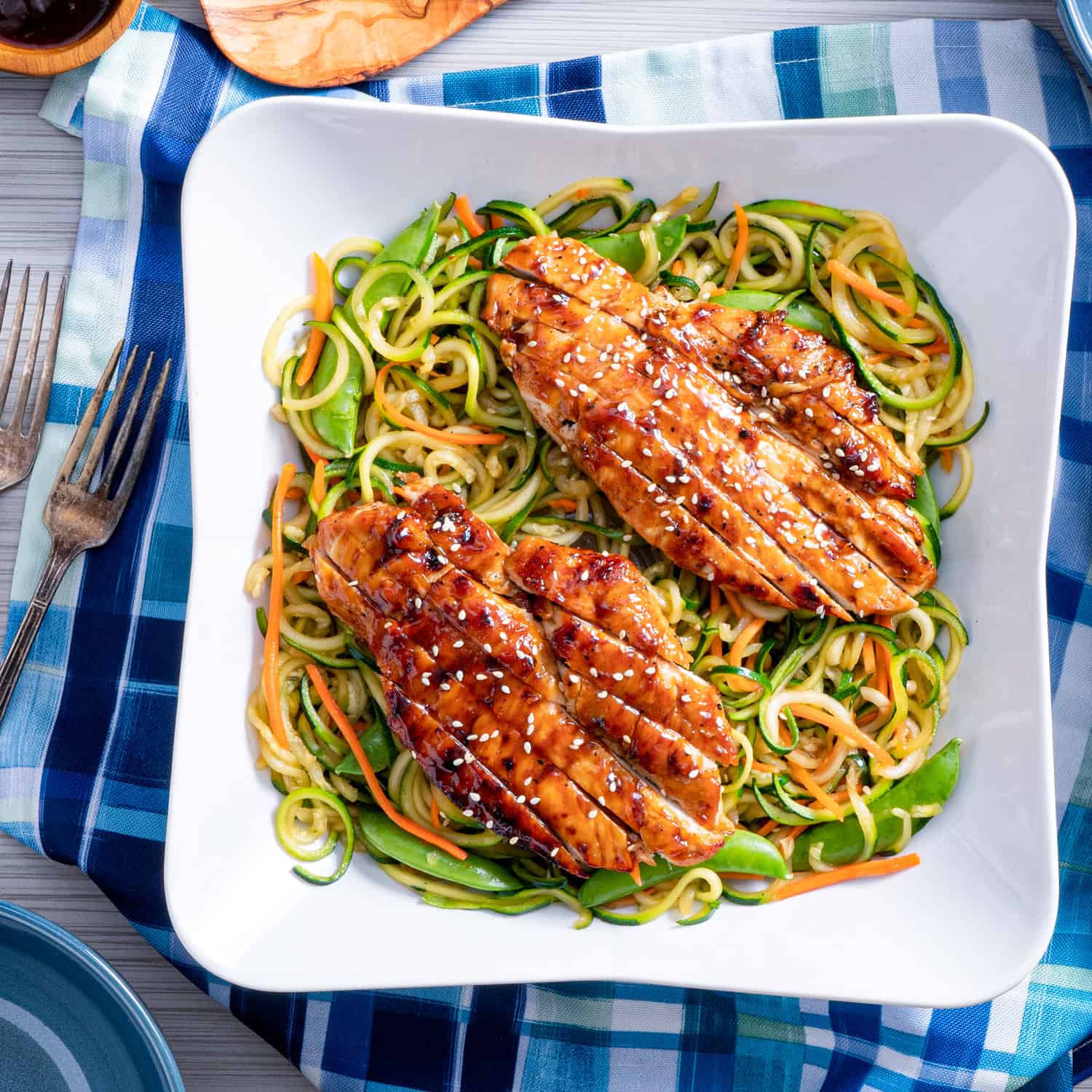
- Remove from heat. Place chicken on top of noodles. Garnish with sesame seeds and green onion. Serve and Enjoy.
Nutrition
Notes
- Pound to 1/2-inch — Even thickness isn't just about aesthetics. A flat, uniform breast cooks in the same time across the whole surface. No dry edges waiting for a thick center to catch up.
- Don't rush the marinate — Thirty minutes is the floor. An hour is better. The teriyaki sauce needs contact time to penetrate the meat, not just coat the outside.
- Get the pan hot before the chicken goes in — Medium-high heat, sesame oil shimmering. A cold pan gives you steamed chicken. You want that sear.
- Add the zucchini last — Two minutes is all it needs. Any longer and the water releases and you've got soup instead of noodles. Watch the clock.
- Let the chicken rest — Even five minutes on the plate while you finish the noodles makes a difference. The juices redistribute and the slices won't run when you plate.
- Reserve some teriyaki sauce for the noodles — The recipe splits the sauce between the marinade and the cook. Keep track of what goes where so you're not short at the end.
- Slice the chicken on a bias and fan it over the noodles — the cut exposes more surface area and the presentation looks intentional.
- For extra crunch and protein, scatter crushed roasted peanuts or sliced almonds over the top. It adds texture against the soft zucchini and ties in with the Asian-inspired profile of the dish.
- If you want more substance, a side of steamed jasmine rice or a fried egg on top fills it out. The rice soaks up any extra teriyaki sauce from the plate. The egg yolk breaks into the noodles and adds richness.
- Sriracha mayo alongside turns this into two different dishes depending on how much heat you want. Mix sriracha with a spoonful of Japanese mayo, drizzle, done.
- Store leftovers in an airtight container in the refrigerator for up to 3 days.
- Reheat the chicken and noodles separately if you can — the zucchini releases water as it sits, and reheating in a hot skillet over medium heat drives off that moisture better than a microwave does. If you're reheating together, use a skillet, stir often, and keep the heat low.
- The noodles are best the day they're made. After a day in the fridge, the zucchini softens noticeably. It still tastes right — just expect a different texture than the first pass.