Ingredients
Equipment
Method
- Before cooking anything, prep all ingredients and have them ready at the stove. Stir-fry moves fast -- there is no time to chop mid-cook. Pat shrimp completely dry with paper towels, then toss with 1 tsp Kinder's The Blend Seasoning in a bowl.
- Heat a wok or large saute pan over medium-high heat until very hot. Add 1 Tbsp vegetable oil and 1/2 tsp sesame oil. When the oil is shimmering and just beginning to smoke, add shrimp in a single layer.
- Do not move the shrimp for 1 minute -- allow a proper sear to develop on the bottom. After 1 minute, stir and cook for an additional 30 seconds until the shrimp are pink and curled into a C-shape. Transfer shrimp to a clean plate and set aside.
- Add the remaining 1 Tbsp vegetable oil to the hot wok. Add red bell pepper and zucchini. Stir-fry for 2 minutes over high heat, tossing constantly, until the vegetables are bright and slightly tender but still have bite.
- Add minced garlic and minced ginger to the wok. Stir-fry for 30 seconds until fragrant -- do not let it burn.
- Add pineapple chunks. Stir-fry for 30 seconds until heated through.
- Pour in 1 cup Kinder's Sweet & Sour Wing Sauce & Dip. Stir everything to combine and cook until the sauce is simmering and has coated all the vegetables, about 2 minutes.
- Return the cooked shrimp to the wok. Stir to coat with the sauce and cook for 2 minutes until everything is warmed through and the shrimp are fully coated.
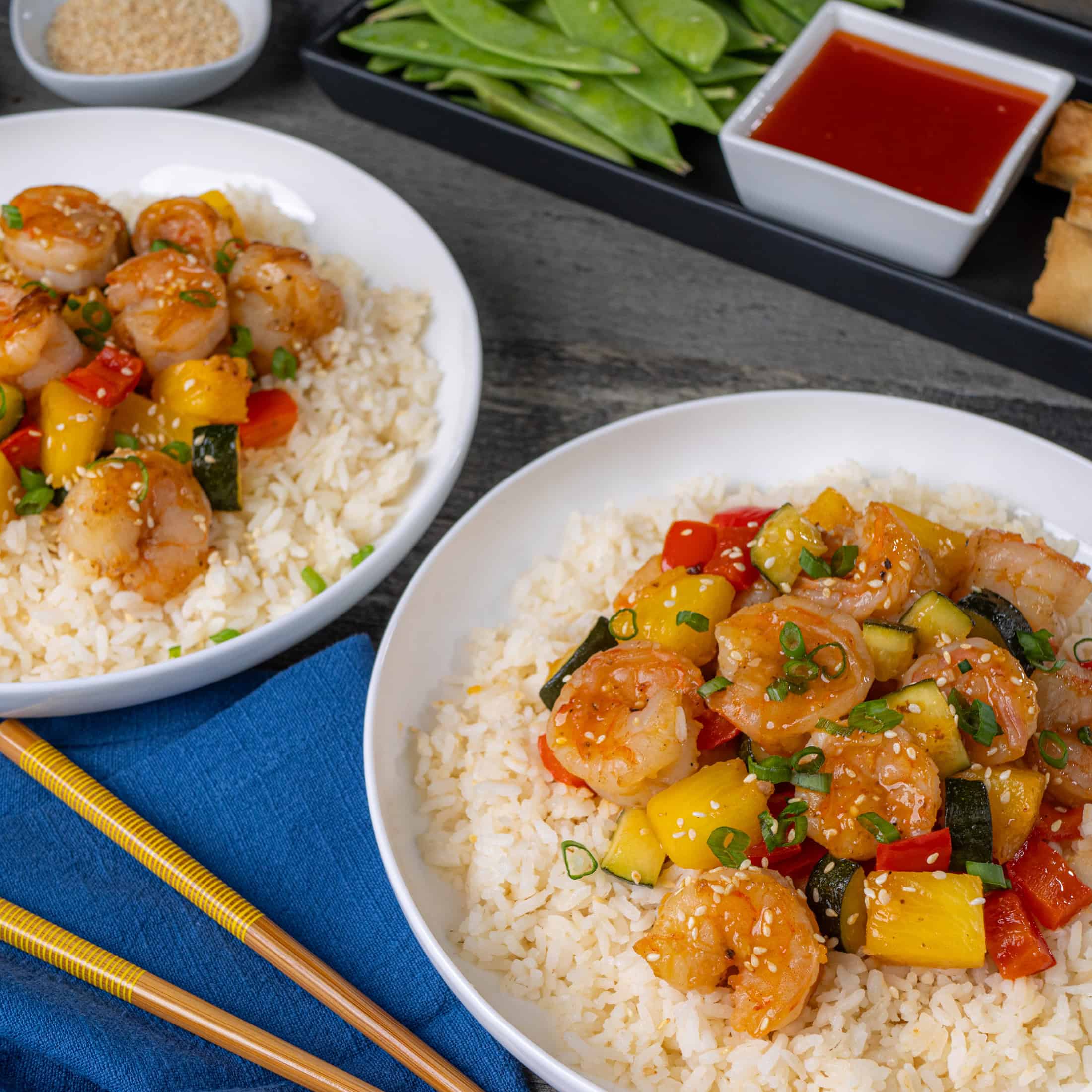
- Serve immediately over steamed rice, garnished with sliced green onions and sesame seeds.
Nutrition
Notes
- Go 16/20 count shrimp. Smaller shrimp cook through before the crust sets and turn rubbery fast. 16/20 — roughly 16 to 20 shrimp per pound — holds its shape against a hot wok and still cooks in 90 seconds. Fresh or fully-thawed frozen both work; what matters is they're cold and dry when they hit the seasoning.
- Dry the shrimp like you mean it. Moisture is the enemy of sear. Spread the shrimp on a sheet pan lined with paper towels, pat the tops with another towel, and let them sit for a minute while you finish prep. A dry exterior is how you get caramelized color instead of a pale, steamed shrimp.
- Wait for the shimmer. The wok has to be screaming hot before anything goes in. Heat it empty over high for a full minute, add the oil, and wait another 20–30 seconds until it shimmers and starts to haze. Cold oil in a cold pan means steamed, stuck shrimp — no shortcut.
- Shrimp first, out second. Shrimp cook in 90 seconds total; the vegetables take 3 minutes. Cook them together and the shrimp overshoot every time. Sear the shrimp, pull them to a plate, run the vegetables, then fold the shrimp back in at the end to warm through in the sauce.
- Pineapple goes in last. Pineapple breaks down fast in sugar-heavy heat. Add it 30 seconds before the sauce so it warms through but stays bright and intact. Longer than that and it turns to jam — fine flavor, wrong texture for a stir fry.
- Cornstarch slurry is optional. Kinder's Sweet & Sour Wing Sauce reduces to a glossy coating on its own. If you want a thicker, restaurant-style cling, whisk 1 tsp cornstarch into 1 Tbsp cold water and stir it in after the sauce has simmered for a minute. Thickens in 30 seconds.
- Plate and eat immediately. A sweet and sour shrimp stir fry doesn't hold. The vegetables keep cooking on residual heat, the sauce soaks into the shrimp, and the texture loses its edge inside 5 minutes. Rice in the bowl, stir fry on top, scallions and sesame, eat.
- Work in batches if the pan's crowded. A 12-inch wok takes 1.5 lb of shrimp without crowding; anything smaller and the shrimp steam instead of sear. If the pan looks packed, split the shrimp into two rounds, sear each for 90 seconds, then pull both to a plate before the vegetables go in. A sweet and sour shrimp stir fry needs breathing room to build real color.
- Jasmine rice is the default for a sweet and sour shrimp stir fry — the floral, slightly sticky texture catches the runoff sauce without getting gummy. White rice or fried rice both work. For a lower-carb move, swap in cauliflower rice or serve it straight over a pile of shredded napa cabbage and let the sauce wilt it lightly. Lo mein or rice noodles tossed in a splash of sesame oil also slot in if you want to skip the rice.
- For more vegetable in the bowl, steam broccoli or blanch snap peas on the side — both stand up to the sauce without fighting the shrimp for attention. Mandarin orange segments stand in for the pineapple if you want a softer, less acidic tropical note.
- Finish with sliced green onions and toasted sesame seeds. For heat, a line of chili crisp or sriracha across the shrimp, or drop 1 tsp of chili garlic sauce into the wok with the garlic and ginger for through-line heat instead of surface heat. A squeeze of lime right before serving cuts the sweet and wakes the whole plate up.
- Leftover sweet and sour shrimp stir fry holds in an airtight container in the fridge for up to 2 days. Keep the rice in its own container — rice that sits in sauce overnight turns gummy. Let everything cool to room temperature before sealing (warm food in a closed container equals condensation, and condensation is how leftovers go sideways).
- Reheating: skip the microwave. It rubbers the shrimp and wilts what little texture the vegetables have left. Hot skillet, 2–3 minutes over medium-high, tossing constantly. Splash of water if the sauce has tightened in the fridge. Not freezer-friendly — shrimp turn spongy, vegetables go limp, sauce separates on thaw. Best the day it's made; quality drops fast after a few hours.