Ingredients
Equipment
Method
- Freeze steak for 30 minutes -- this firms it up enough to slice very thinly against the grain. Thin slices are the key to a tender, authentic cheesesteak. Alternatively, ask your butcher to slice it thin.
- Season sliced steak with Kinder's The Blend Seasoning and toss to coat evenly. Set aside.
- Heat 1 Tbsp vegetable oil in a large cast-iron skillet over medium-high heat. Add sliced onions and bell peppers. Cook, stirring occasionally, for 8-10 minutes until vegetables are caramelized and softened. Season with salt and pepper to taste. Remove from the pan and keep warm.
- Increase heat to high. Add the remaining 2 Tbsp vegetable oil to the pan.
- Add the seasoned steak slices in a single layer (work in batches if needed to avoid overcrowding). Cook 2-3 minutes without stirring to build a sear, then flip and cook another 1-2 minutes until just cooked through.
- Return onions and peppers to the pan with the steak. Toss everything together to combine.
- Divide the meat and vegetable mixture into 4 portions in the pan. Lay 2 slices of provolone over each portion. Cover the pan with a lid or tent with foil for about 1 minute until the cheese melts completely.
- While the cheese melts, butter the cut sides of the hoagie rolls and toast them cut-side down in a separate pan or on the griddle until golden.
- Use a spatula to scoop each cheese-covered portion into a toasted roll. Serve immediately.
Nutrition
Notes
- Partial-freeze for the thin slice. Twenty to thirty minutes in the freezer is the shortcut that makes rib eye sliceable at home. The muscle firms up just enough to hold a paper-thin cut against the grain. Thick, uneven slices are what make a homemade rib eye cheesesteak go chewy — fix that at the cutting board before you fix anything in the pan.
- The pan needs to be loud. When the seasoned steak hits cast iron, you want an immediate, aggressive sizzle. A quiet landing means the pan's too cool and you're about to steam the beef gray. Heat the skillet over high until a drop of water skitters and evaporates in a second.
- Work in batches — always. Two pounds of sliced rib eye crowded into one pan drops the surface temperature fast and kills the sear. Two batches of 1 lb each, 2–3 minutes per side, undisturbed until the flip. Pull the first batch to the board while the second cooks.
- Cheese melts on the meat, off the heat. The Philly-style move: kill the heat or pull the pan, divide the beef-and-vegetable mixture into four portions, layer two slices of provolone per portion, then cover with a lid or foil for about one minute. You're using residual heat, not direct heat — that's what gives you melted-not-rubbery cheese.
- Toast the hoagie or the whole thing collapses. A soft untoasted roll turns into a sponge the second the beef juices hit it. Butter the cut side and toast face-down in a separate pan or on the griddle until it's golden and structural. This is not optional.
- Caramelize, don't sauté. Eight to ten minutes on the onions and peppers over medium-high, stirred occasionally — not constantly — builds the sweet, deeply savory base the rib eye leans on. Rushed onions taste raw under the cheese.
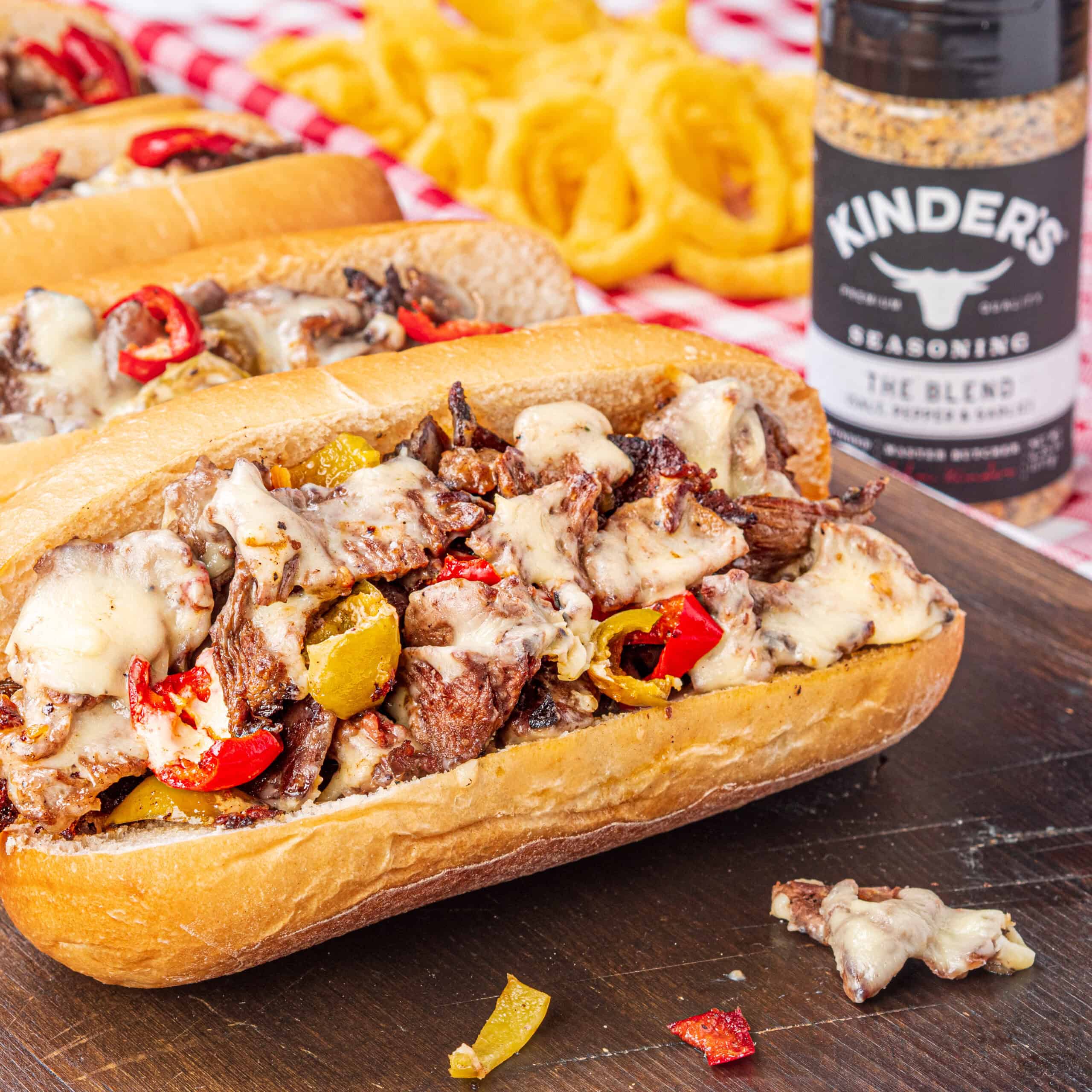
- Serve each rib eye cheesesteak straight from the pan with crispy fries, kettle chips, or a cold drink that knows how to cut through the cheese. Build a topping bar for the table: hot cherry peppers, sauteed mushrooms, extra caramelized onions, a bottle of hot sauce, and a shaker of Kinder's The Blend for anyone who wants more seasoning on the finished sandwich.
- A sharp vinegar-dressed green salad on the side keeps the richness in check without fighting the beef. For game day, cut each sandwich in half and put the halves on a board with the toppings in little bowls — that's the move when the game is on and the table is the kitchen island.
- Date night version: plate a single sandwich cleanly with fries and a small salad, keep the peppers and hot sauce on the side, and pour something with a little heft — a dry red, a cold lager, whatever you drink with a good burger.
- Store the cooked beef-and-vegetable mixture in an airtight container in the refrigerator for up to 2 days. Keep the rolls separate and dry — do not store assembled sandwiches or you'll reheat a soggy roll.
- Reheat the meat mixture in a hot skillet over medium with a splash of water or beef broth to bring the moisture back without steaming it flat. Toast a fresh hoagie, add cheese at the last minute under a lid, and assemble hot.
- The cooked steak and vegetable mixture also freezes well in an airtight container for up to 2 months. Thaw overnight in the refrigerator, then finish in a hot skillet — reheating from frozen dumps water and turns the beef tough.