Ingredients
Equipment
Method
- Rinse ribs under cold water and pat completely dry with paper towels. If desired, remove the membrane from the underside of each rack: slide a butter knife under the membrane at one end, grip with a paper towel for traction, and peel it off in one sheet. Removing the membrane allows seasoning to penetrate both sides and produces more tender results.
- Season both sides of each rack generously with Kinder's All Purpose Seasoning, pressing gently to adhere. Let the seasoned ribs sit at room temperature for 20-30 minutes while the oven preheats.
- Preheat oven to 275 degrees F (no convection fan). Tear off two large sheets of heavy-duty foil -- enough to wrap each rack with 6 inches of extra foil on each side.
- Place each rack bone-side up on a sheet of foil. Fold and crimp the foil tightly to create a completely sealed pouch around each rack. Place on a baking sheet.
- Bake at 275 degrees F for 1.5 hours. Rotate the pan 180 degrees and continue baking for another 1.5 hours. At the 3-hour mark, test for tenderness by piercing the meat between two bones with a fork -- it should slide in and out with almost no resistance. If needed, continue baking in 15-minute increments until tender.
- Once tender, remove from the oven and allow the ribs to rest, still wrapped in foil, for 30-60 minutes. This rest period lets the juices reabsorb into the meat and takes tenderness to the next level.
- Increase oven temperature to 325 degrees F. Unwrap the ribs and place bone-side down on the baking sheet. Brush generously with Kinder's Founder's Reserve BBQ Sauce, coating the top and sides completely.
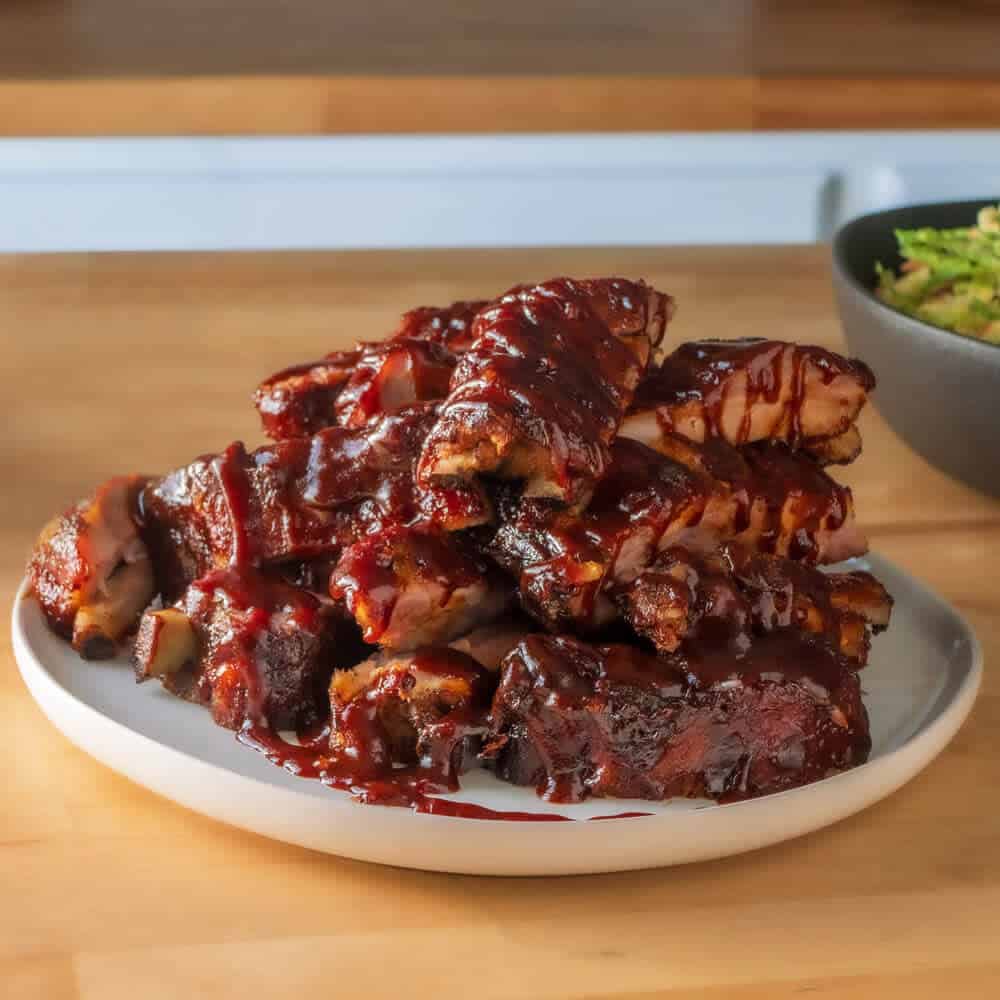
- Roast uncovered at 325 degrees F for 20 minutes until the sauce sets and begins to caramelize. For an extra-lacquered glaze, apply a second coat of sauce and roast an additional 15 minutes. Rest briefly before cutting into individual ribs and serving.
Notes
- Remove the membrane first — Slide a butter knife under one end, grip with a paper towel, and peel it off in one sheet. Skip this and no amount of low-and-slow will fix the texture.
- Crimp the foil tight — The ribs braise in their own juices inside the pouch. Any steam escaping means moisture loss. Press each seam closed and fold it twice.
- Don't skip the rest — After 3 hours, leave the ribs wrapped in foil off the heat for 30-60 minutes. Residual heat keeps breaking down the collagen while the juices redistribute back into the meat. This step alone makes a noticeable difference in the final texture.
- Hold 275°F — not higher — Patience at low temperature produces better results than rushing. Push to 300°F or above and the exterior dries out before the collagen has time to break down.
- Want smokier? — Add 1 tsp of liquid smoke to the Kinder's All Purpose Seasoning and work it in before wrapping. It bridges the gap between oven and pit without overpowering the sauce.
- Classic sides earn their place here: coleslaw, cornbread, baked beans. Extra Kinder's Founder's Reserve BBQ Sauce on the side for dipping — not optional. A cold pickle tray cuts the richness well if you're running a full spread.
- Pair with grilled corn on the cob and cold potato salad for an outdoor-dinner-indoors setup that doesn't need a sunny day to work. Or lay the ribs over thick slices of buttered white bread to catch the drippings — a Southern BBQ move worth trying.
- For a game-day spread, cut the racks into individual bones before plating and pile them on a sheet pan lined with butcher paper. These are meant to be eaten with your hands.
- Leftover ribs keep wrapped tight or in an airtight container in the refrigerator for up to 4 days.
- To reheat: wrap loosely in foil, add a small splash of water or broth inside the packet, and heat at 300°F for 15-20 minutes. The added moisture keeps the meat from drying out on the second pass.
- For a sauced finish after reheating, brush with additional Kinder's Founder's Reserve BBQ Sauce and run under the broiler for 3-5 minutes.
- Freeze cooked, cooled ribs tightly wrapped for up to 2 months. Thaw overnight in the refrigerator before reheating — don't rush the thaw on these.