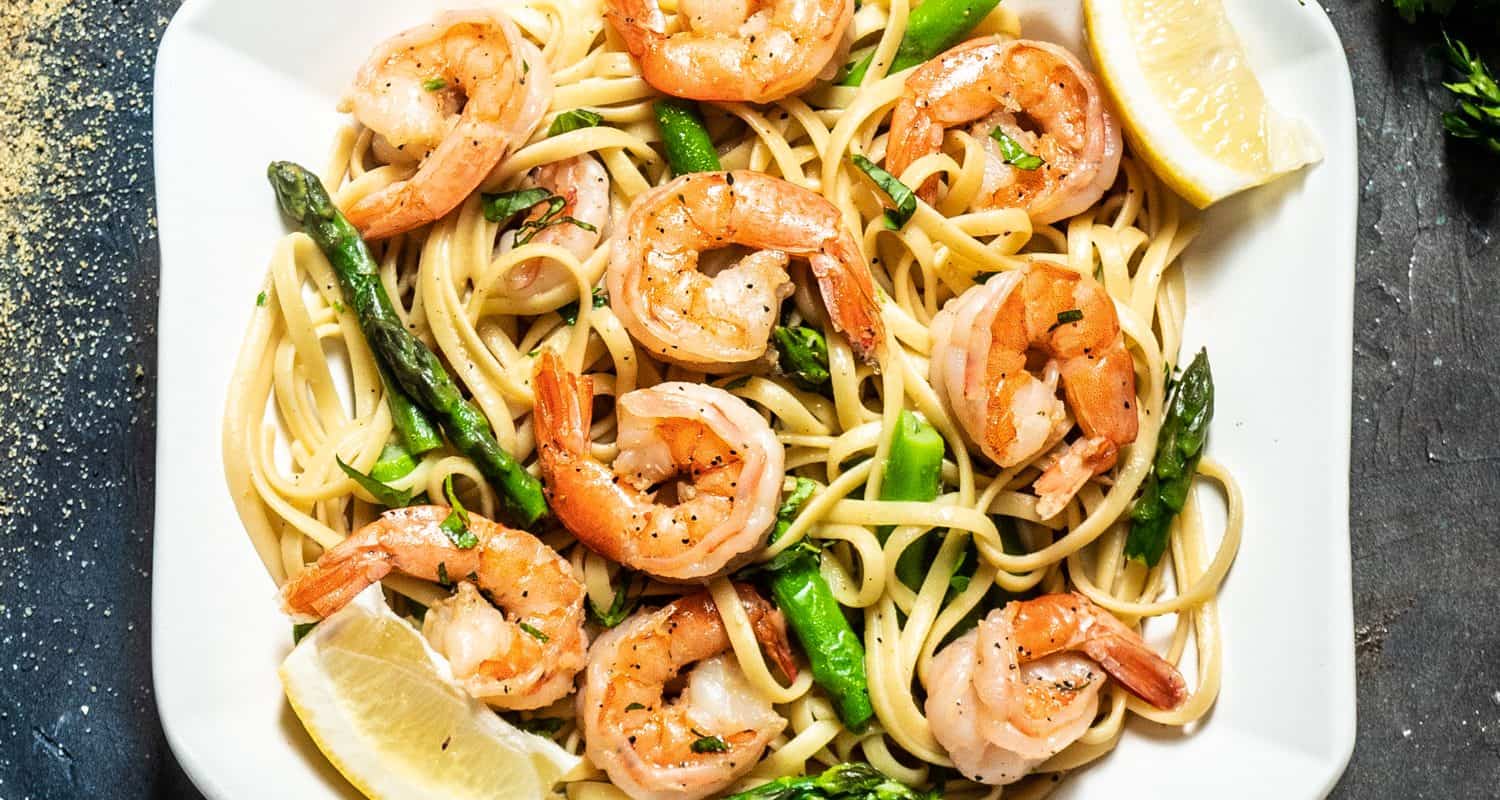
Ingredients
Equipment
Method
- Season the shrimp generously on both sides with 2 tsp. lemon pepper seasoning and set aside.
- Bring a large pot of salted water to a rolling boil.
- Add linguine pasta to the boiling water and cook according to package directions until al dente.
- Drain the cooked pasta and cool under cold running water. Set aside.
- Heat olive oil in a large skillet over medium heat.
- Add minced garlic to the hot oil and cook, stirring frequently, until fragrant, approximately 1 minute.
- Pour in the chicken broth and bring to a simmer.
- Continue simmering the broth uncovered, allowing it to reduce by approximately half, which should take 5-7 minutes.
- Add the trimmed asparagus pieces and remaining 1 tsp. lemon pepper seasoning to the broth.
- Cook the asparagus uncovered for approximately 5 minutes until it is crisp-tender.
- Remove the asparagus and broth mixture from the pan and set aside on a plate.
- Return the same skillet to medium heat and add butter.
- Once the butter is melted and foamy, carefully add the seasoned shrimp to the pan.
- Cook the shrimp for approximately 2-3 minutes on the first side until they begin to turn pink.
- Flip the shrimp and cook the other side for approximately 2-3 minutes until they are completely pink throughout and cooked through.
- Turn off the heat and add the cooked pasta to the skillet with the shrimp.
- Add the reserved asparagus and broth mixture back to the skillet.
- Pour in the fresh lemon juice and gently toss all ingredients together until well combined.
- Top with grated parmesan cheese and fresh chopped parsley.
- Serve immediately while hot.
Nutrition
Notes
- Season the shrimp directly, before they hit the pan — the lemon pepper needs contact heat to build the crust. Seasoning the sauce after the fact doesn't do the same thing.
- Don't crowd the pan — shrimp need space to sear. If your skillet is under 12 inches, cook them in two batches. A crowded pan drops the temperature and steams instead of browns.
- Reduce the broth before adding the asparagus — about half the liquid needs to cook off first. Skip this step and you end up with a watery sauce that slides off the pasta.
- Pull the shrimp when they hit pink and opaque — they carry over. If they look completely done in the pan, they've already overcooked by the time you toss everything.
- Rinse the pasta in cold water after draining — it stops the cook and keeps the linguine from clumping while you finish the sauce. It's going back into the skillet anyway.
- Add the lemon juice off heat — citrus loses its brightness when it cooks. Add it last so the acid still cuts through the butter.
- A Sauvignon Blanc or unoaked Chardonnay works well here — the citrus in the wine mirrors the lemon pepper without competing with it. Skip the heavy reds; they flatten the shrimp.
- The plate already has protein, pasta, and vegetables built in. If you want something alongside, crusty bread is enough to soak up the broth. Keep additional sides light — a simple arugula salad with shaved parmesan and a squeeze of lemon runs the same flavor lane without piling on weight.
- This serves four as a main. If you're cooking for two and want leftovers, portion the shrimp separately before refrigerating. They reheat better on their own than buried in pasta.
- Refrigerate in an airtight container for up to two days. The pasta absorbs the sauce overnight, so add a splash of chicken broth or water when reheating. Warm it in a skillet over low heat — a microwave works, but shrimp get rubbery fast. Heat just until the shrimp are warm through, not until they're cooking again.
- This dish doesn't freeze well. The shrimp texture breaks down, and the pasta turns soft. If you want to get ahead, prep the components separately: cooked pasta, reduced broth, and raw seasoned shrimp all store well individually in the fridge for up to 24 hours. Toss and finish when you're ready.