Ingredients
Equipment
Method
- Prep the smoker: Preheat smoker to 225°F using hickory wood for maximum smoke-to-seasoning synergy.
- Trim the fat: Trim the fat cap slightly from the top side of the beef ribs — remove thick fat deposits but leave a thin layer for moisture and flavor.
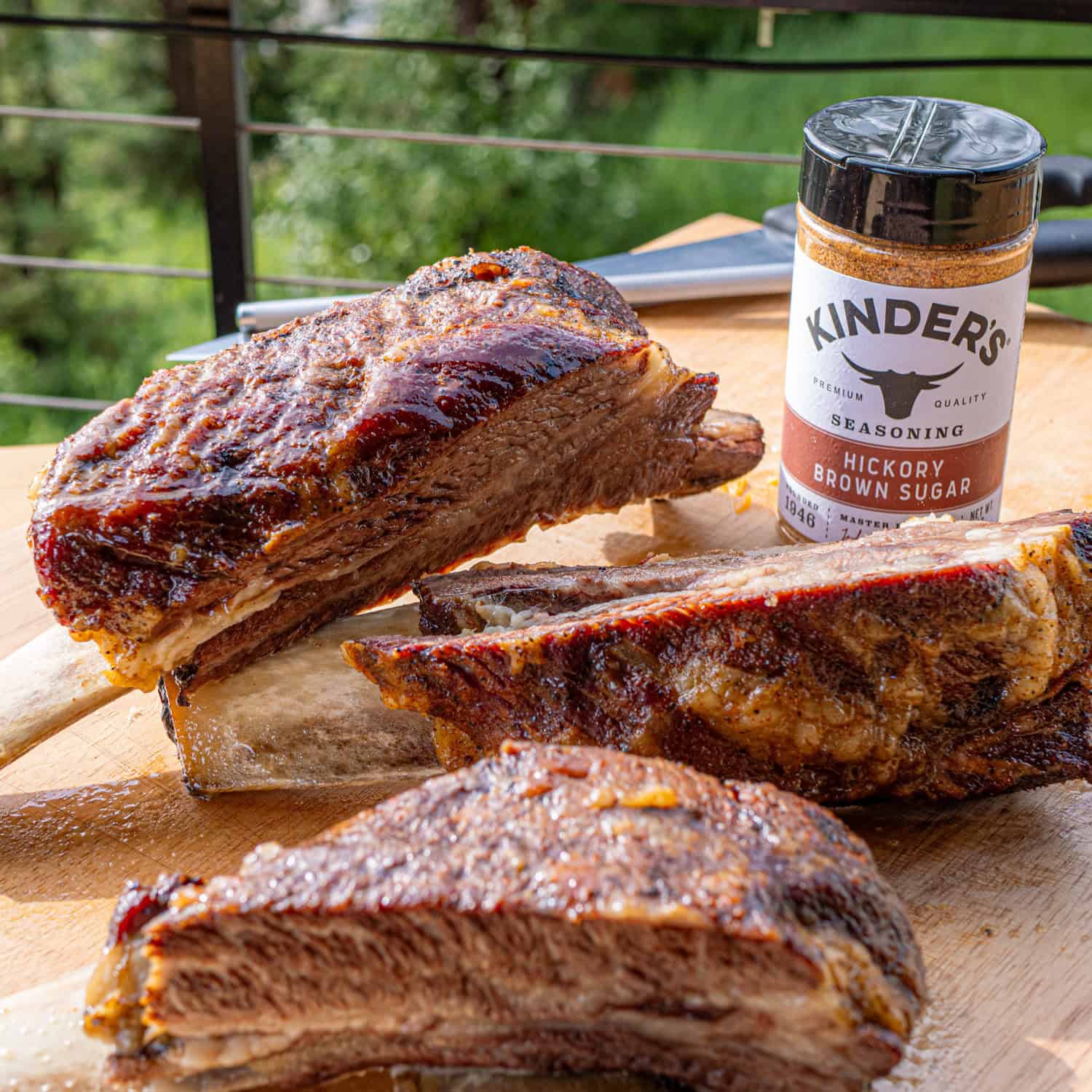
- Season: Apply Kinder's Hickory Brown Sugar Seasoning generously to all sides of the ribs. Press the seasoning into the meat. Let sit 15–20 minutes while your smoker reaches temperature.
- First smoke (unwrapped): Place ribs bone-side down on the smoker. Smoke at 225°F for approximately 4 hours, or until the internal temperature reaches 160°F in the thickest part of the meat between the bones. Do not rush this stage — bark development happens here.
- Wrap and braise: Transfer ribs to a large aluminum foil pan. Add 2 cups beef broth. Cover tightly with foil. Place back on the smoker and increase temperature to 275°F.
- Second cook (wrapped): Cook for an additional 1–1.5 hours, until the internal temperature reaches 201–203°F and a probe slides into the thickest part of the meat with zero resistance.
- Rest — this step is non-negotiable: Remove from smoker. Place the entire covered pan into a cooler and let rest for at least 1 hour. Two to three hours is even better if time allows. The resting period is critical for moisture redistribution.
- Slice and serve: Slice ribs between the bones and serve immediately with your favorite sides.
Nutrition
Notes
- Probe tenderness beats temperature — The 201–203°F target is a guideline. What matters is probe feel. Slide a thermometer or toothpick into the thickest part of the meat between the bones — it should go in and come out with zero resistance, like pushing through warm butter. If there's any pull, give it another 15–20 minutes and probe again. Ribs don't care about your timeline.
- Don't rush the bark — The first four unwrapped hours build the Kinder's Hickory Brown Sugar bark. Every time you open the smoker you lose heat, smoke, and bark momentum. Resist the urge to check. Set the probe, trust the temp, and walk away for at least 90 minutes at a time.
- Hickory is the right wood — Kinder's Hickory Brown Sugar Seasoning and hickory smoke are built for each other. Oak works as a backup. Mesquite is too aggressive for a 4-hour smoke on sweet-rub beef — it will turn acrid. Cherry or pecan for a milder, sweeter note if that's what you have.
- Rest in a dry cooler (the "Texas Crutch" rest) — Wrap the foil pan tightly, put it in a dry, empty cooler, close the lid. The ribs hold at a safe serving temperature for up to three hours while the juices redistribute. Skip this step and the bite is tougher and drier, no matter how well you cooked.
- Plan the day around the cook — Start early. Smoker up to 225°F by 8 a.m. means ribs on by 9, wrapped by 1, probe-tender by 2:30, resting by 3, sliced by 4. Give yourself a window — dino ribs are done when they're done, not when you need them.
- Full Texas BBQ spread: smoked baked beans, mustard-forward coleslaw, buttered cornbread, pickled red onions, and sliced jalapeños. White bread on the side to catch the juice and any bark that falls off when you slice.
- For a BBQ-joint presentation, skip the plates. Butcher paper on the table, ribs sliced between the bones, a pile of pickles and onions, and a pour of the braising liquid from the foil pan as an au jus. Everyone serves themselves.
- If you want to stretch the ribs further, pull the meat off the bones and pile it over cheesy grits or mashed potatoes. Spoon the braising liquid over the top. One rack serves three whole-bone, but pulled over grits it serves five.
- Drinks: a dark beer, a smoky mezcal, or a glass of Zinfandel. The sweet-smoke bark takes bold drinks without a problem.
- Refrigerate leftover ribs in an airtight container for up to three days, either bone-in or with the meat pulled. Freeze pulled meat for up to two months — bone-in doesn't freeze well because the bark loses texture.
- Reheat bone-in ribs in a 300°F oven, covered, with a splash of beef broth in the pan. Twenty to thirty minutes gets them warmed through without drying out. Pulled meat reheats best in a skillet over medium-low with a little broth — two minutes, stirring, and you're back in business.
- Skip the microwave for bone-in ribs. It dries the meat and kills the bark. Microwave is acceptable for pulled meat in a pinch, covered, at 50% power for 60–90 seconds.