Ingredients
Equipment
Method
- Preheat grill to high (450–500°F) for direct searing, then set up for two-zone cooking. Pat steaks and asparagus dry.
- Brush steaks lightly with olive oil on both sides. Season generously with Kinder's Buttery Steakhouse Seasoning — rub it in well. Toss asparagus with remaining olive oil and season generously with the same seasoning.
- Grill steaks on hot direct heat 3–5 minutes per side for medium-rare (internal 130–135°F; adjust time for thickness). Move to indirect side if needed to reach desired temp without burning. Rest 5–10 minutes tented with foil.
- Grill asparagus on direct (or medium side) 4–8 minutes, turning occasionally, until bright green with light blistering.
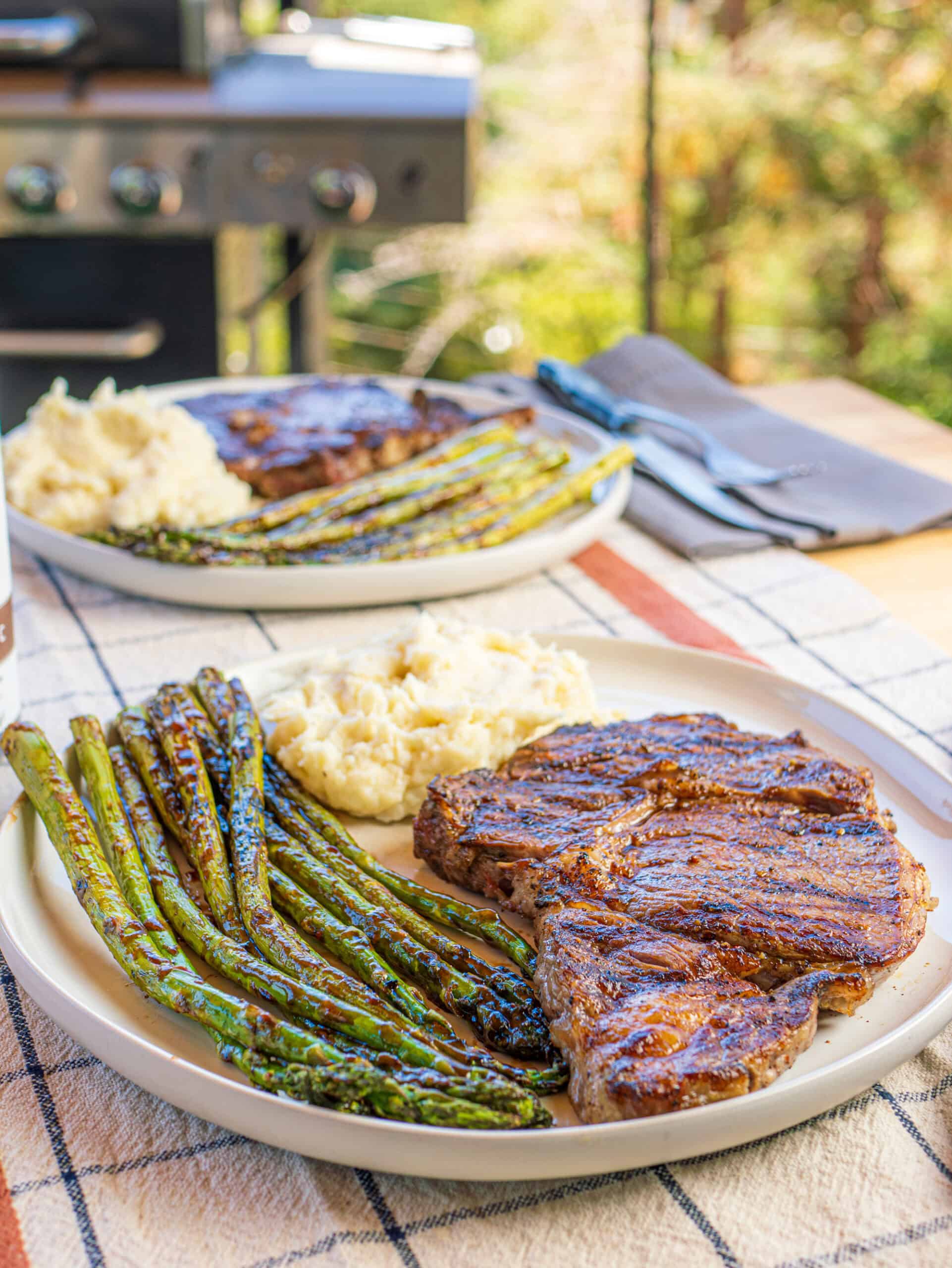
- During the last 2 minutes, brush asparagus generously with Kinder's Roasted Garlic BBQ Sauce — flip and baste again for a glossy, garlicky glaze. Remove when charred to your liking.
- Plate steaks (whole or sliced) alongside glazed asparagus. Drizzle extra Roasted Garlic BBQ Sauce if desired.
Nutrition
Notes
- Pull early, rest long — Target 125–128°F on the grill. A 5–10 minute rest under foil brings ribeye to 130–135°F, the point where the fat has fully rendered and the texture locks in. Above 145°F the buttery richness the Buttery Steakhouse Seasoning is built around starts to drop off.
- Butter during the rest — Drop a pat of butter on the steaks the moment they come off the grill, then tent with foil. The Buttery Steakhouse Seasoning's garlic-herb notes absorb into the resting juices and the butter carries them deeper. Ten seconds of effort.
- BBQ sauce goes on last — Apply Kinder's Roasted Garlic BBQ Sauce only in the final 2 minutes of grill time. The sugars caramelize fast — too early and you get char without glaze, too late and it doesn't set. Flip once after basting and baste the second side before it comes off.
- Season ahead if you have time — Coat steaks and asparagus with Buttery Steakhouse Seasoning up to 2 hours before grilling and refrigerate. Pull everything 30 minutes before you cook to reach room temperature. The seasoning penetrates the surface without changing the cook time.
- Two-zone setup isn't optional — Set up a hot direct zone for the initial sear and a cooler indirect zone. Thick ribeyes at 1–1½ inches will often need to finish indirect after searing to reach the right internal temp without burning the crust.
- A baked potato with butter and sour cream completes the steakhouse plate. That's the obvious move, and it's obvious because it works.
- For the classic pairing: a wedge salad with blue cheese and crispy bacon. The fat in the blue cheese and the crunch of the bacon hit a different register than the garlic-sweet glaze on the asparagus — they don't compete, they round the plate out.
- On wine: Cabernet Sauvignon or Zinfandel. Both are built for a beef-heavy, grill-char plate. A Cab's tannin structure cuts through the Buttery Steakhouse richness; a Zinfandel's fruit brings out the roasted garlic sweetness in the BBQ glaze.
- Four components — steak, asparagus, potato, salad — and a glass of red. Full steakhouse dinner from a backyard grill.
- Store steak and asparagus in separate airtight containers — they reheat differently and should stay apart. Both keep in the fridge for up to 3 days.
- To reheat the steak: hot skillet with a pat of butter, 2 minutes per side. The crust won't fully recover, but the interior stays close. Don't microwave — the texture suffers fast.
- To reheat asparagus: a 375°F oven for 5–8 minutes, or a dry skillet over medium heat. The glaze softens slightly but holds. Skip adding liquid — it washes out the caramelized BBQ coating.