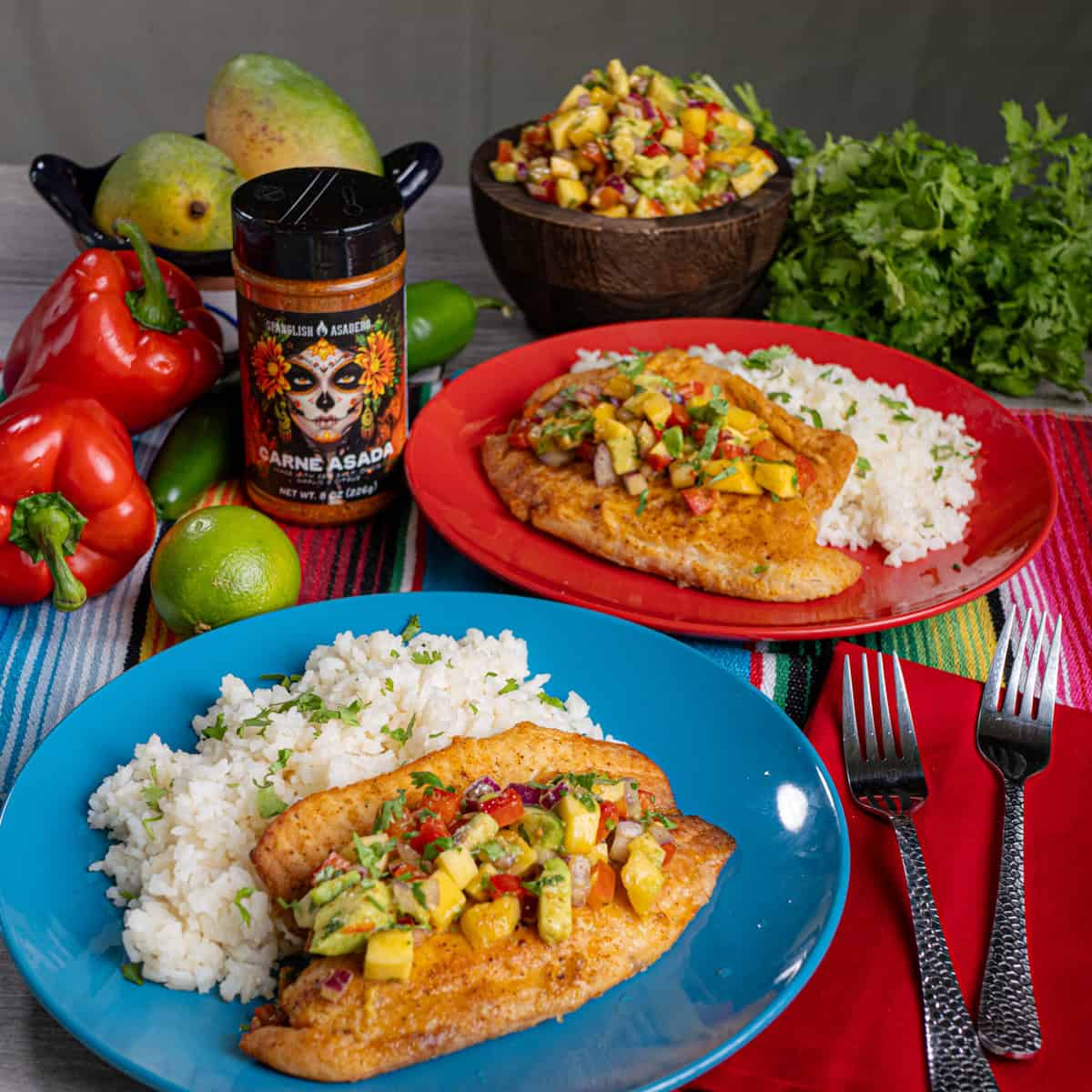
Ingredients
Equipment
Method
- Prep: Rinse tilapia fillets under cold water and pat dry with paper towels.
- Make mango salsa: In a bowl, combine diced mango, red bell pepper, cilantro, red onion, diced avocado, lime juice, 1 tbsp olive oil, and a dash of Spanglish Asadero Carne Asada Seasoning. Mix gently, cover, and refrigerate until ready to serve.
- In a shallow dish, combine flour and 3 tbsp Spanglish Asadero Carne Asada Seasoning.
- Press each tilapia fillet into the seasoned flour, coating evenly on both sides. Shake off excess flour.
- Heat 2 tbsp olive oil in a large skillet over medium-high heat until shimmering.
- Place coated fillets in the skillet. Cook 4 minutes per side until golden brown and fish flakes easily.
- Remove fillets to a paper towel-lined plate to drain excess oil.
- Serve fillets over a bed of white rice, topped with a generous spoonful of chilled mango salsa.
Nutrition
Notes
- Get the pan hot first — The oil should be shimmering before the fish goes in. If it isn't, the dredge soaks up the oil instead of crisping, and you lose the crust before it forms.
- Pat the tilapia dry before you dredge — Surface moisture works against you. Wet fillets steam in the pan instead of searing, and the flour coating slips off instead of holding. Paper towels, firm pressure, then straight into the seasoned flour.
- Shake off the excess flour — A thin, even coat is what you want. Too much flour and the crust turns gummy; it won't brown evenly across the whole fillet.
- Don't crowd the pan — If all four fillets don't fit in a single layer with space around them, cook in two batches. Crowding drops the pan temp and you get steam instead of sear.
- Make the salsa first — It improves with 10–15 minutes cold while you prep and cook the fish. The lime juice ties the flavors together; give it time to work.
- Use the full amount of seasoning — Spanglish Asadero Carne Asada Seasoning is doing the heavy lifting in the dredge. Under-season the flour and the crust is under-flavored all the way through — not just on the surface.
- White rice is the base — plain and unseasoned so it doesn't compete with the crust. The salsa handles the acid and brightness. If you want to push the plate further, warm flour tortillas work alongside it; the fish breaks apart easily and makes a natural taco with the mango salsa built right in.
- For a more substantial spread, roasted vegetables sit well next to this — zucchini, corn, or charred bell peppers all pick up the same citrus-and-chili profile without fighting the salsa.
- Fresh cilantro and a lime wedge right before serving. The lime is non-negotiable — it ties the hot fish to the cold salsa and pulls the whole dish into focus.
- Store the fish and salsa separately in airtight containers in the refrigerator. Fish keeps for up to 3 days; the salsa is best within 24 hours — the avocado oxidizes and the texture softens past that point.
- Reheat the fish in a skillet over medium heat with a thin layer of oil, or in a 350°F oven for 8–10 minutes. Microwave works in a pinch — cover it and use medium power to avoid toughening the fish. Don't add the cold salsa to the reheat. Pull it straight from the fridge and spoon it on after the fish is hot.