Ingredients
Equipment
Method
- If using, drizzle olive oil over the steak and spread to coat. Season both sides generously with Kinder's Carne Asada Seasoning, pressing firmly to adhere.
- Refrigerate uncovered for 30 minutes to 1 hour. The dry rub will draw out and reabsorb surface moisture, intensifying flavor at the surface.
- Remove steak from the refrigerator 15-20 minutes before cooking to take the chill off and promote even cooking throughout.
- Preheat your grill to medium-high heat. Oil the grates. Place steak on the grill and cook 10-12 minutes total, flipping once halfway through.
- Use a thermometer to check doneness: Rare 125 degrees F, Medium-rare 135 degrees F, Medium 145 degrees F. Remove at your preferred temperature.
- Rest the steak on a cutting board for 10 minutes. This allows the juices to redistribute and ensures every slice stays juicy.
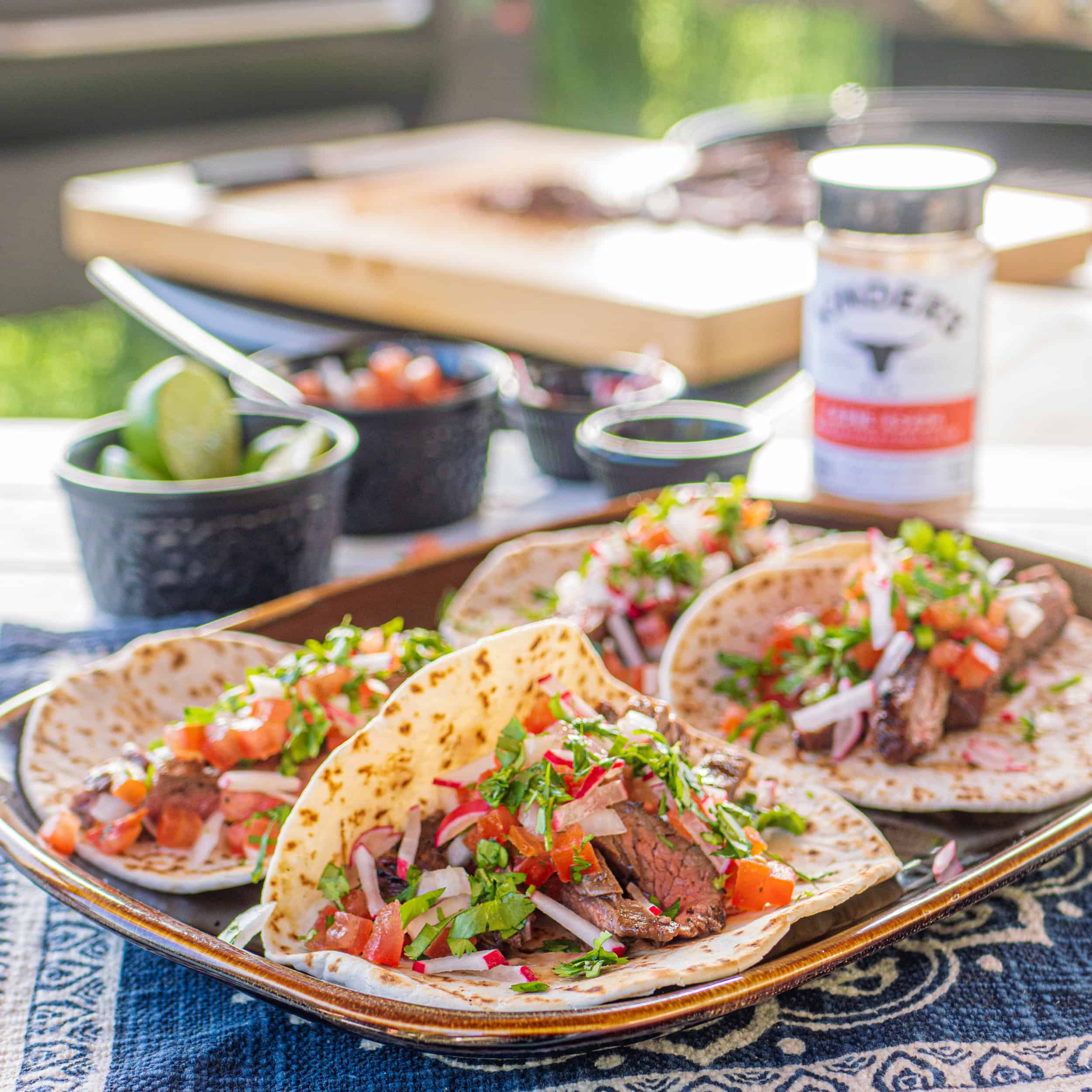
- Slice thinly across the grain at a slight diagonal angle. Serve immediately in warm tortillas with your preferred toppings.
- Broiler Option: Place steak on a roasting rack set over a baking sheet. Position 6-7 inches from the broiler element. Broil 5-6 minutes per side, checking temperature with a thermometer. Rest and slice as above.
Notes
- Skirt or flank — Skirt steak has more fat marbling and runs richer; flank is leaner and a bit more forgiving. Both work for carne asada. Try each and decide which direction you want to go.
- Cut across the grain — The grain on skirt and flank runs in a clear, visible direction. Slice perpendicular to those fibers at a slight diagonal. Cut with the grain and every bite fights you. This is the move that separates good slices from tough ones.
- Preheat all the way — High heat is what gives carne asada its char and its crust. A warm grill is not a hot grill. Wait until the grates are fully up to temp and lightly oiled before the steak goes on — you want it to sear immediately, not stick and steam.
- Rest it, no exceptions — 10 full minutes off the grill before you slice. Cut early and the juice runs straight onto your cutting board. Wait and it stays in the meat where it belongs.
- Warm your tortillas on the flame — Hold each corn tortilla directly over a gas burner for 20–30 seconds per side until the edges char slightly and the texture tightens. It's the taqueria move and it makes a real difference.
- Classic street tacos: warm corn tortillas, carne asada, diced white onion, fresh cilantro, salsa verde, and a squeeze of lime. It's the format the dish was built for.
- A rice bowl works just as well — cilantro-lime rice, black beans, pico de gallo, and a drizzle of crema. More filling, still clean.
- For a bigger spread, pile the slices over nachos with melted cheese, jalapeños, and guacamole. The char holds up under the toppings.
- Leftover carne asada makes one of the better breakfast burritos going — scrambled eggs, cheese, and salsa, with the slices reheated fast in a hot skillet. Day-two carne asada is not a downgrade.
- Store sliced carne asada in an airtight container in the refrigerator for up to 3 days. Reheat in a hot skillet with a splash of beef broth or water — 1–2 minutes over medium-high heat keeps the slices from drying out. Skip the microwave if you can; it steams the crust flat.
- Freeze uncooked seasoned steak for up to 2 months. Thaw overnight in the refrigerator, then pull it out 15–20 minutes before cooking to bring the center up to temp. Pre-sliced carne asada reheats better than a whole steak — more surface area means faster, more even warming.