Ingredients
Equipment
Method
- Prep: Make the quick recaito by blending or finely chopping onion, bell pepper, cilantro, and garlic with olive oil, salt, and pepper until it forms a loose paste.
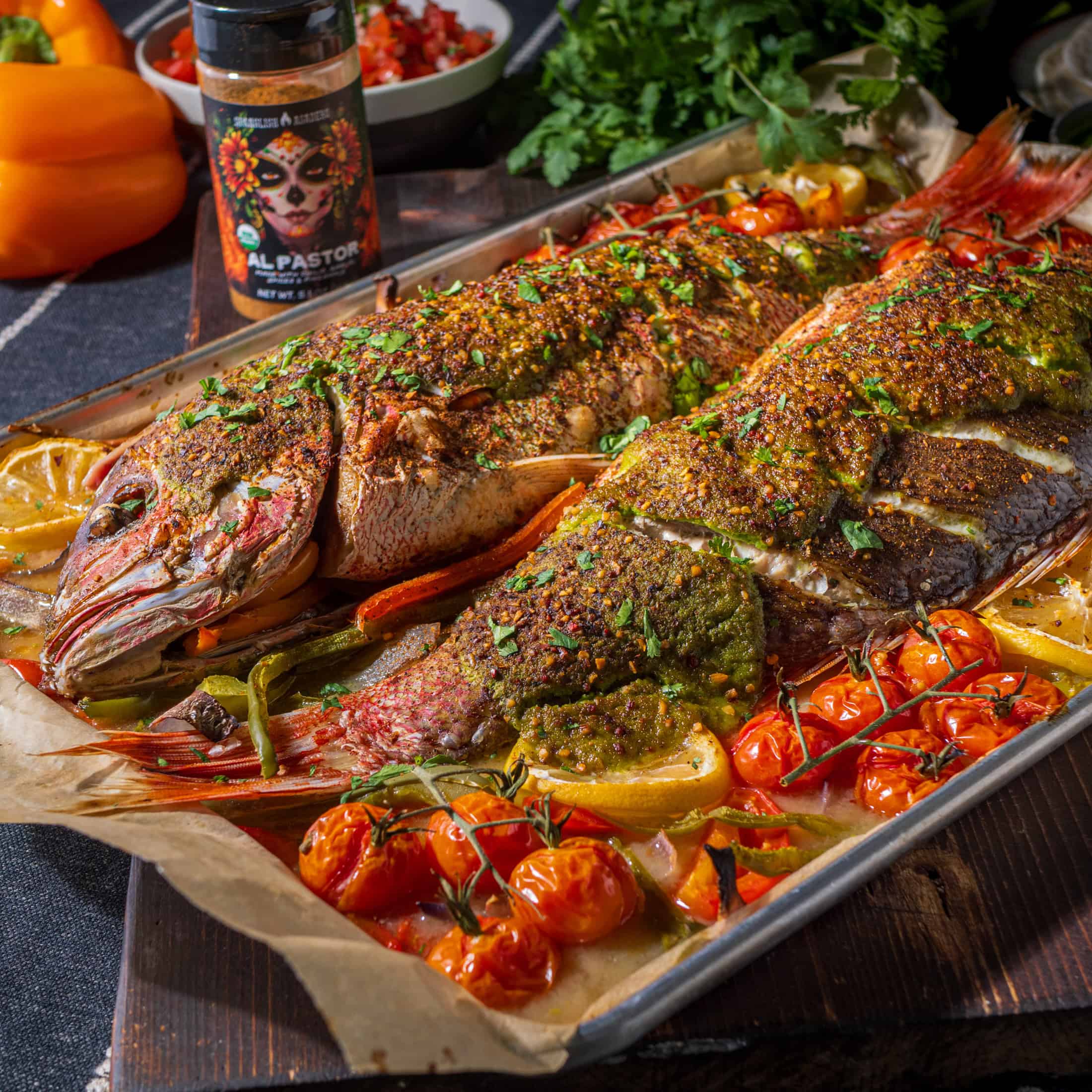
- Pat fish dry. Rub both snappers generously inside and out with the recaito and Spanglish Asadero Al Pastor Seasoning. Stuff the cavities with bell pepper and green onion mix.
- Preheat oven to 400°F. Place fish on a foil-lined baking sheet or in a baking dish. Cover loosely with foil.
- Bake 20–25 minutes. Remove foil, increase heat to 425°F, and bake another 5–10 minutes until skin is charred and fish flakes easily with a fork.
- Let fish rest 5 minutes. Serve whole or filleted with lime wedges and warm tortillas.
- PRO TIPS & DIAL-INS
- Spanglish Asadero Al Pastor Seasoning gives the fish a delicious sweet-heat-pineapple kick that works surprisingly well with red snapper.
- Doneness: Fish is ready when it reaches 145°F internal near the bone and flakes easily.
- For extra char: Make sure the fish is very dry before baking and use the high-heat finish.
- Frying option: Lightly dust with flour and fry in ½ inch oil at 350–375°F for 3–4 minutes per side (ladle hot oil over the top if the fish is too large for the pan).
- Make-ahead: Season and stuff the fish up to 2 hours ahead and keep refrigerated.
Nutrition
Notes
- Score deep, not shallow — The cuts need to reach the flesh, not just nick the skin. Three to four diagonal cuts per side, about ½ inch deep. Shallow scores don't let seasoning in and don't give the heat a path to the skin.
- Dry the fish completely — Pat the snapper dry with paper towels before the recaito goes on. Any surface moisture steams the skin instead of crisping it. The high-heat finish only works if the fish went in dry.
- Use the full amount of Al Pastor Seasoning — The recipe calls for 3–4 tablespoons across two whole fish. Use the high end. The cavity needs seasoning as much as the exterior.
- 145°F near the bone is the target — Insert a thermometer into the thickest part of the flesh just above the spine. At 145°F the fish will also flake cleanly with a fork — both indicators confirm doneness.
- The high-heat finish is not optional — The first 20–25 minutes at 400°F cooks the fish through. The 5–10 minutes at 425°F with the foil off is what blisters the skin and creates char. Turn the heat up immediately when the foil comes off — don't let the oven cool between stages.
- Frying option — Lightly dust with flour and fry in ½ inch of oil at 350–375°F, about 3–4 minutes per side. Ladle hot oil over the top if the fish is too large to submerge. The result is crispier skin with more dramatic color.
- Serve the snapper whole at the table — the presentation does half the work. Warm corn tortillas, diced white onion, rough-torn cilantro, and lime wedges on the side let everyone build their own. The first squeeze of lime over the fish is important — it cuts through the al pastor seasoning and brings the whole thing into focus.
- For a more composed plate: white rice, sliced avocado, charred jalapeños, and the fish portioned tableside. The flesh lifts cleanly from the bone after the dish rests for five minutes.
- The recipe scales cleanly — two fish serves four, four fish serves eight. The recaito doubles without adjustment.
- Fish is best the day it's made. The skin loses its char overnight, and the texture changes in the refrigerator. That said, the cooked snapper holds in an airtight container for up to 3 days.
- To reheat: peel the skin off, break the flesh into portions, and warm it in a skillet over medium-low heat with a splash of water or citrus juice. Medium power in the microwave, covered, in 45-second intervals works if the skillet isn't an option. Don't use high heat — the flesh turns rubbery fast.
- Tortillas, garnishes, and lime are always fresh. Don't store them with the fish.